A National Story Shaped by the Mountains
In Manah, COX Architecture drew on the Al Hajar mountains for a national museum whose galleries move from rock and earth towards openness and light.

Sign up to receive the latest tech news and updates from Property News International straight to your inbox.
By signing up, you will receive emails about property news products and you agree to our terms of use and privacy policy.
@2026 Property News International. All Rights Reserved.

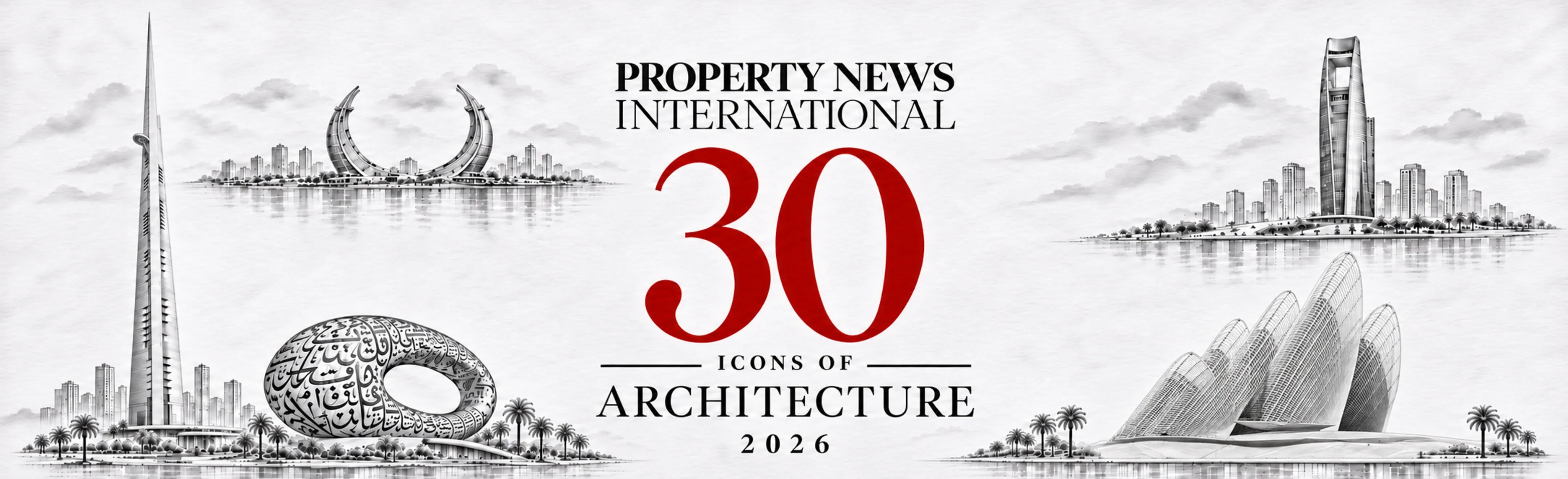
A National Story Shaped by the Mountains
In Manah, COX Architecture drew on the Al Hajar mountains for a national museum whose galleries move from rock and earth towards openness and light.
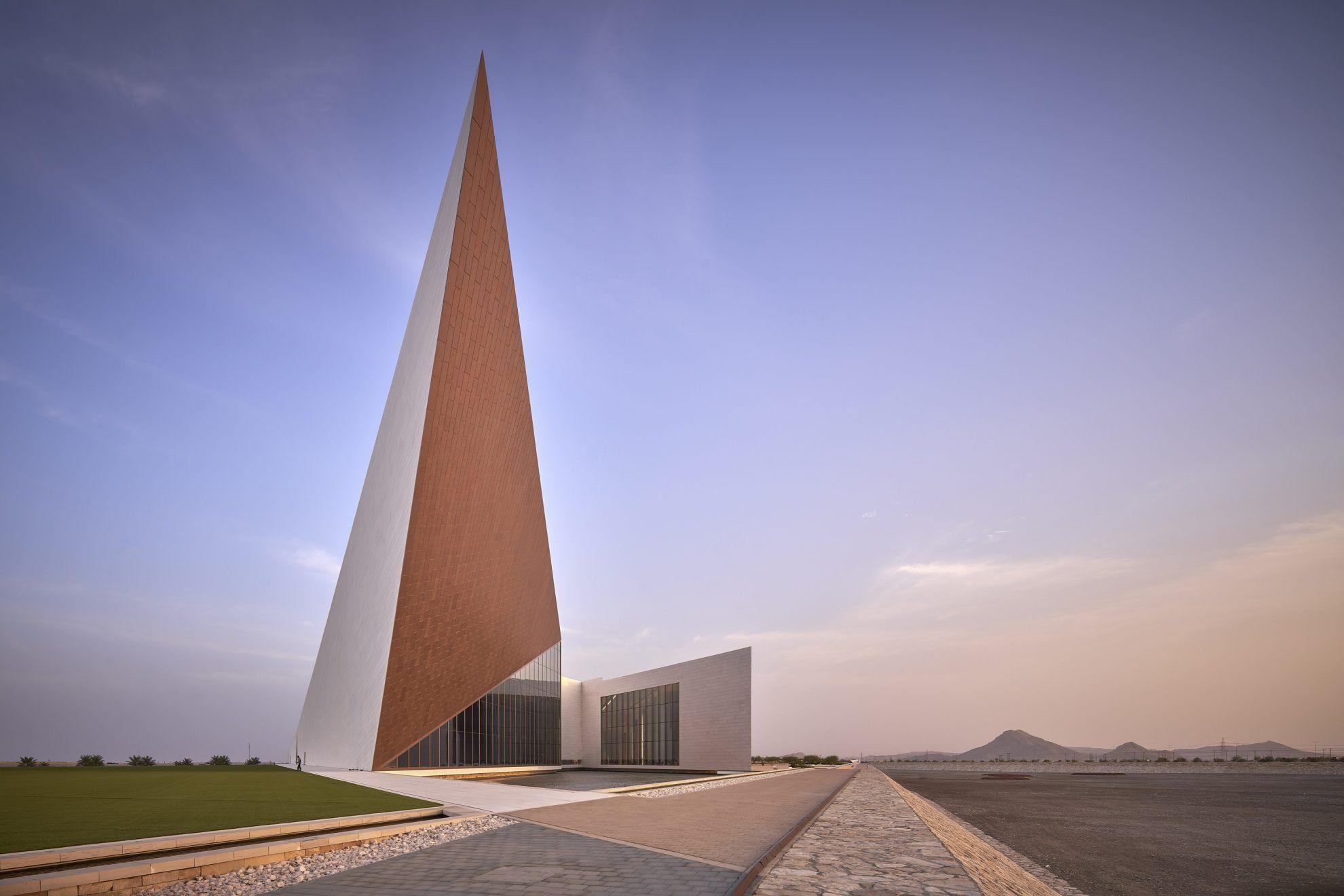 Oman Across Ages Museum’s angled exterior at Manah
Architecture: COX Architecture | Architects: Steve Woodland and Bret White | Location: Manah, Ad Dakhiliyah, Oman | Status: Completed 2023
Stone, shade and a sharply rising silhouette establish the character of the Oman Across Ages Museum before a visitor encounters its collections. At Manah, in Oman's Ad Dakhiliyah Governorate, COX has drawn on the Al Hajar mountains to give a national museum a form rooted in its surroundings. The building's angled planes belong to a contemporary architectural language, but their starting point is a landscape that has shaped life in Oman for centuries.
Completed in 2023, the museum gathers exhibition, learning and public spaces into a composition that appears to emerge from the desert. Its broad surfaces and abrupt changes in direction give the building different proportions as it is approached. Long, low elements establish contact with the ground; taller forms create moments of emphasis. The mountain reference is carried through the organisation of space rather than treated simply as an outline on the horizon.
Inside, the movement from the country's geological origins towards its modern history becomes an architectural sequence. COX describes spaces that develop from an association with rock and earth towards greater openness and light. Large structural spans allow galleries to hold that progression without being broken into a succession of small rooms. The resulting scale gives the exhibition designers room to work with objects, moving images and reconstructed environments, while the architecture supplies a broader sense of passage.
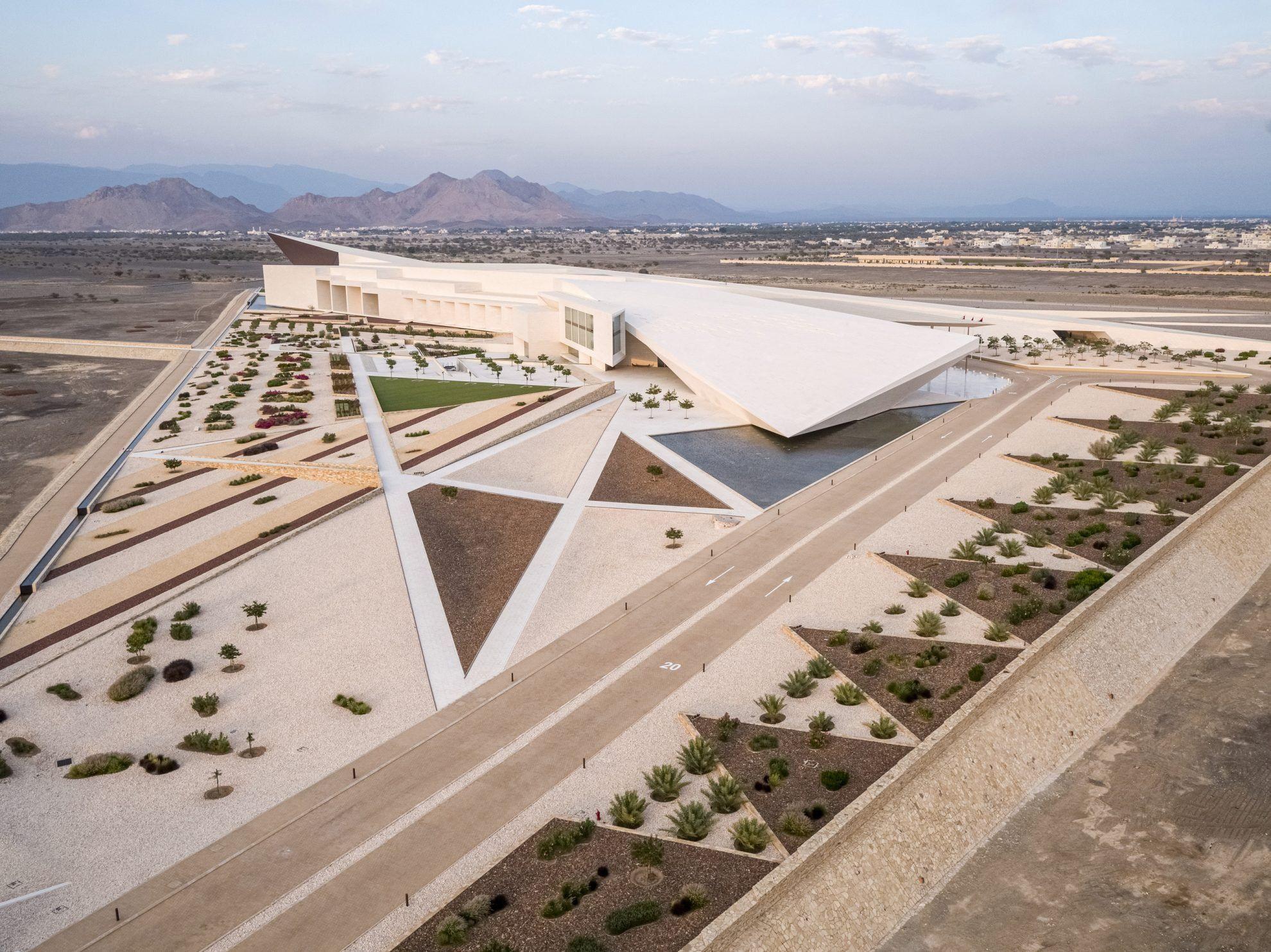 Aerial view of Oman Across Ages Museum
The museum's History Gallery traces the formation of the land, early settlement, trade and successive periods of Omani civilisation. Maritime heritage and aflaj irrigation systems are prominent subjects. Both are especially appropriate to this setting: they explain how people used knowledge, resources and networks to inhabit difficult terrain and connect with places beyond it. The Renaissance Gallery then turns to the development of the modern nation, extending the story into social, economic and cultural change.
Material choices make that connection to place tangible. According to Oman's Ministry of Information, stone sourced from Ad Dhahirah and North Al Batinah was used on walls inside and outside the museum, with waste material reused in the garden. The building's orientation and wall geometry also address the sun. Its lower eastern profile shields the interior from direct morning sun, while inclined western walls shade windows against direct exposure. These decisions give the dramatic exterior a practical relationship with the climate.
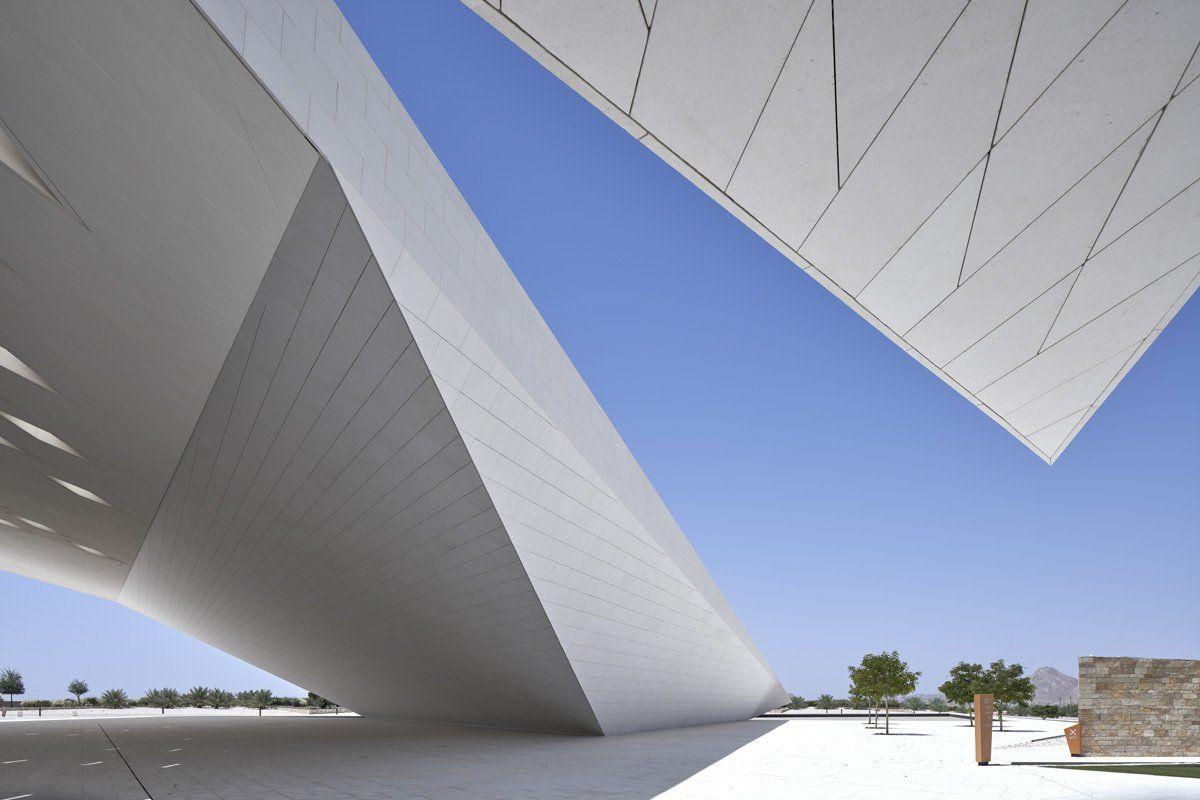 Cantilevered roof of Oman Across Ages Museum
The museum is intended to support more than a single visit through its galleries. Its Knowledge Centre and associated facilities give it an educational role, while the garden and public spaces broaden the ways people can spend time there. This is significant for a national institution outside the capital: the building brings cultural infrastructure to Manah and asks visitors to engage with Oman through a different geographical starting point.
There is confidence in the scale of the architecture, but its strongest idea is close to the ground. The same landscape that helped form the country's history becomes the means of presenting it. COX gives that relationship a clear physical expression, using mass, light and movement to make the museum's subject present before any label is read.

Stay ahead with the latest updates, insights, and trends shaping the world of real estate globally.