Bringing the Street to the Performance
Henning Larsen's opera house for Jeddah Central is a cluster of blocks with a shaded 'cultural spine' running through them from the city to the Red Sea.

Sign up to receive the latest tech news and updates from Property News International straight to your inbox.
By signing up, you will receive emails about property news products and you agree to our terms of use and privacy policy.
@2026 Property News International. All Rights Reserved.

Bringing the Street to the Performance
Henning Larsen's opera house for Jeddah Central is a cluster of blocks with a shaded 'cultural spine' running through them from the city to the Red Sea.
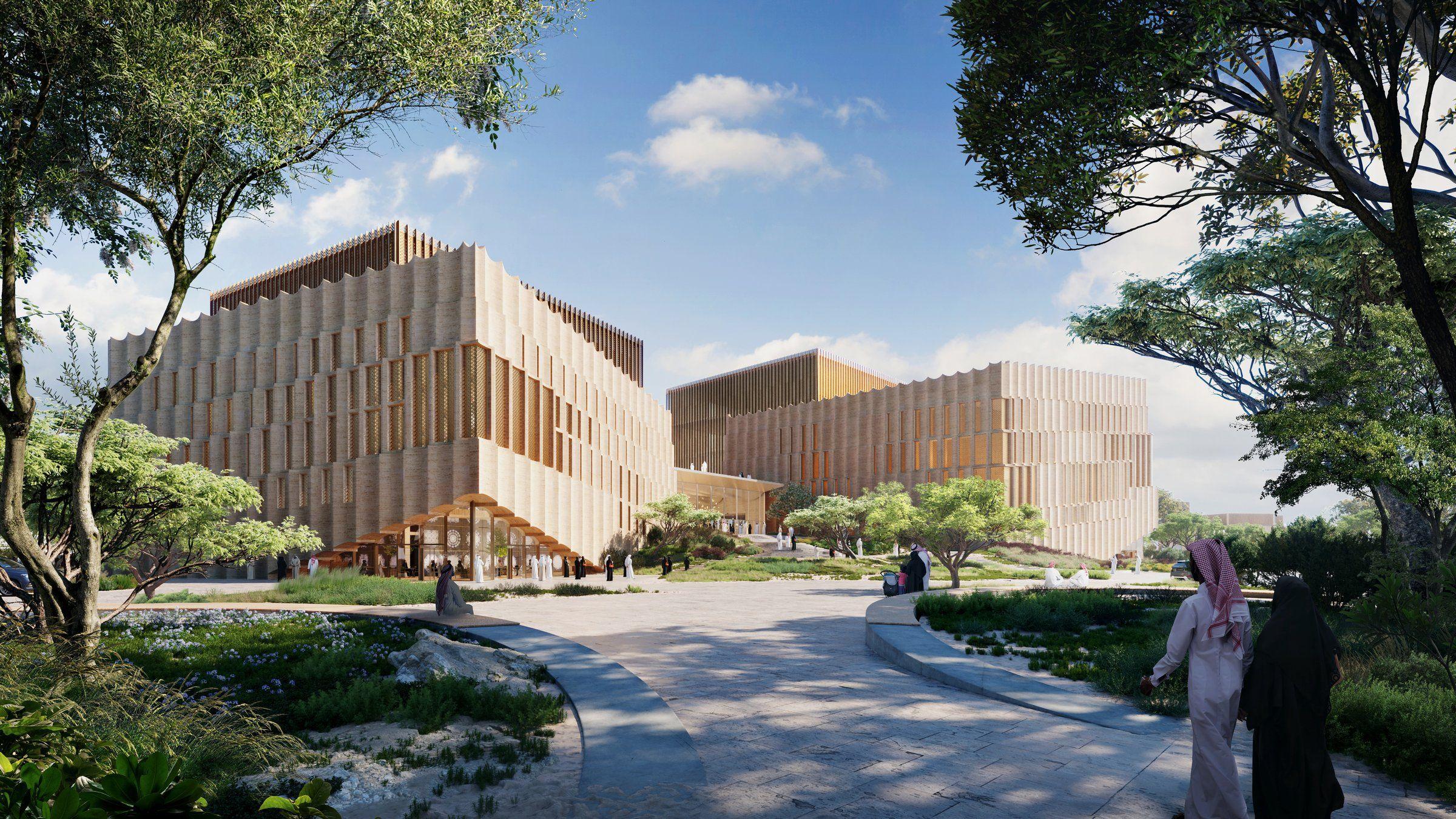 Jeddah Opera House buildings and shaded walkway
Associate design director: Kasia Piekarczyk – Henning Larsen.
Architect: Henning Larsen | Engineer: Buro Happold | Developer: Jeddah Central Development Company | Contractor: Modern Building Leaders
Walk through Al-Balad, Jeddah's old town and a UNESCO World Heritage Site since 2014, and the lanes keep changing width. A passage narrows between houses built of coral stone, the porous reef limestone that went into most of the old town, then opens into a small square. Overhead, roshan windows, the carved timber bays that jut from the façades, add another layer between street and room.
Henning Larsen has taken that pattern to the new waterfront. Its opera house is a cluster of blocks instead of one big building, with a shaded route running through them from the city to the Red Sea. The route is meant to stay open whether or not there is a show on. Every cultural building claims to belong to its city. Letting people walk through without a ticket is the promise worth holding this one to.
There are three venues: the Red Sea Theatre for opera, seating about 1,500; a playhouse for about 750; and a rehearsal hall for about 150. Henning Larsen calls the shaded route through them a "cultural spine". Big halls need big boxes. Henning Larsen keeps the lower blocks on the city side and lets the theatres rise behind them, facing the water. An entrance square on the north side acts as an outdoor foyer. Henning Larsen describes it as a barahaat, the name for the small public squares where Al-Balad's lanes open out.
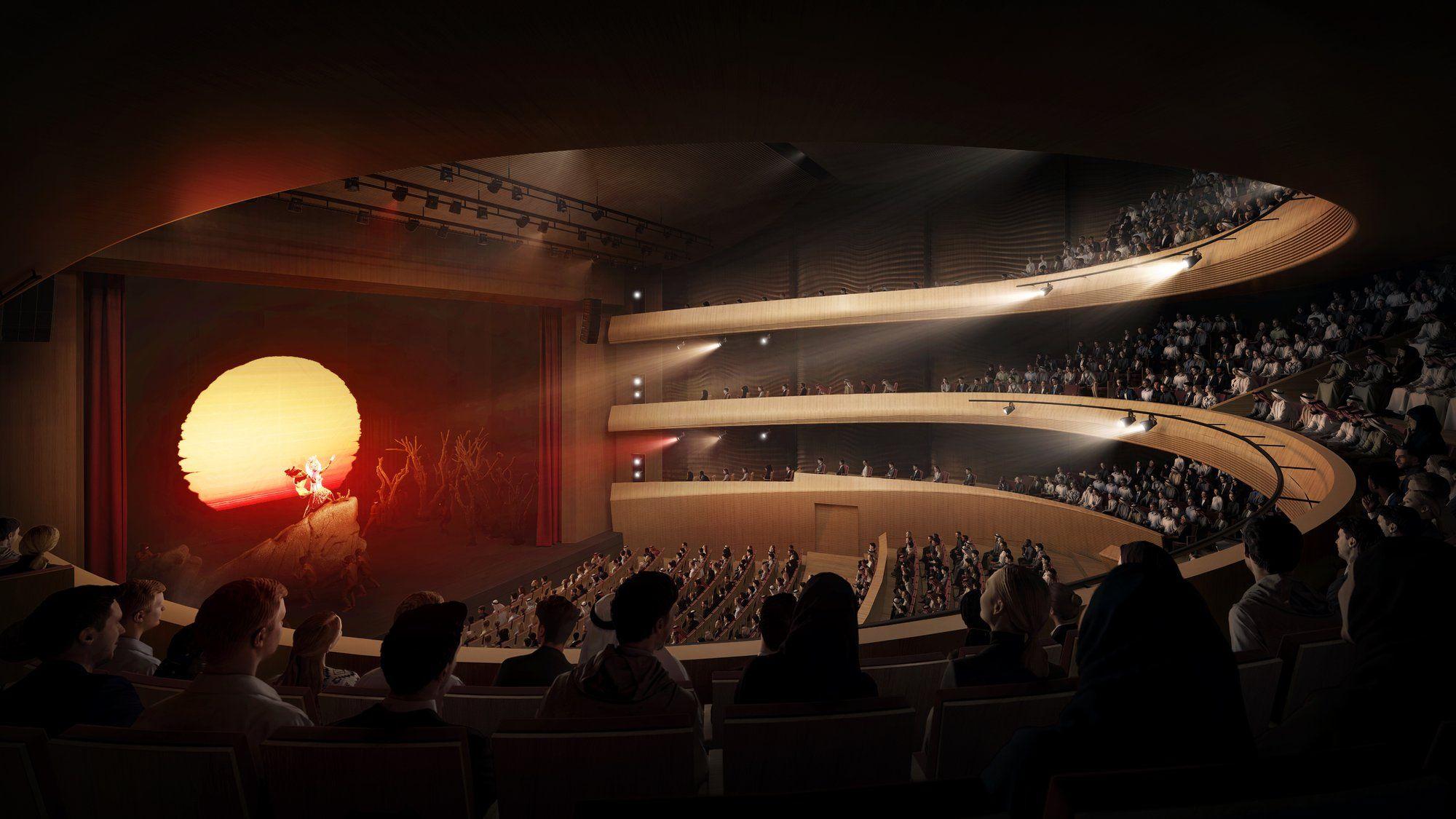 Main auditorium of Jeddah Opera House
The windows borrow from mashrabiyas and roshans, but they change with the rooms behind them. Some are shallow niches, while others are deep enough for people to gather in. Coral stone and timber set the palette. Canopies and planted paths shade the outdoor spaces, and the blocks are placed to pull air through. These are practical provisions. A route like this needs shelter and somewhere to sit if it is going to carry everyday life, not only audiences arriving for an evening performance.
The halls will be flexible too. Scenography consultant dUCKS scéno has designed seating that transforms automatically to clear a flat floor, so the venues can host weddings, dinners and ceremonies as well as performances. Nagata Acoustics is the acoustician.
Modern Building Leaders won the construction contract in February 2024. It was among the first landmark contracts for Jeddah Central, the PIF-backed waterfront redevelopment, awarded alongside those for the project's stadium and oceanarium. The opera house will anchor its own Opera Quarter on the waterfront. Henning Larsen gives 2024–2027 as the project timeframe.

Stay ahead with the latest updates, insights, and trends shaping the world of real estate globally.