Making Space at the Edge of the Mountain
Villas on the valley floor, on the cliffs, in crevices and inside the rock: how Oppenheim Architecture set Desert Rock into the granite mountains inland from the Red Sea coast.

Sign up to receive the latest tech news and updates from Property News International straight to your inbox.
By signing up, you will receive emails about property news products and you agree to our terms of use and privacy policy.
@2026 Property News International. All Rights Reserved.

Making Space at the Edge of the Mountain
Villas on the valley floor, on the cliffs, in crevices and inside the rock: how Oppenheim Architecture set Desert Rock into the granite mountains inland from the Red Sea coast.
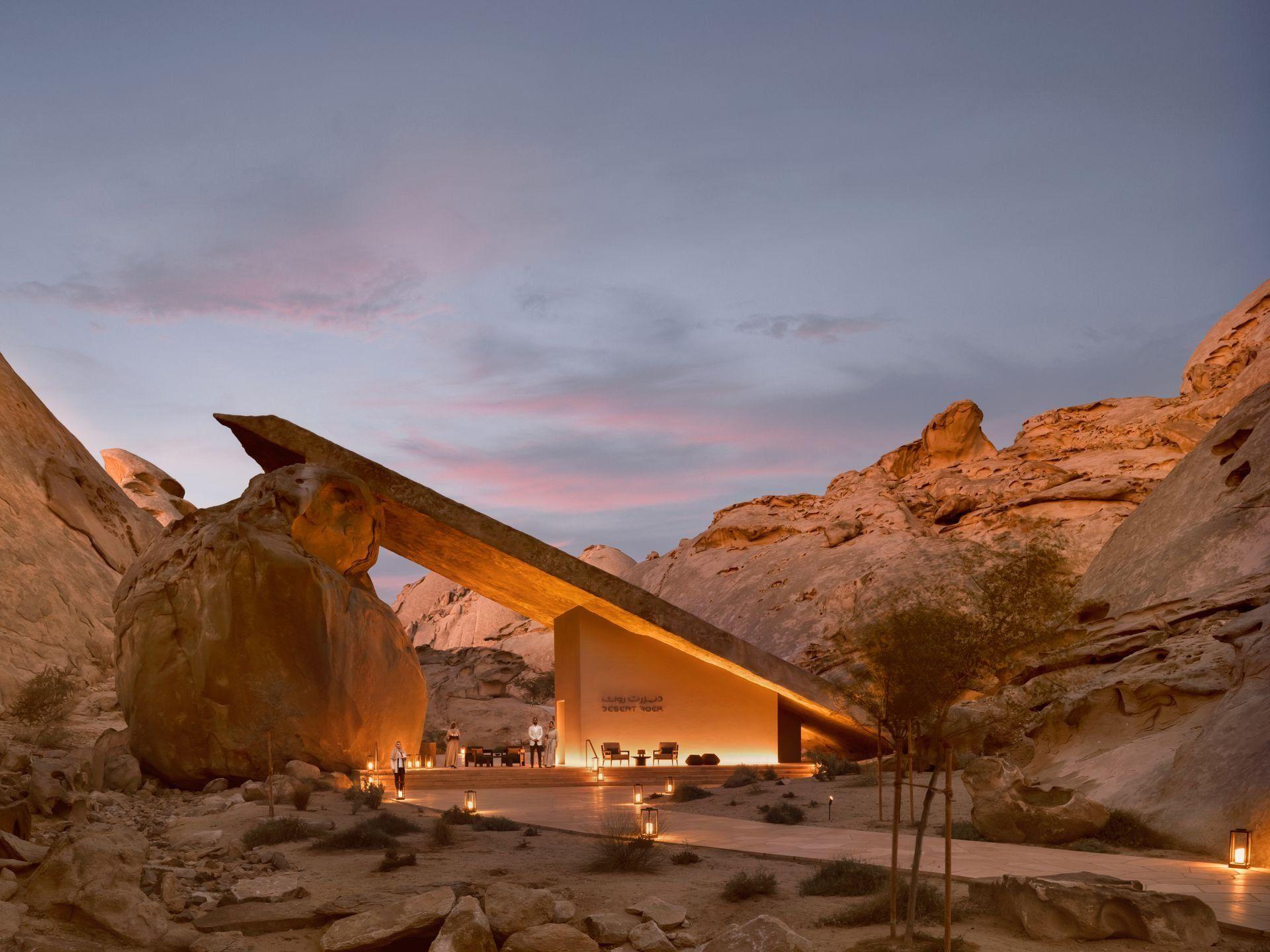 Triangular roof spanning boulders at Desert Rock
Lead designer: Chad Oppenheim – Oppenheim Architecture.
Architect and masterplanner: Oppenheim Architecture | Developer: Red Sea Global | Opened: December 2024
The glass at the mouth of the cave suite is cut dead straight. The granite around it is not. Nobody has tidied the edge where they meet, and that is the whole idea of Desert Rock.
Oppenheim Architecture designed the resort and its masterplan for Red Sea Global, in the granite mountains inland from Saudi Arabia's Red Sea coast. Most of the destination's resorts face the sea from beaches and islands. Desert Rock turns its back on the water and faces the mountain. It opened in December 2024 with 54 villas and 10 suites. There is no main building. The rooms are scattered through a valley and up its slopes, and their names tell you where each one sits:
There is also a Royal Villa. The numbers moved during design: when the scheme was first shown in 2021 it had 48 villas and 12 rooms. It opened with 54 villas and 10 suites.
Each type gives a different relationship with the mountain. A terrace above a drop is exposed in a way a room recessed into granite is not. The direction of the view and the amount of rock around each opening matter as much as how high up it sits.
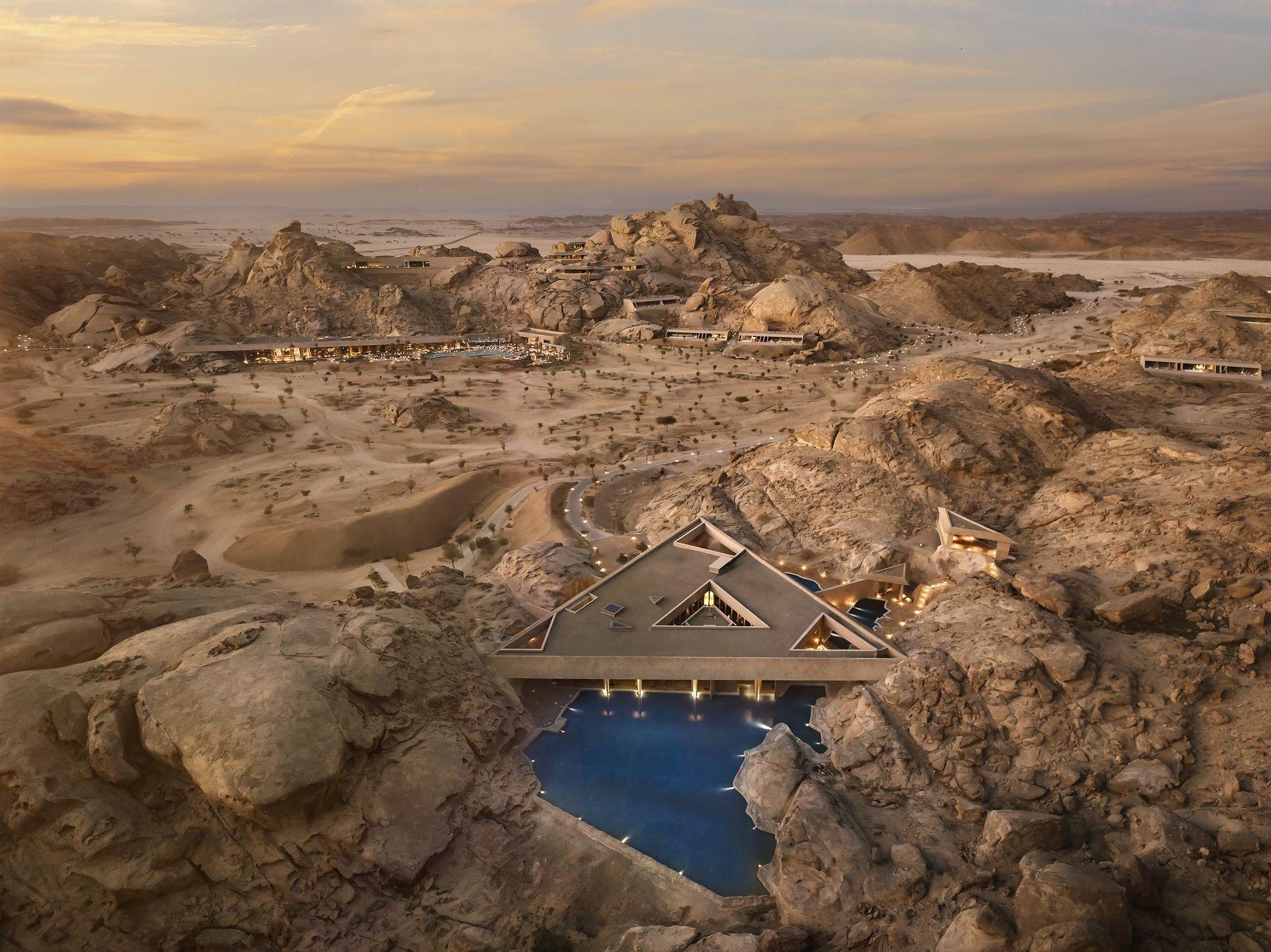 Aerial view of Desert Rock in its granite valley
That spread was a climate decision as much as a scenic one. Oppenheim looked for caves, crevices and shaded slopes where the air stays cooler and the sun reaches less. Rock overhangs extend past the glass. Roofs sit below the surrounding peaks. Terraces tuck back into recesses. Much of the shade was already there.
The materials come from the same place. Oppenheim proposed recycling construction material from the site, so the new walls share the colours and minerals of the stone around them.
What stops the buildings dissolving into imitation rock is the geometry. A triangular roof spans a gap between two boulders and is plainly man-made. Openings have clean frames. Where the architecture could have copied the mountain, it stays straight and lets the granite be the irregular one.
At night, lights come on in separate rooms across the slopes, small and scattered, under a much larger dark outline of rock.
The hardest thing a desert resort can do is leave the desert alone. Desert Rock gets closer than most.

Stay ahead with the latest updates, insights, and trends shaping the world of real estate globally.