Property News International

Change region:

GlobalcheckMiddle East

Subscribe to Our Newsletter

Sign up to receive the latest tech news and updates from Property News International straight to your inbox.

By signing up, you will receive emails about property news products and you agree to our terms of use and privacy policy.

@2026 Property News International. All Rights Reserved.

Blends Media
A Blends Media Group Production

Megalodome Golf: Inside the World’s First Full-Scale Indoor Golf Course

Megalodome Golf is set to redefine sports architecture with the world’s first full-scale indoor golf course, featuring climate-controlled domes and a playable nine-hole layout in Illinois.
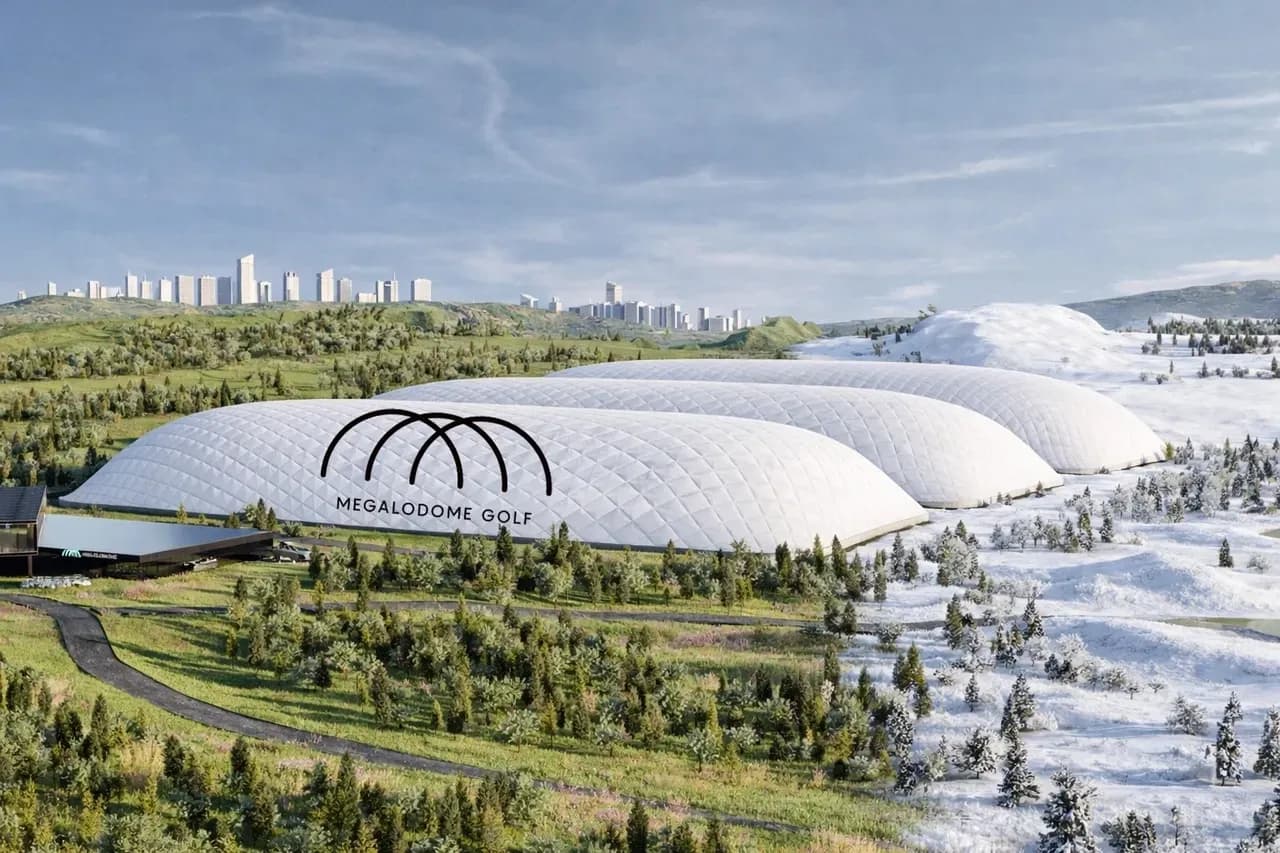
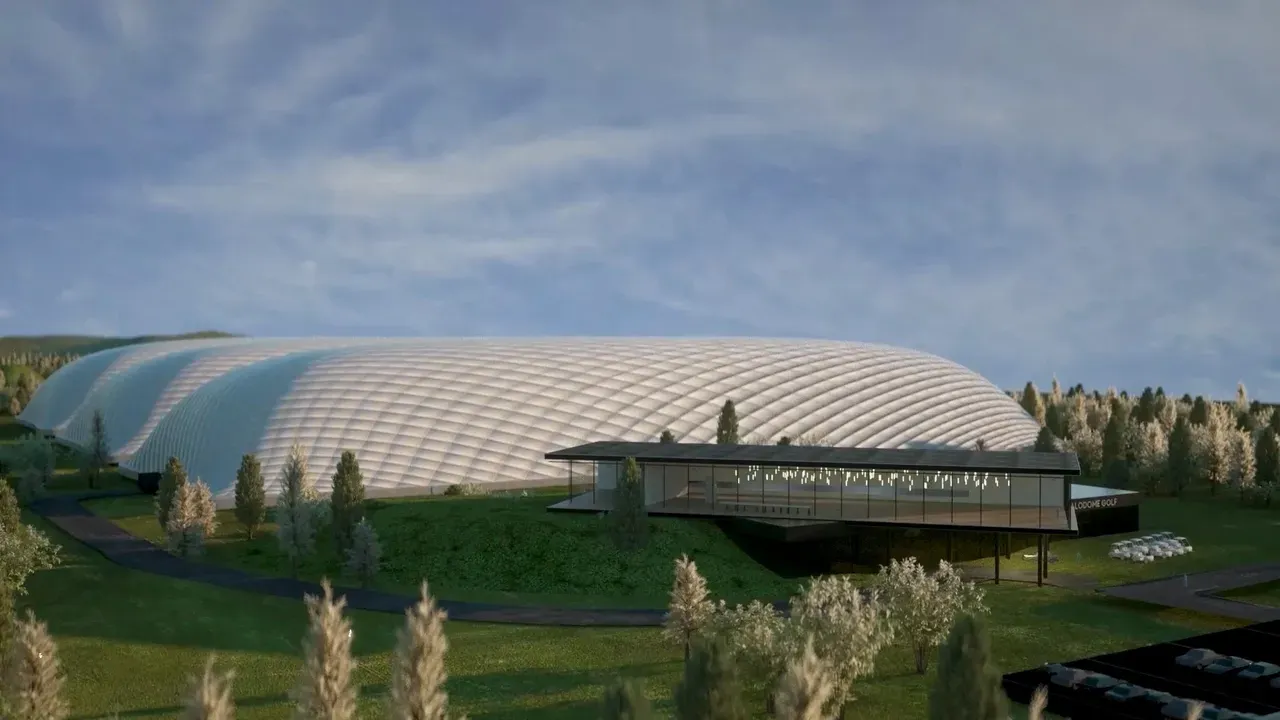
Megalodome Golf will feature three interconnected climate-controlled domes enclosing a full nine-hole executive golf course in Illinois.Megalodome Golf will feature three interconnected climate-controlled domes enclosing a full nine-hole executive golf course in Illinois. Image: Megalodome Golf

Chicago, USA: As golf adapts to shifting climate patterns and the growing demand for year-round play, a pioneering development in the United States is redefining how the sport can be designed, built, and experienced. Megalodome Golf, planned for Oswego, Illinois, southwest of Chicago, is set to become the world’s first full-scale indoor golf course, introducing a bold new typology in sports architecture and indoor recreation.

Designed to operate independently of weather conditions, the project brings together architectural ambition, climate-controlled engineering, and authentic course design to create an entirely new model for modern golf facilities.

A dome-driven golf landscape

At the heart of the Megalodome concept are vast structural domes that fully enclose a playable golf environment. Designed by Montreal-based Huxham Golf Design, the project features a nine-hole executive course housed beneath three interconnected domes, each rising approximately 110 feet high.

Unlike traditional indoor golf facilities that rely on simulators or netted enclosures, the Megalodome is conceived as a true architectural structure. Each dome spans up to 300 by 900 feet, creating a controlled environment where wind, snow, heat, and seasonal limitations no longer dictate play. The scale of the enclosure allows for full swings and realistic ball flight, preserving the spatial and physical integrity of outdoor golf within an indoor setting.

Indoor Golf Course © Megalodome GolfImage: Megalodome Golf

Indoor golf course architectural features

The executive course is planned as a par-30 layout, comprising six par-3 holes and three par-4 holes. Designing golf within an enclosed volume introduces challenges not found in traditional landscapes, particularly around ceiling height, spatial sequencing, and routing efficiency.

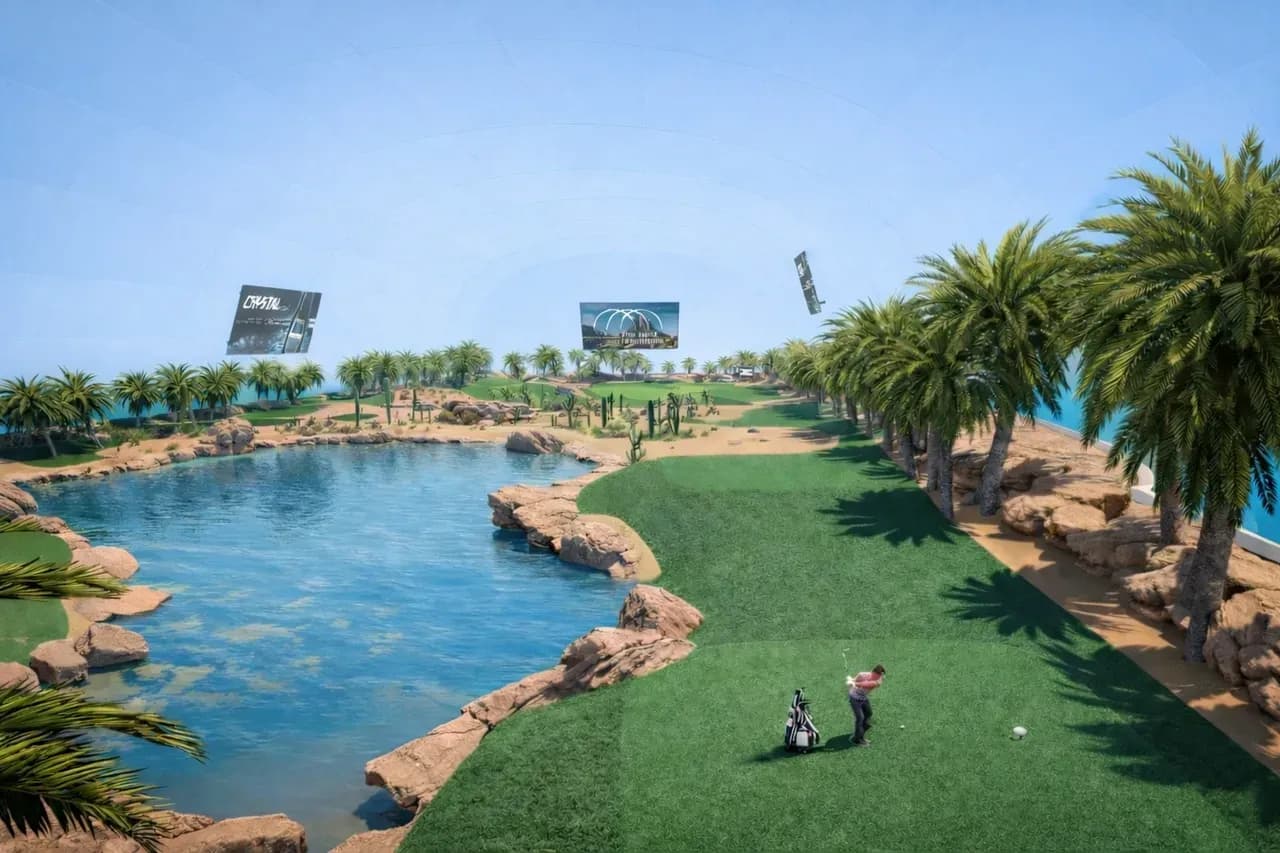
To address this, the course integrates artificial turf engineered to replicate natural grass performance, paired with real sand bunkers, water hazards, and desert-style landscaping. The intention is to evoke the sensory experience of outdoor golf while benefiting from the predictability and comfort of a climate-controlled interior. This approach reflects a broader trend in experiential architecture, where realism and immersion are prioritised within engineered environments.

Artificial turf, real sand bunkers, and water hazards will recreate outdoor golf conditions inside a controlled architectural structure.Artificial turf, real sand bunkers, and water hazards will recreate outdoor golf conditions inside a controlled architectural structure. Image: Megalodome Golf
Artificial turf, real sand bunkers, and water hazards will recreate outdoor golf conditions inside a controlled architectural structure.Image: Megalodome Golf

Supporting facilities under one roof

Beyond the main course domes, a fourth dome is planned as a dedicated practice and training facility. This space will include a 275-yard driving range, 50 practice stalls, and short-game areas featuring chipping and putting greens.

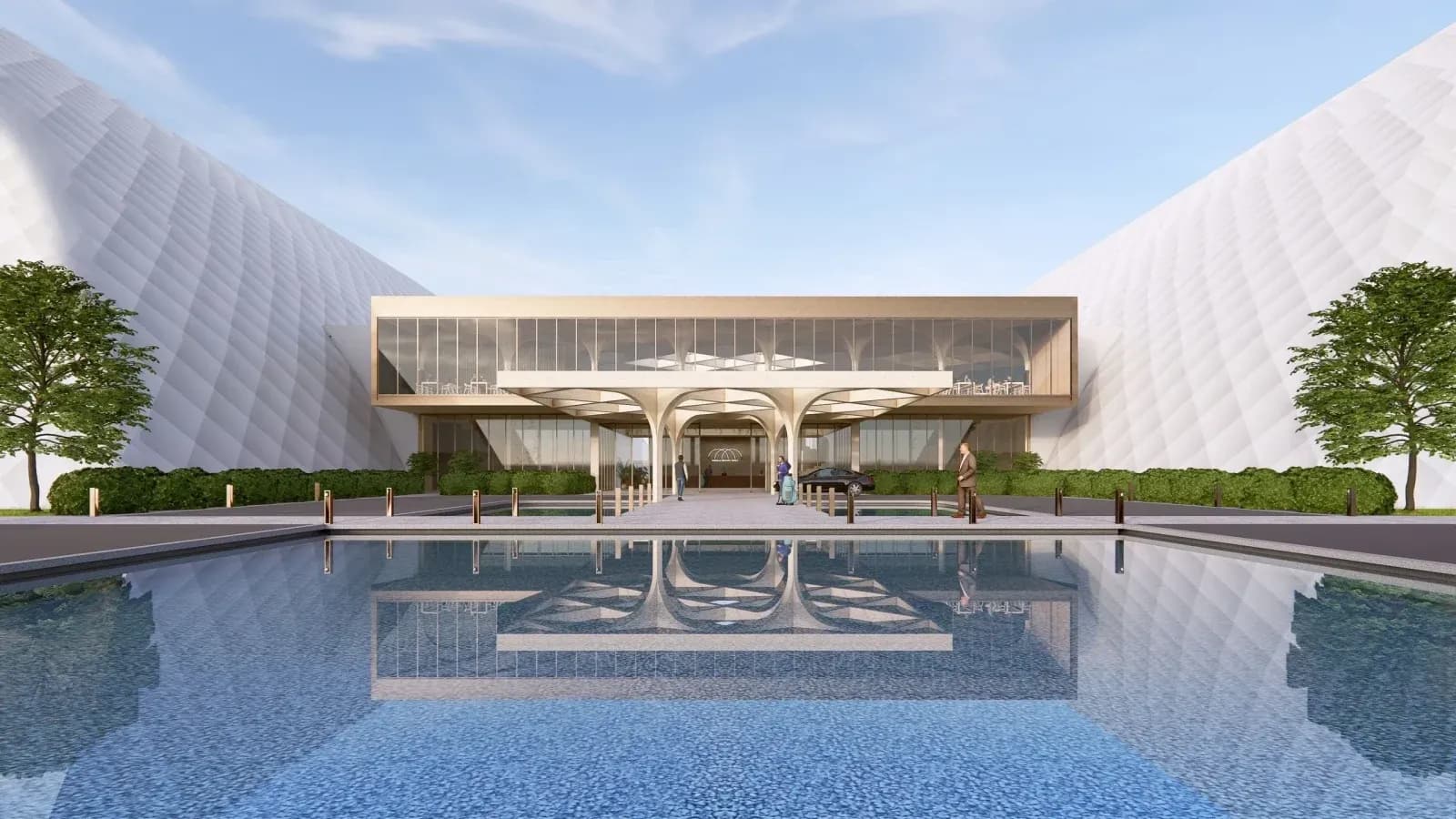
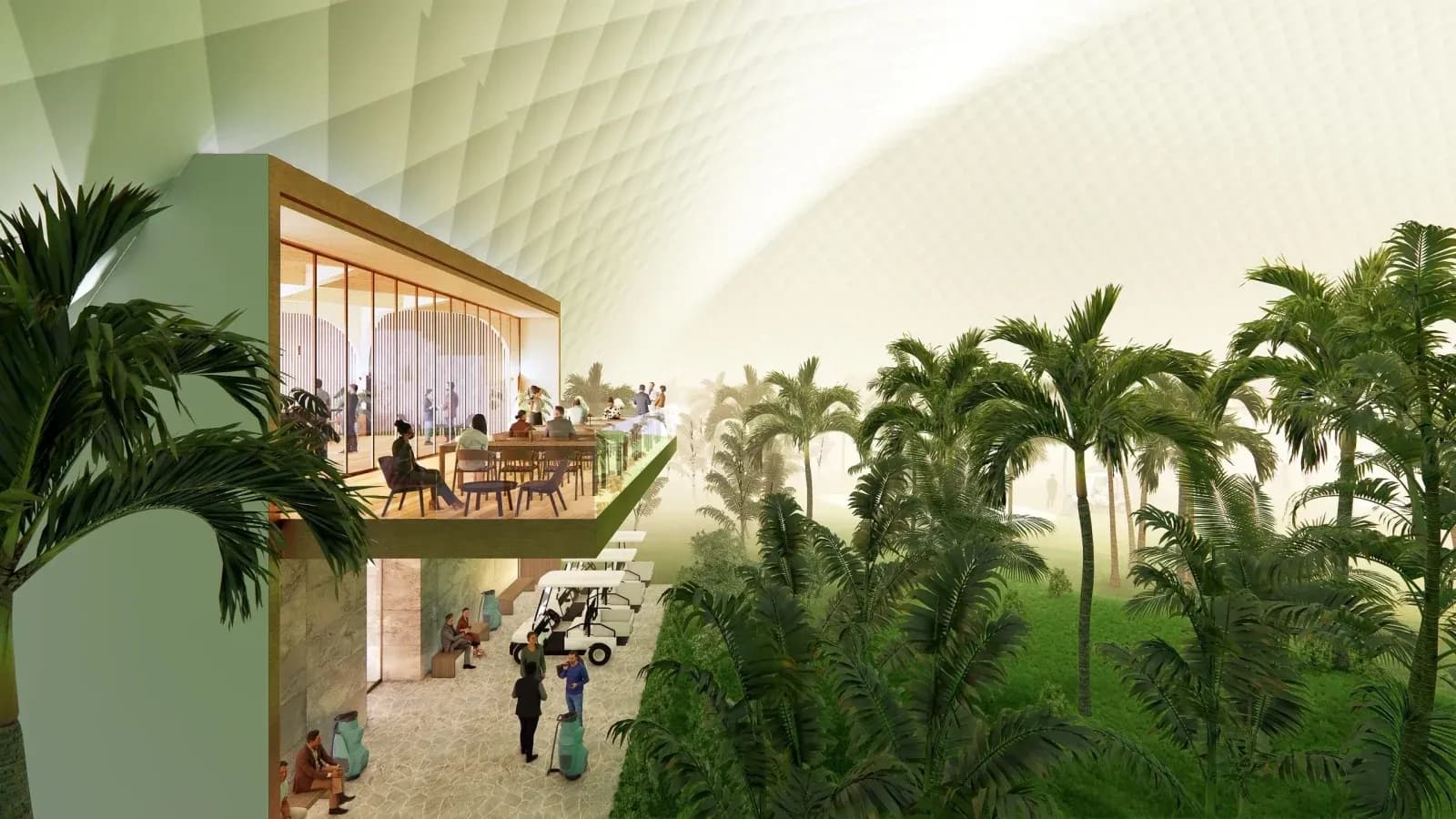
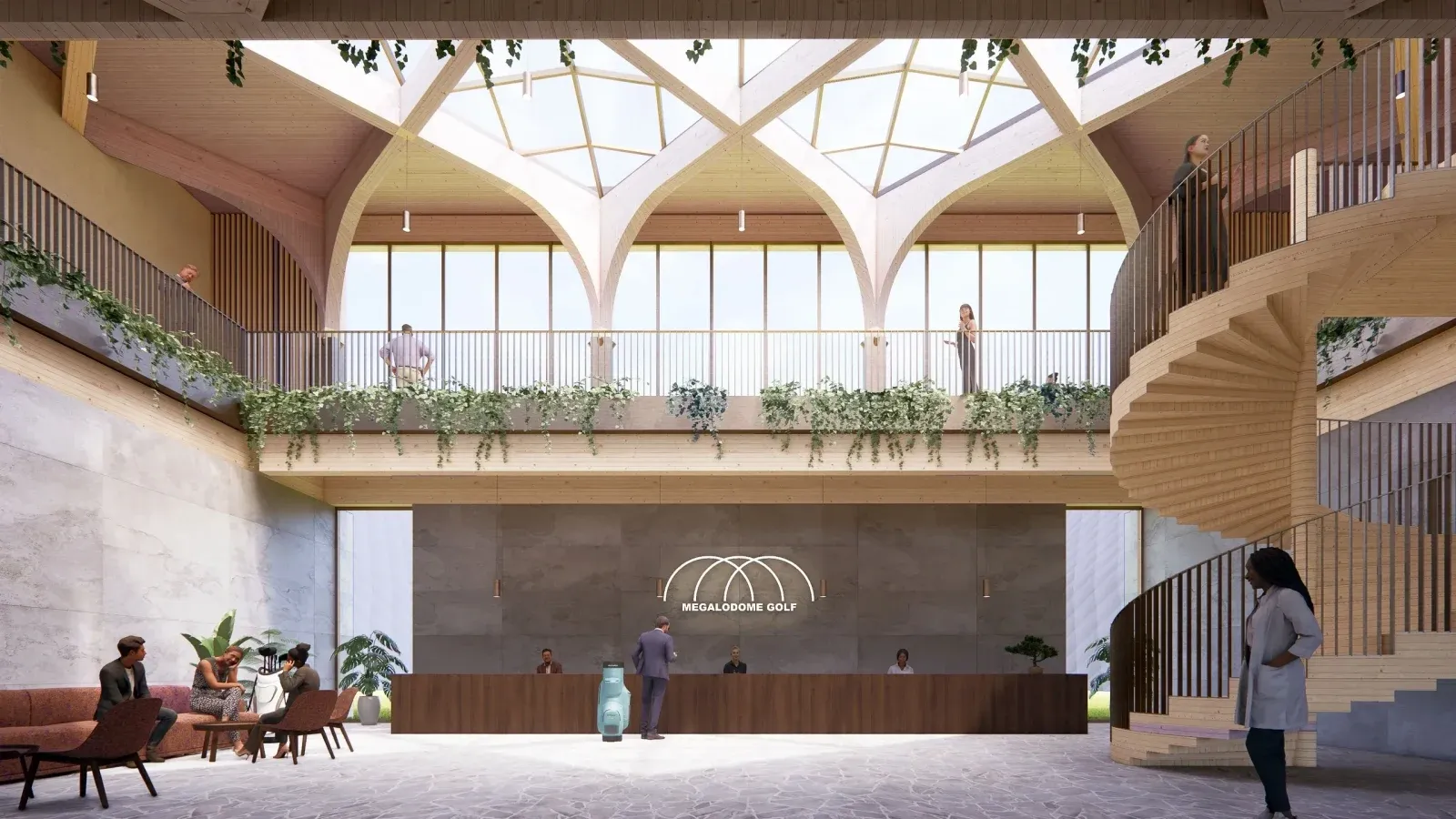
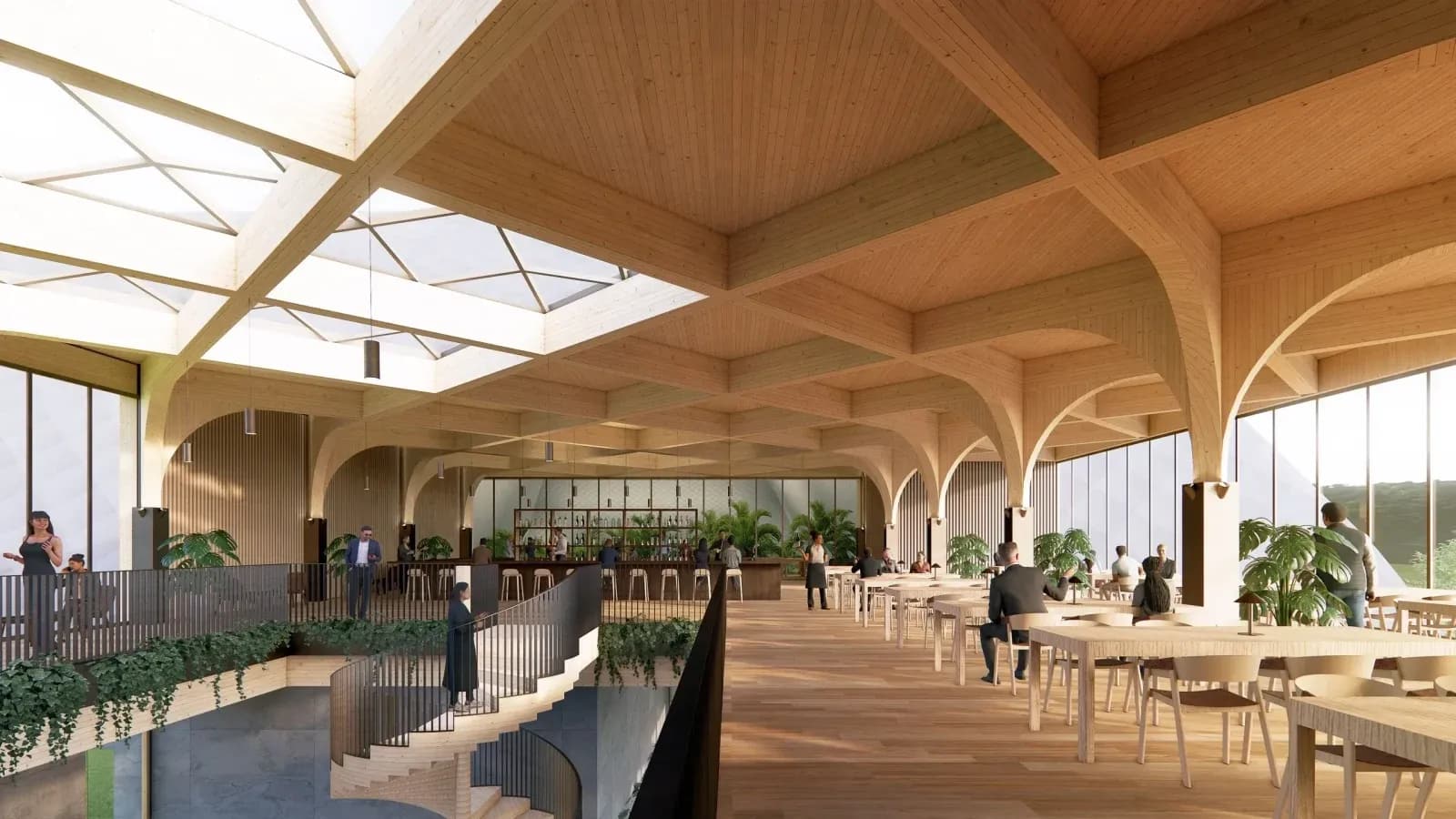
The wider development also includes a clubhouse designed to overlook both the course and practice areas, creating visual and functional connections between sport, leisure, and social interaction. While the architectural firm responsible for the broader built environment has yet to be publicly announced, the programme points toward a mixed-use recreational concept that blends sports architecture with hospitality and community-focused design.

A fourth dome will house a 275-yard driving range and comprehensive practice facilities, expanding the project beyond traditional indoor golf concepts.A fourth dome will house a 275-yard driving range and comprehensive practice facilities, expanding the project beyond traditional indoor golf concepts. Image: Megalodome Golf
A fourth dome will house a 275-yard driving range and comprehensive practice facilities, expanding the project beyond traditional indoor golf concepts.Image: Megalodome Golf

Design challenges and innovation

Creating an indoor environment suitable for a sport traditionally defined by open landscapes presents complex architectural challenges. Structural span, climate control, lighting simulation, acoustics, and visual openness must all be carefully balanced to avoid a sense of enclosure.

The height and volume of the domes are central to this strategy, offering golfers the vertical scale typically associated with sky and open terrain. Unlike conventional indoor golf solutions, Megalodome Golf is as much an architectural statement as it is a recreational facility, replicating not only the mechanics of the game but also its spatial experience.

The domes are designed to rise approximately 110 feet, allowing full swing play and realistic ball flight within an indoor environment.The domes are designed to rise approximately 110 feet, allowing full swing play and realistic ball flight within an indoor environment. Image: Megalodome Golf
With construction targeted toward a fall 2027 opening, Megalodome Golf is positioned to reshape expectations around indoor sports facilities. As climate variability increasingly affects outdoor recreation, developments like this may signal the emergence of new hybrid models that merge indoor comfort with authentic outdoor-style play.