Sign up to receive the latest tech news and updates from Property News International straight to your inbox.
By signing up, you will receive emails about property news products and you agree to our terms of use and privacy policy.
@2026 Property News International. All Rights Reserved.
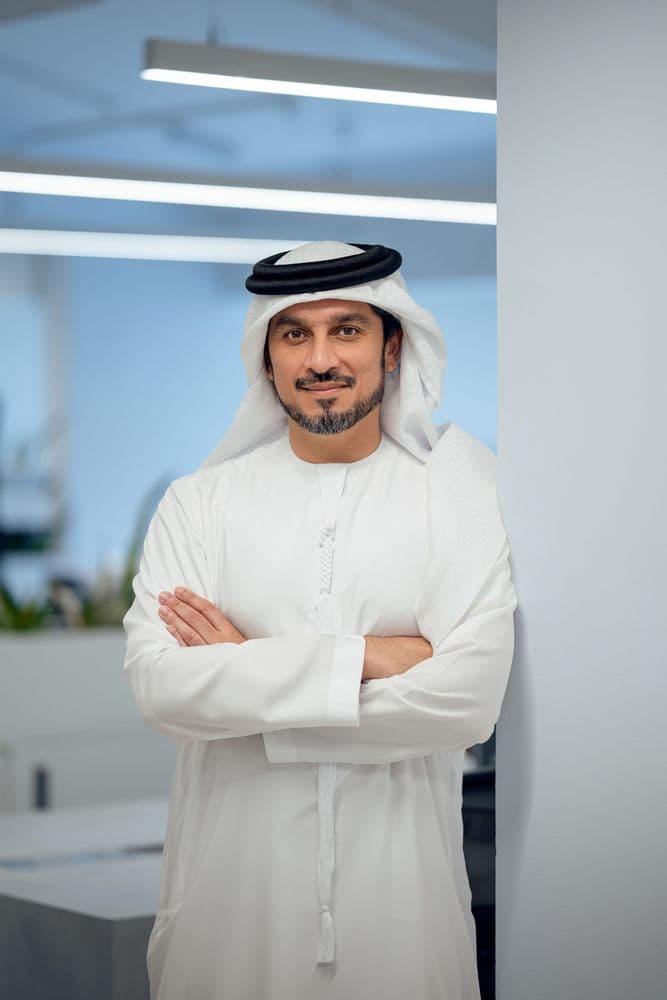
A.R.M. Holding CEO H.E. Mohammad Saeed Al Shehhi shares his vision for Dubai's next generation of communities. Image: SuppliedAs Dubai enters a new era of people-centric urban development, A.R.M. Holding continues to play a defining role in shaping the city's future. The Dubai-based private investment and real estate group of H.H. Sheikh Ahmed bin Rashid Al Maktoum, under the leadership of H.E. Mohammad Saeed Al Shehhi, is redefining development through a long-term vision that places communities, culture and quality of life at the heart of every project.
In this exclusive cover story, Property News International explores how A.R.M. Holding is helping shape the next chapter of Dubai's urban evolution through visionary developments such as the Jebel Ali Racecourse masterplan, HUNA, HIVE and ENTA Mina. H.E. Mohammad Saeed Al Shehhi shares his vision for creating communities that inspire connection, creativity and long-term value, while discussing the future of Dubai's real estate landscape, the growing importance of placemaking, and why the most successful developments of tomorrow will be defined not simply by their architecture, but by the lives they enrich every day.
Dubai has never been a city content with following global trends. It has consistently redefined what modern cities can become; transforming ambitious ideas into globally recognised destinations while setting new benchmarks for investment, innovation and quality of life.
Today, as the emirate enters a new phase of growth under the Dubai 2040 Urban Master Plan, the conversation has shifted. Success is no longer measured simply by iconic skylines or recordbreaking towers. Instead, the focus is increasingly on creating communities where people genuinely want to live, work and belong. The city's next phase is not simply about expanding its footprint; it is about enhancing everyday life.
Few organisations embody this evolution more clearly than A.R.M. Holding. Since its establishment as a private investment group in 2019, A.R.M. Holding has quietly become one of the UAE's most influential organisations, operating across real estate, hospitality, culture,
education and strategic investments. Rather than chasing short-term returns, the company has built its reputation around a philosophy that places long-term prosperity, community and human experience at the centre of development.
At the centre of that vision is H.E. Mohammad Saeed Al Shehhi, Chief Executive Officer of A.R.M. Holding; whose belief is that successful cities are ultimately built around people; not projects.
A.R.M. Holding is a private investment group operating across real estate, hospitality, culture, education and strategic investments. Image: SuppliedUnder the leadership of H.E. Mohammad Saeed Al Shehhi, the organisation has embraced a development philosophy that prioritises patience over speed, stewardship over speculation, and communities over commodities. It is an approach that challenges many of the assumptions traditionally associated with large-scale real estate investment, while aligning closely with Dubai's longterm ambitions for sustainable urban growth.
"Our philosophy can be summarised in two words: enabling prosperity," Al Shehhi tells Property News International.
It is a statement that reflects far more than corporate positioning.
"A.R.M. Holding was established in 2019 as a private investment group, and that private, patient structure shapes every decision we make. We are not building to exit. We hold what we create, which means we live with the consequences of our choices for decades."
That long-term ownership model fundamentally changes how decisions are made.
"It forces you to ask harder questions at the start," he explains. "Will people still want to be here in twenty years? Will this street feel alive on an ordinary Tuesday evening, not just at launch?"
For Al Shehhi, community value and investor value are inseparable.
"I have never seen community value and investor value as competing interests. A place people do not want to leave is, by definition, a resilient asset."
It is a philosophy that challenges conventional real estate thinking by viewing public spaces, culture, education and design not as additional amenities, but as the economic foundations of long-term asset performance.
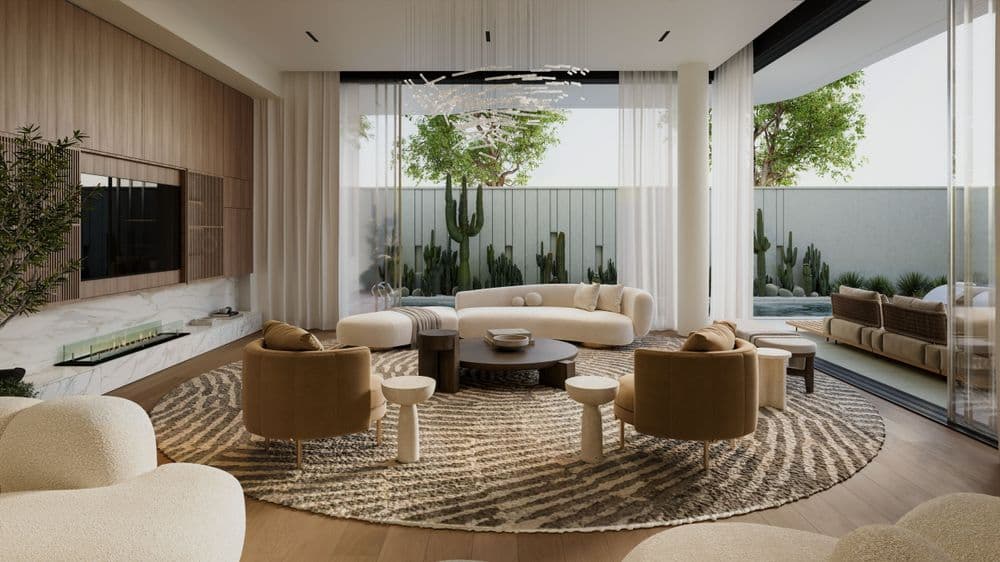
Villa interior at Across H by HUNA - Dubai, United Arab Emirates. Image: SuppliedPerhaps nowhere is this philosophy more evident than A.R.M. Holding's ambitious masterplan for the historic Jebel Ali Racecourse.
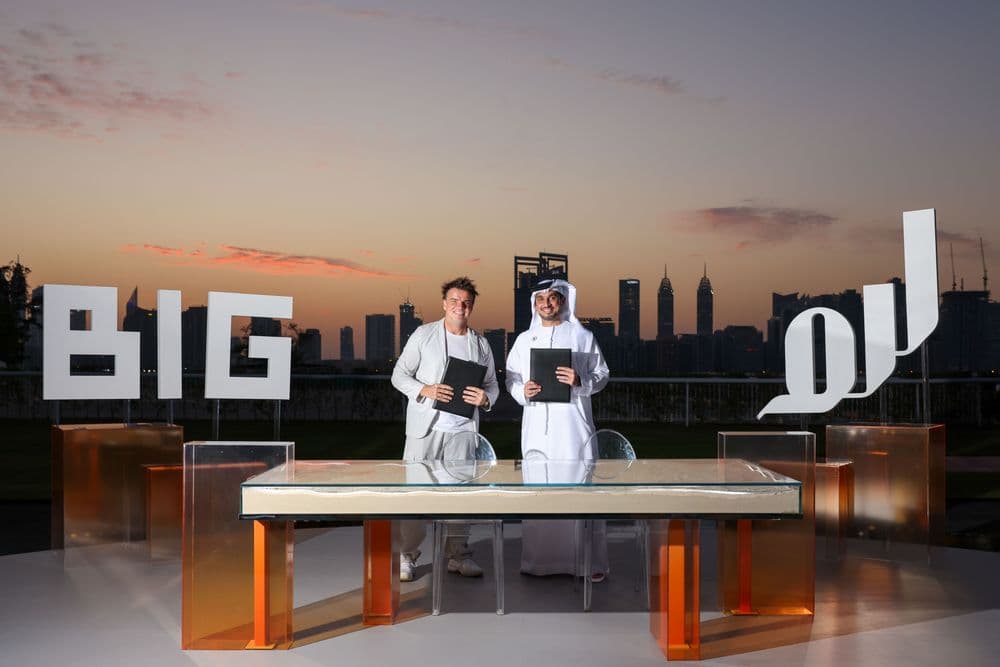
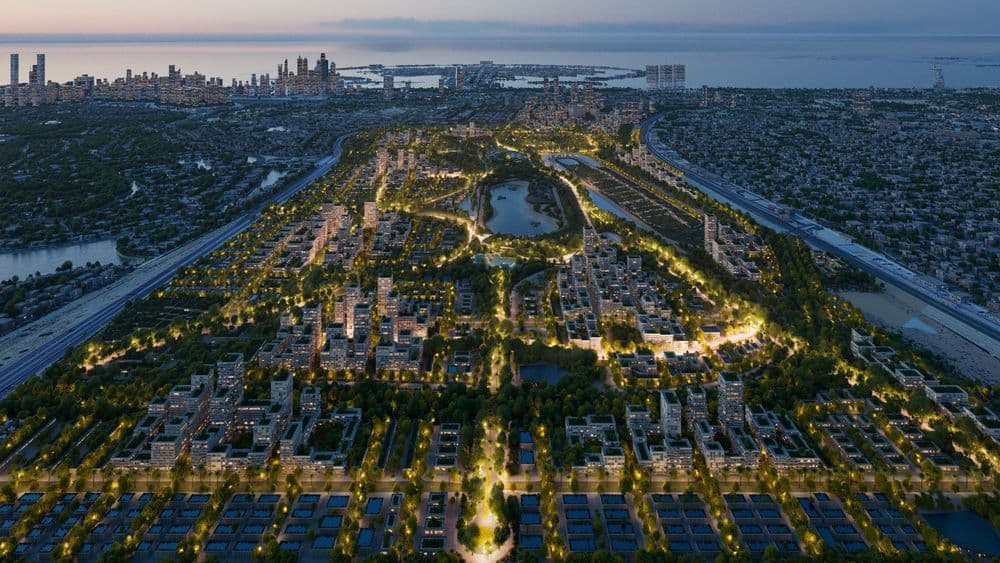
Master planned in collaboration with BIG – Bjarke Ingels Group, the five-square-kilometre development represents one of Dubai's most significant urban regeneration projects and reflects the changing priorities of modern city-making.
Rather than beginning with density calculations or commercial targets, Al Shehhi says the project started with a far simpler question.
"What does a good day look like for a resident?"
That question shaped every aspect of the masterplan.
The district is centred around a major park, with walkable neighbourhoods increasing in density as they approach the green heart of the community. Every resident will live within a five-minute walk of parks, amenities and essential services, while the site's historic equestrian identity remains woven into the district instead of being replaced. Equally significant is the project's emphasis on accountability.
"The masterplan is built around seventeen measurable performance indicators covering wellbeing, sustainability, culture and identity. We wanted a plan we could be held to; not just a set of renderings."
The project is fully aligned with the Dubai 2040 Urban Master Plan, demonstrating that large-scale developments can remain fundamentally humancentred.
"If a five-square-kilometre district can be organised around the walking distance of a child or a grandparent, then any project can."
It is precisely this blend of scale and humanity that Al Shehhi believes will define the next generation of urban development across the UAE.
Occupancy, rental performance, and capital appreciation all follow from the same source: whether daily life in a place is genuinely good.Occupancy, rental performance, and capital appreciation all follow from the same source: whether daily life in a place is genuinely good.
H.E. Mohammad Saeed Al Shehhi and BIG – Bjarke Ingels Group representatives during the signing of the Jebel Ali Racecourse masterplan collaboration. Image: Supplied
Night aerial render of the masterplan around JARC - Dubai, United Arab Emirates. Image: SuppliedAcross A.R.M. Holding's residential portfolio, the focus extends well beyond architecture.
Developments such as HUNA and HIVE have become recognised for creating communities rather than simply delivering homes.
According to Al Shehhi, today's buyers expect far more than premium finishes or attractive floor plans.
"They are asking what life feels like between the buildings: who their neighbours are, what happens at street level, whether there is a reason to walk downstairs on a Friday."
HUNA addresses that through culture.
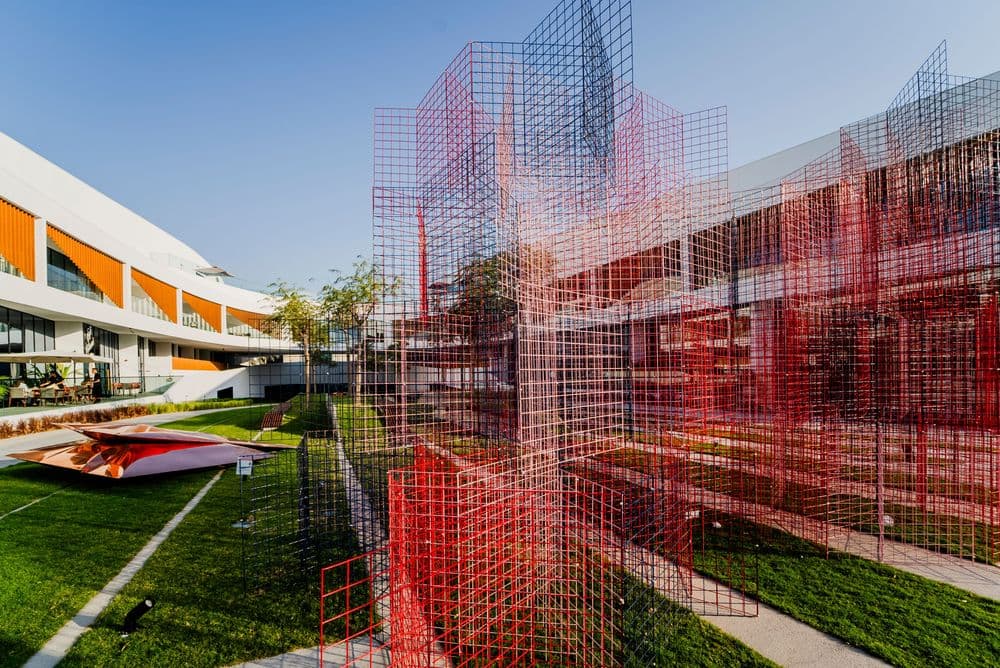
Its sculpture park at H Residence features works from internationally acclaimed and Emirati artists including Rana Begum, Shaikha Al Mazrou, Pablo Reinoso, Khalid Al Banna, Nadim Karam, Sara Naim and Jacob Dahlgren.
Cultural programming, talks and carefully curated retail experiences further strengthen community interaction, while concepts such as Across H on Al Wasl Road activate the surrounding public realm.
HIVE approaches the same challenge from a different perspective.
Designed for younger residents, the concept revolves around shared workspaces, communal kitchens and collaborative environments where community itself becomes part of the product.
"The proof is in behaviour," Al Shehhi says. "When residents host their friends in the building rather than leaving it, when a development becomes part of how a neighbourhood describes itself, the commercial performance follows."
His conclusion is simple: "Placemaking is not a cost of doing business. It is the business."
I have never seen community value and investor value as competing interests. A place people do not want to leave is, by definition, a resilient asset.
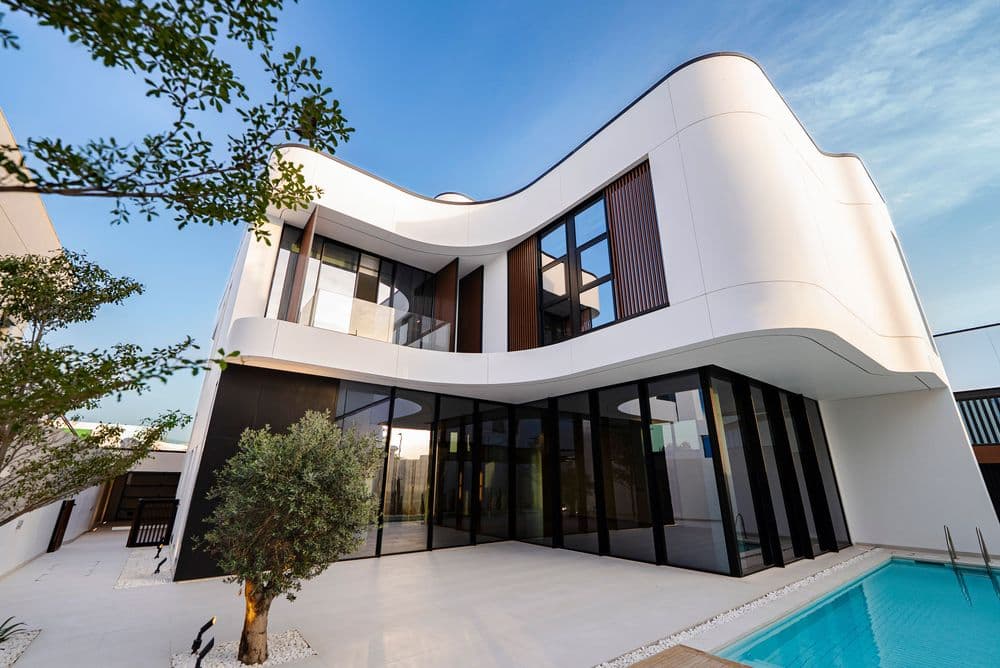
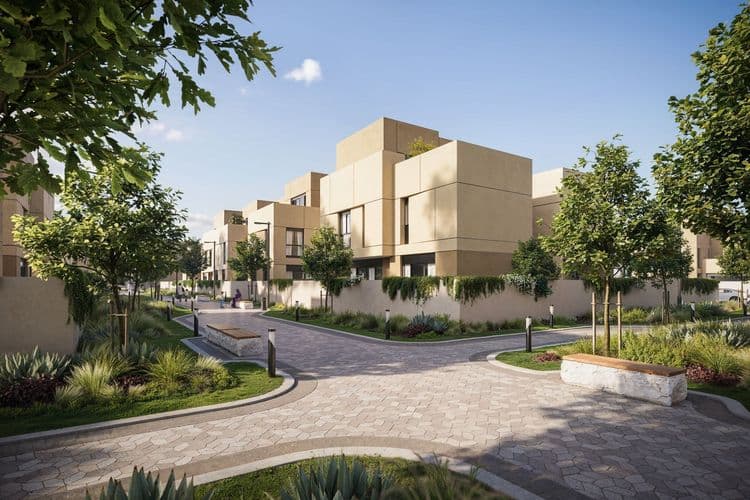
Villa exterior at Across H by HUNA - Dubai, United Arab Emirates. Image: SuppliedAs A.R.M. Holding expands into new markets, the same principles continue to guide investment decisions.
ENTA Mina in Ras Al Khaimah exemplifies this approach.
Rather than beginning with land availability, the concept emerged from observing the evolving lifestyles of HIVE residents.
"We watched HIVE residents mature into buyers who wanted ownership without giving up the sense of community they had found in co-living."
That insight led to the creation of design-led waterfront residences on Hayat Island, integrating co-working and social spaces while responding to Ras Al Khaimah's growing population of young professionals and rapidly expanding tourism economy.
For Al Shehhi, evaluating new markets always begins with three priorities: genuine demand, a clear gap in the market and selecting the right development partner.
"Long-term growth, in our view, follows population quality of life rather than headlines. Markets that are investing in liveability are the markets we want to be in."
One of A.R.M. Holding's defining characteristics is its investment in art, education and public space.
Where many developers treat culture as an amenity, Al Shehhi believes it should be considered essential infrastructure.
"Cities do not compete on square footage. They compete on meaning."
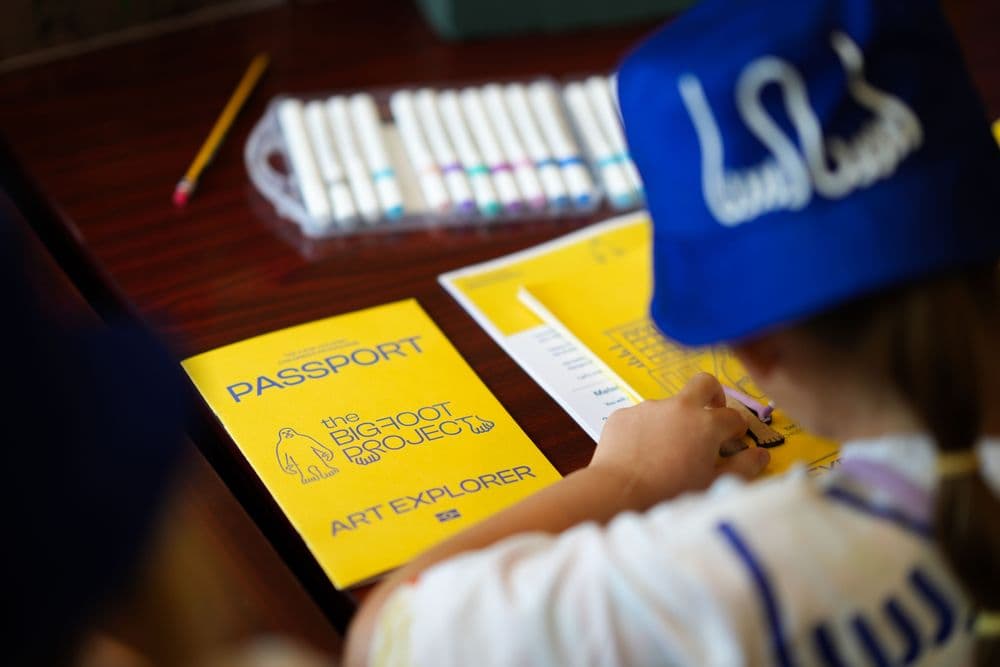
The company serves as Presenting Partner of Art Dubai, Corporate Patron of the Dubai Collection, and its Children's Programme has already reached more than 37,800 students across all seven emirates since 2021.
Within A.R.M. Holding's developments, public art and cultural programming are integrated into projects from the earliest planning stages.
"The return is real, if patient," he says. "Culture gives development a reason to be visited by people who do not live there... It gives residents pride, which sustains its value."
For Al Shehhi, these investments ultimately contribute to something even larger.
"For the UAE more broadly, it builds the creative confidence of a generation, which is the most important asset any city can hold."
Sculpture Park at H Residence by HUNA - Dubai, United Arab Emirates. Image: SuppliedLooking ahead, Al Shehhi believes the future of development will be defined by three priorities.
"Health, proof, and daily life."
Health means designing communities that encourage walking, outdoor activity, cleaner air and stronger social interaction.
Proof means replacing sustainability claims with measurable outcomes and performance indicators that build trust among investors, regulators and residents alike.
Most importantly, successful developments will focus on everyday living.
"The era of competing on spectacle is ending."
"The developments that succeed over the next decade will be the ones that are simply better to live in on an ordinary day: the school run, the evening walk, the coffee downstairs."
He believes Dubai's 2040 Urban Master Plan already provides that blueprint.
"The developers who internalise it earliest will define the market."
A.R.M. Holding's Children programme 2026 Edition. Image: SuppliedWhen asked what legacy he hopes A.R.M. Holding will leave behind, Al Shehhi's answer returns to the same principle that has guided the organisation from the beginning.
"I would like A.R.M. Holding to be remembered for raising the standard of what ordinary life in a city can feel like."
"If, decades from now, a child who discovered art through our Children's Programme is shaping this country's creative life, or a family still chooses to stay in a neighbourhood we built because life there is genuinely good, that is the legacy that matters to me."
His advice to future leaders is equally straightforward:
"Build what you would want to keep."
"Measure what matters to residents."
"And be patient: the most valuable things a place can have—trust and belonging— cannot be accelerated. They can only be earned."
In many ways, those words also describe Dubai itself.
A city built on ambition is now entering an era where lasting success will increasingly be measured not only by what is built, but by how people experience it every day.
Through its commitment to placemaking, culture, sustainability and long-term stewardship, A.R.M. Holding is helping shape that future; one community at a time.

Dubai commercial property sales reached a record $5.31 billion during H1 2026, W Capital reveals

Roshn launches luxury curated villas within its flagship Sedra community in Riyadh

Sheikh Khaled launches Marsa Al Saadiyat, a $27.23 billion, 6.4 million sqm waterfront destination
MERED says Dubai's off-plan market is redefining luxury residential development across the emirate.