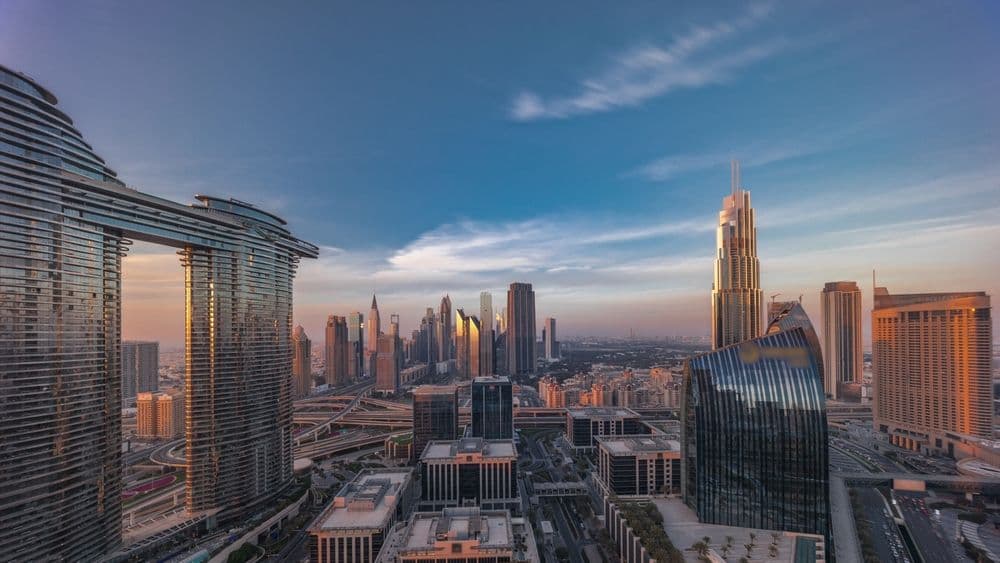
Institutional Demand Drives Market Growth
The report also highlights a sharp increase in transaction values, with the average commercial property sale rising from approximately AED2.8 million during H1 2025 to AED5.7 million in H1 2026, indicating growing demand for premium office assets and strategically located commercial developments.
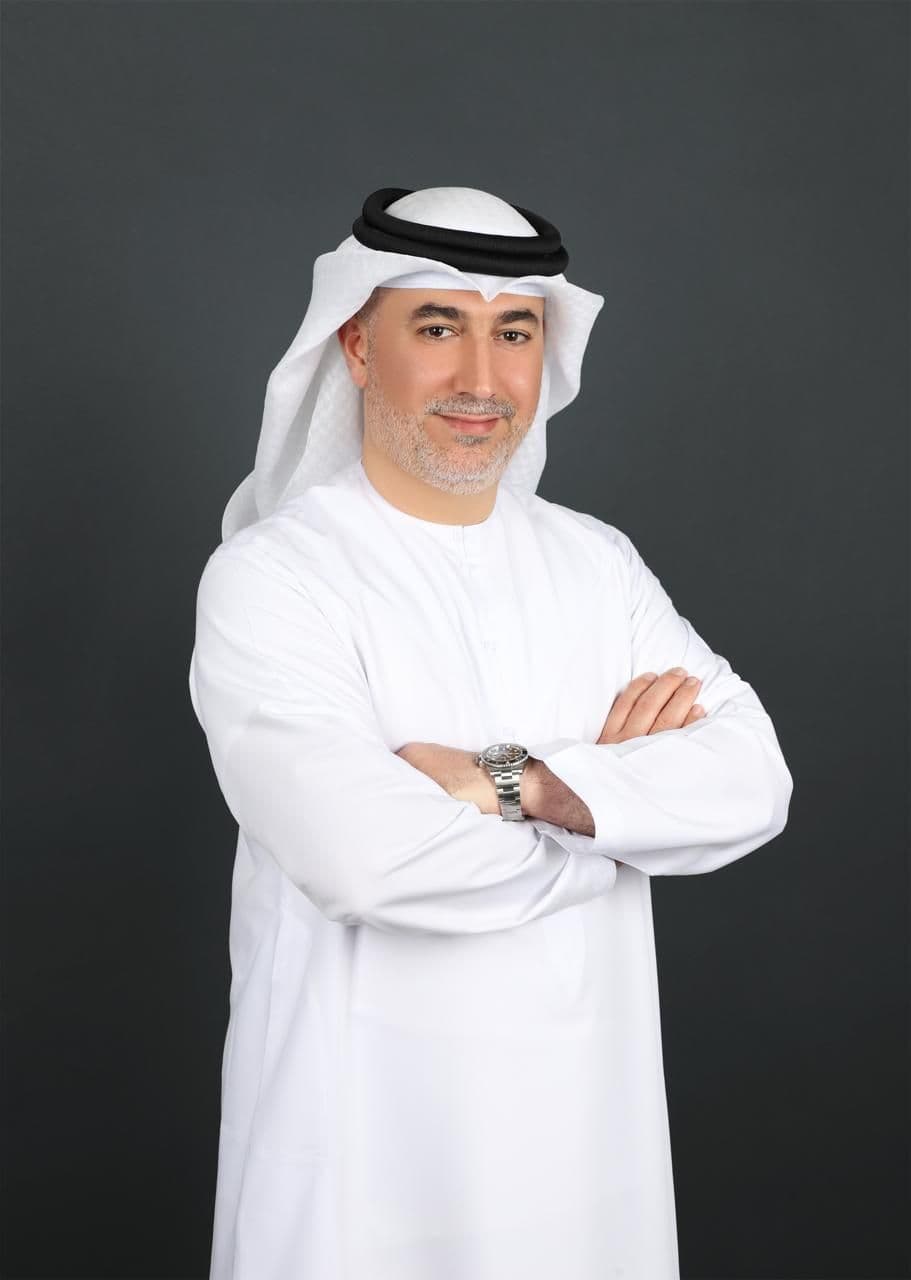
Al Zarooni said institutional investors have become one of the key drivers of the market's long-term growth.
"The fact that six months of sales have already exceeded an entire year's performance clearly indicates that Dubai's commercial real estate market has entered a new phase where institutional demand has become one of the primary drivers of long-term growth."
He added that the continued relocation and expansion of investment funds, global banks, financial institutions, credit rating agencies and multinational companies demonstrates that Dubai has evolved beyond serving as a gateway to regional markets.
According to Al Zarooni, the emirate has become a genuine global centre for managing operations, capital and talent.
Office Assets Continue to Lead the Market
Office properties remained the dominant segment of Dubai's commercial real estate market during H1 2026, accounting for more than 81% of total commercial sales value.
Office transactions generated $4.30 billion (AED15.8 billion) through 2,569 transactions, while retail properties recorded $1.01 billion (AED3.7 billion) across 846 transactions.
Off-plan office developments led market activity, generating $3.54 billion (AED13 billion) through 1,668 transactions, compared with $735 million (AED2.7 billion) for completed office assets.
Meanwhile, off-plan retail units generated $681 million (AED2.5 billion), while completed retail properties contributed $300 million (AED1.1 billion).
According to W Capital, the dominance of off-plan office developments reflects sustained investor confidence in future demand, supported by new commercial projects incorporating contemporary architecture, sustainability standards, smart technologies and flexible workplace environments.
Al Zarooni noted that the limited availability of Grade A office space continues to support both rental growth and capital appreciation.
"The combination of robust corporate demand and constrained supply continues to strengthen market fundamentals. However, developers must carefully expand the pipeline of premium office projects to ensure supply keeps pace with the emirate's long-term economic growth."
He added that future office developments should focus not only on increasing supply but also on delivering smart, sustainable and flexible workplaces capable of meeting the evolving requirements of international businesses.
Business Bay Leads Office Investment
Business Bay remained Dubai's leading office investment destination during the first half of the year, recording 814 transactions worth $2.18 billion (AED8 billion), representing more than half of the emirate's total office sales value.
It was followed by:
Second Commercial Centre – $436 million (AED1.6 billion)
TECOM Site A – $381 million (AED1.4 billion)
Dubai Maritime City – $272 million (AED1 billion)
Jumeirah Lakes Towers (JLT) – $248 million (AED910 million)
According to W Capital, this geographical diversification reflects the maturity of Dubai's commercial property market, with demand spreading across multiple business districts offering a range of office formats, price points and infrastructure suited to multinational corporations, SMEs and entrepreneurs.
Positive Outlook for Commercial Real Estate
W Capital believes Dubai's commercial real estate market has demonstrated resilience despite ongoing geopolitical uncertainty and global economic pressures, highlighting the strength of genuine business demand and the emirate's favourable investment environment.
Al Zarooni said long-term corporate expansion strategies, including headquarters relocations, workforce growth and operational expansion, have fundamentally changed the nature of market demand compared with previous cycles.
He also emphasised the wider economic impact generated by commercial real estate growth.
"When a company establishes a new office, it creates demand well beyond commercial real estate. Employees require housing, schools, retail, hospitality, transport and professional services. Every new office therefore acts as a catalyst for broader urban economic growth."
Today, more than 50,000 professionals work within the Dubai International Financial Centre (DIFC), illustrating how established business clusters continue to support economic activity across multiple sectors.
Al Zarooni expects Dubai's commercial real estate market to maintain its strong momentum, supported by continued corporate expansion, sustained foreign investment and growth across the financial, technology and professional services sectors.
"Commercial real estate has become one of the clearest indicators of Dubai's economic strength. Record sales are no longer simply measuring investor appetite for office assets, they reflect the growing number of businesses choosing Dubai as their long-term base for regional and global operations."