Property News International

Change region:

GlobalcheckMiddle East

Subscribe to Our Newsletter

Sign up to receive the latest tech news and updates from Property News International straight to your inbox.

By signing up, you will receive emails about property news products and you agree to our terms of use and privacy policy.

@2026 Property News International. All Rights Reserved.

Blends Media
A Blends Media Group Production

Exclusive Interview: Amna Fayaz on the Future of Workplace Acoustics

Amna Fayaz, Senior Executive Manager at Europhon Acoustics, discusses workplace acoustics, hybrid offices, sustainability and the future of commercial design across the GCC.
Amna Fayaz Khazi, Senior Executive Manager, Europhon AcousticsAmna Fayaz Khazi, Senior Executive Manager, Europhon Acoustics. Image: Supplied

As organisations across the GCC rethink how offices are designed and used, workplace quality is increasingly being measured by more than aesthetics and functionality. Employee wellbeing, collaboration, sustainability and productivity have become central to the modern workplace, placing greater emphasis on creating environments that support people as effectively as they support business performance.

One of the most significant yet often overlooked aspects of workplace design is acoustics. From improving concentration and speech clarity to enhancing employee wellbeing and supporting hybrid working, acoustic performance is now recognised as a strategic component of successful commercial developments rather than simply a finishing touch.

In this exclusive interview with Property News International, Amna Fayaz, Senior Executive Manager at Europhon Acoustics, discusses how acoustic design is reshaping workplaces across the GCC, the role it plays in creating healthier and more sustainable buildings, and why integrating acoustics from the earliest stages of design is becoming essential for future-ready developments.

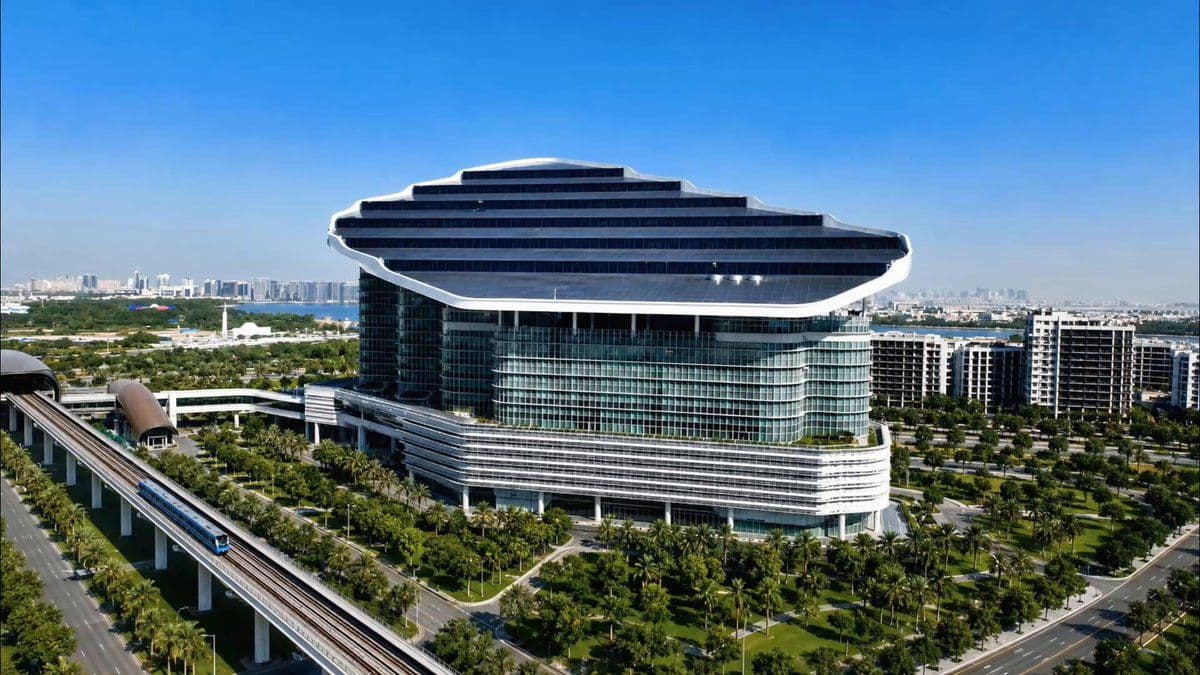
DEWA Al Shera'a Headquarters - Dubai, United Arab EmiratesDEWA Al Shera'a Headquarters - Dubai, United Arab Emirates. Image: Supplied

As organisations continue to redefine the workplace, how has the role of acoustics evolved from a design consideration to a strategic element of office planning?

Over the past decade, we have seen a fundamental shift in how organisations approach workplace design. Acoustics has become a strategic design consideration that directly influences employee wellbeing, collaboration and business performance.

As organisations compete to attract and retain talent, the quality of the workplace experience has become just as important as the quality of the building itself. Today's offices are expected to support focused work, collaboration, video conferencing, informal meetings and social interaction, often within the same open environment. Achieving that balance requires acoustic intent to be embedded from the earliest stages of design rather than introduced as a corrective measure later.

Ultimately, the most successful workplaces are those where people can think clearly, communicate comfortably and feel genuinely supported by their environment. Acoustics have become fundamental to creating that experience.

Noise is often described as an invisible workplace challenge. How does acoustic performance influence employee wellbeing, concentration and productivity in modern office environments?

Unlike lighting or furniture, poor acoustics often go unnoticed until they begin affecting how people work. Continuous exposure to background conversations, reverberation, building services and external noise can reduce concentration, increase mental fatigue and make communication more difficult throughout the day.

Many employees don't necessarily recognise poor acoustics as the source of their frustration or mental exhaustion. They simply leave work feeling more fatigued, less focused and mentally drained. Creating balanced acoustic environments significantly improves how people concentrate, collaborate and communicate, while reducing unnecessary sensory overload.

Well-designed acoustic environments minimise distractions, improve speech clarity and create spaces where employees can perform at their best. This is particularly important as organisations increasingly prioritise employee wellbeing alongside productivity, recognising that healthier workplaces naturally support stronger business performance.

We have observed this first-hand across commercial developments throughout the GCC. At projects such as DEWA Al Shera'a Headquarters, the objective was to create an environment that actively supports employee wellbeing through greater acoustic comfort, allowing people to work more effectively while enhancing the overall workplace experience.

Sustainability is becoming a priority across the built environment. How can acoustic solutions contribute to greener, healthier and more environmentally responsible workplaces?

Sustainability today extends well beyond operational efficiency or energy performance. Increasingly, it is being measured by the overall quality, resilience and longevity of the built environment, as well as the health and wellbeing of the people who occupy it.

Acoustic solutions play an important role in improving indoor environmental quality without compromising architectural intent. When integrated alongside natural daylight, thermal comfort, ventilation and biophilic design principles, they help create workplaces that are healthier, more comfortable and designed for long-term performance.

We are also seeing growing demand for acoustic systems that incorporate durable materials, recycled content and low-maintenance finishes, supporting broader sustainability objectives while extending the lifecycle of interior environments. These considerations contribute towards internationally recognised sustainability and wellbeing frameworks, including LEED, and WELL, where occupant comfort forms an increasingly important part of overall building performance.

Projects such as DEWA Al Shera'a Headquarters demonstrate how acoustic design is becoming part of a much broader conversation around sustainable workplaces that prioritise environmental responsibility alongside human wellbeing.

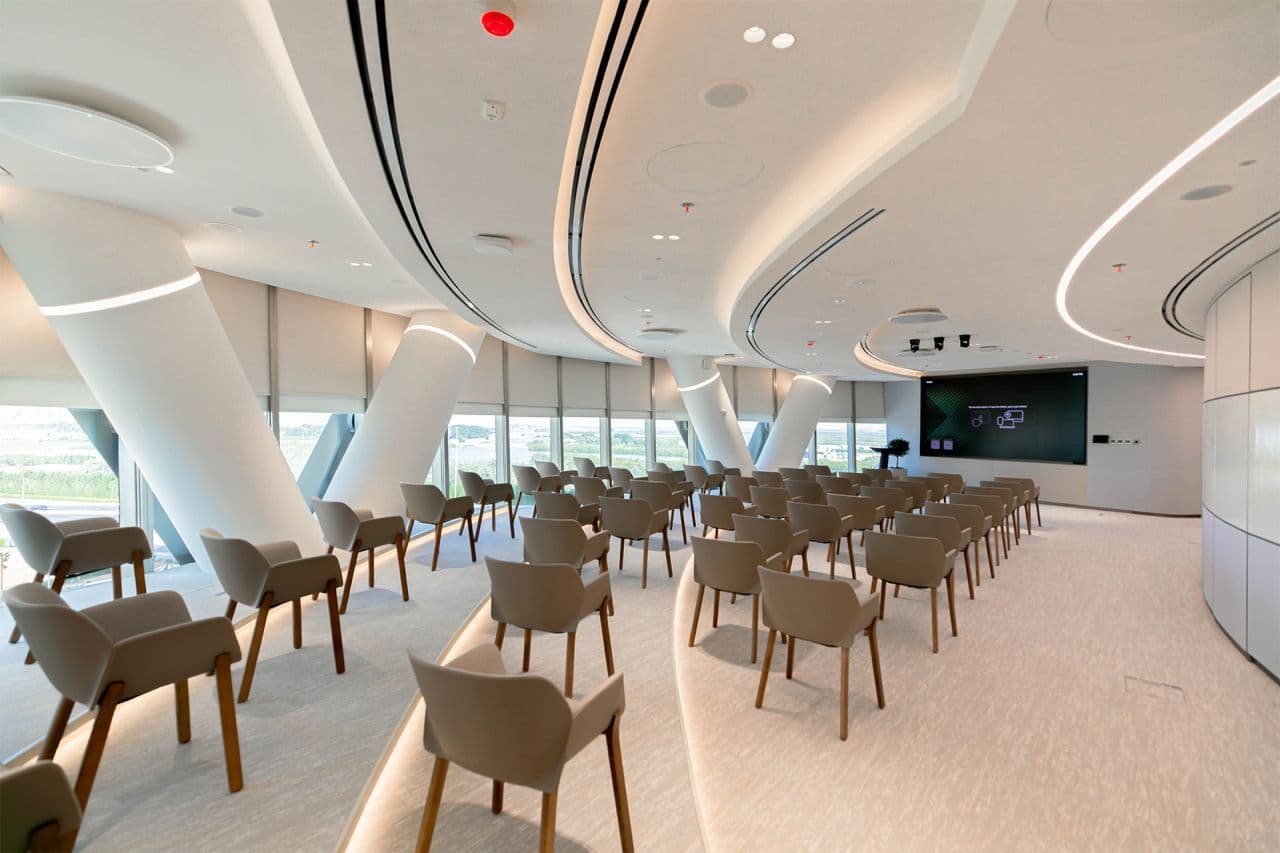
Abu Dhabi Investment Council (ADIC) headquarters, where workplace design integrates acoustic performance to support collaboration, productivity and employee wellbeing.Abu Dhabi Investment Council (ADIC) headquarters, where workplace design integrates acoustic performance to support collaboration, productivity and employee wellbeing. Image: Supplied

Hybrid working has transformed how offices are designed and used. What new acoustic challenges have emerged, and how are developers and occupiers responding to these changing workplace requirements?

Hybrid working has fundamentally redefined the purpose of the office. Today's workplaces are increasingly designed as destinations for collaboration, innovation, mentoring and client engagement, reflecting the evolving role of the office. This shift has introduced new acoustic challenges, as multiple activities now occur simultaneously within open and flexible environments.

One of the most significant changes has been the increase in virtual communication. Video conferencing, online meetings and hybrid collaboration require greater speech clarity and privacy, while open-plan environments still need to encourage interaction without creating excessive background noise.

Developers and occupiers are responding by integrating acoustic ceilings, wall systems, partitions and sound-absorbing finishes from the earliest design stages. The most effective workplaces support a variety of workstyles, creating balanced environments where collaboration, focused work, learning and informal interactions can all thrive.

This evolution is particularly evident across new corporate headquarters, commercial developments and government workplaces throughout the GCC. Projects including Abu Dhabi Investment Council and DEWA Al Shera'a Headquarters reflect how organisations are designing workplaces that prioritise flexibility, wellbeing and acoustic comfort as equally important measures of workplace quality.

From your experience across commercial, government and residential projects, what are the most common misconceptions organisations have about acoustics, and when should acoustic planning be integrated into a project?

One of the biggest misconceptions is that acoustics can simply be solved by installing acoustic panels after a building has been completed. In reality, the most expensive acoustic solution is often the one introduced after occupants have already begun experiencing problems.

Effective acoustic performance is the result of a coordinated design strategy that considers room geometry, ceiling systems, glazing, interior finishes, mechanical services and, most importantly, how people will actually use each space. By the time employees begin complaining about noise, the opportunity to achieve the most effective acoustic outcome has often passed.

The most successful projects are those where acoustics is considered during the concept stage. Early collaboration between architects, interior designers, consultants and acoustic specialists reduces costly redesigns while ensuring buildings achieve both their architectural vision and performance objectives.

Across commercial headquarters, government facilities, museums, healthcare environments and hospitality developments, we are seeing greater recognition that acoustic planning is an essential component of creating environments that support wellbeing, productivity and long-term building performance.

What trends do you expect to shape the future of workplace design across the GCC, and what role will acoustics play in creating more sustainable, productive and human-centric environments?

The future of workplace design across the GCC will increasingly be defined by people rather than buildings. Organisations are recognising that attracting and retaining talent depends on creating workplaces where employees genuinely enjoy spending time, feel connected to their environment and are supported throughout the working day.

We are already seeing a growing emphasis on hospitality-inspired workplaces, flexible environments, wellness-focused design and sustainability-led developments that prioritise employee experience alongside operational performance. As artificial intelligence automates routine tasks, offices will continue evolving into destinations for collaboration, creativity, innovation and relationship building, making the quality of the physical workplace more important than ever.

Alongside natural daylight, thermal comfort and biophilic design, acoustics will become one of the defining elements of workplace quality. Spaces that effectively manage sound enable people to focus without distraction, collaborate with confidence and communicate more comfortably, ultimately creating healthier and more inclusive environments for everyone.

Lasting workplace value comes from creating environments that enable people to work comfortably, collaborate effectively and perform at their best. Great acoustic design is often invisible, yet its impact is immediate and lasting. When thoughtfully integrated from the beginning, acoustics becomes a powerful contributor to wellbeing, sustainability, productivity and the overall human experience of the workplace.