Property News International

Change region:

GlobalcheckMiddle East

Subscribe to Our Newsletter

Sign up to receive the latest tech news and updates from Property News International straight to your inbox.

By signing up, you will receive emails about property news products and you agree to our terms of use and privacy policy.

@2026 Property News International. All Rights Reserved.

Blends Media
A Blends Media Group Production

Dubai Loop Project to Launch in Two Years With No Traffic Interruption

Dubai Loop construction is expected to cause no traffic disruption as Parsons supports design work on the underground transit system linking DIFC and Dubai Mall.
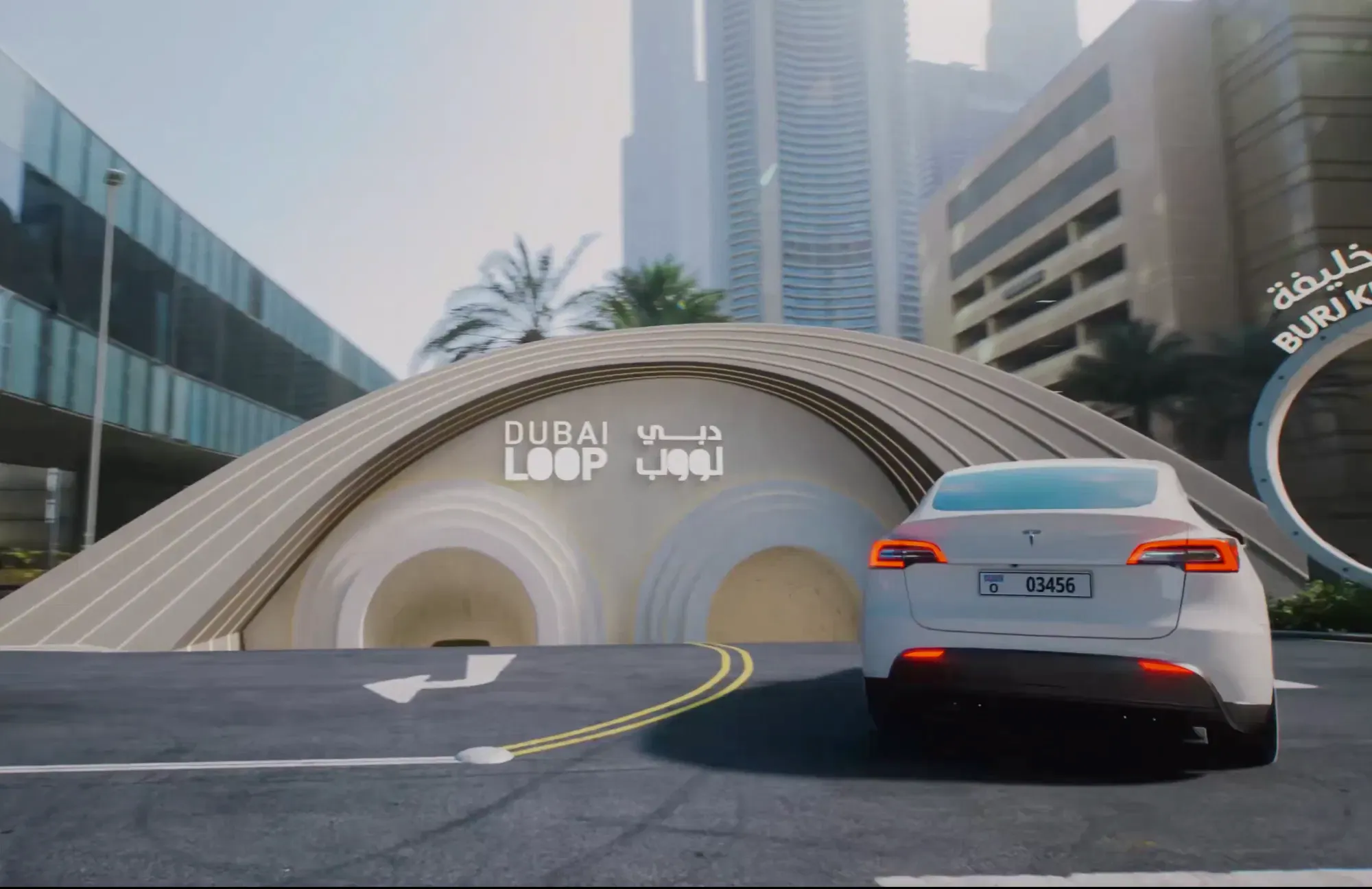
Dubai Loop construction is expected to cause no traffic interruption as work advances on the underground transit system.Dubai Loop construction is expected to cause no traffic interruption as work advances on the underground transit system.

DUBAI, United Arab Emirates - Construction of the Dubai Loop is expected to cause no interruption to traffic, according to a senior transport leader involved in the project, as the emirate advances plans for a high-speed underground road system designed to reduce congestion across key urban districts.

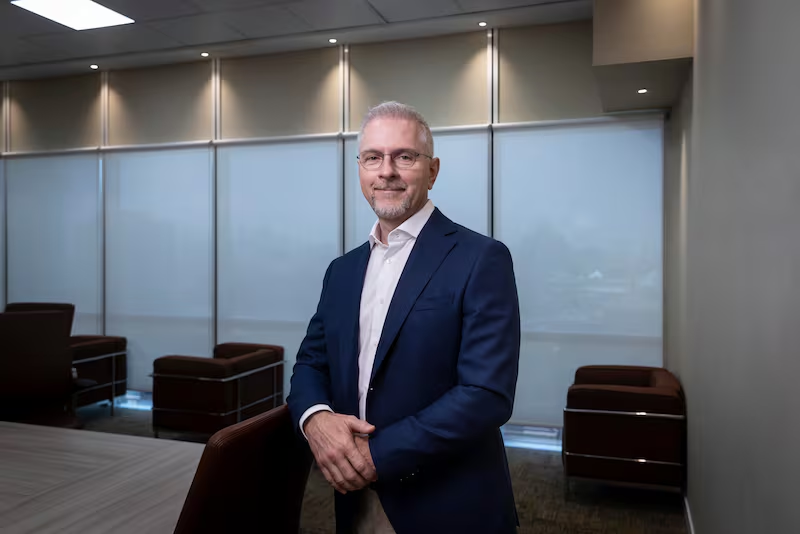
Pierre Santoni, President of Infrastructure in Europe, the Middle East and Africa at Parsons Corporation, said the project involves complex tunnelling beneath some of Dubai’s busiest areas, requiring careful coordination around utilities, building foundations, and existing underground infrastructure.

Parsons, previously named as project management consultants for the Dubai Metro Blue Line, was awarded a nine-month contract in May to support the design of the Dubai Loop scheme, which is being led by Elon Musk’s The Boring Company.

“Underneath there's a lot of utilities. You have foundations from those tall buildings of DIFC and going towards the mall [Dubai Mall]. You have a number of underground utilities – water, power, electricity, gas lines that are there,” he said.

“You need to avoid all that. So weaving through that, and you have a tunnel that from DIFC going towards Business Bay, you have a tunnel there that goes through downtown, so you need to avoid all of this.”

Construction work on the first phase of the Dubai Loop is set to begin next year, with the system expected to be up and running within two years. The timeline comes as tunnelling work has also begun for the Dubai Metro Blue Line.

The Dubai Metro Gold Line, a further extension of the public transport network due to open in 2032, will be a 42-kilometre underground route, highlighting Dubai’s growing focus on underground infrastructure as part of its wider strategy to ease traffic congestion.

Dubai’s Roads and Transport Authority said in February that the first phase of Dubai Loop would cost $153.8 million, equivalent to Dh565 million, and connect DIFC with Dubai Mall as an alternative transit network built beneath the city’s roads, using autonomous Tesla cars.

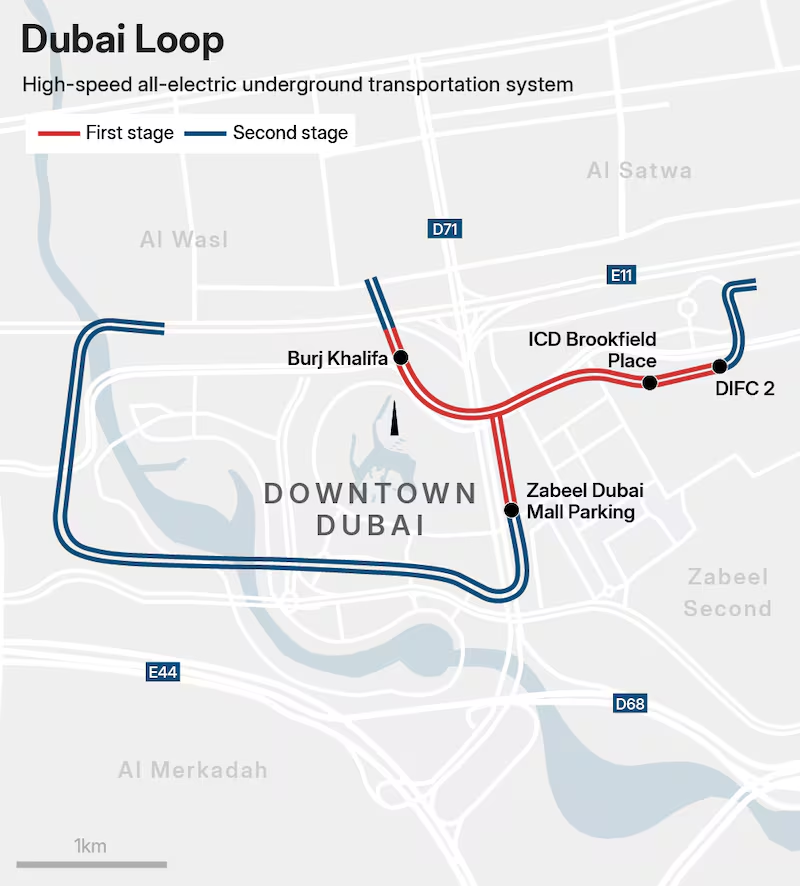
The first four stations will be located at Burj Khalifa, DIFC 2, Zabeel Dubai Mall Parking, and ICD Brookfield Place.

Pierre Santoni, President of Infrastructure in Europe, the Middle East and Africa at Parsons CorporationPierre Santoni, President of Infrastructure in Europe, the Middle East and Africa at Parsons Corporation

No disruption to traffic

While the Dubai Loop will serve some of the city’s busiest districts, Santoni said motorists should not expect the type of roadworks and traffic delays often associated with major above-ground transport projects.

“The impact will be very minimal,” he said. “You will have a small access area where the construction will be. The plot has been allocated, a vacant plot around that will be fenced. As far as everybody's concerned, there will be no impact. That's why the solution was selected. There's no interruption of traffic or anything like that envisaged.”

Once operational, Dubai Loop aims to reduce travel times from DIFC to Dubai Mall from around 20 minutes to just three minutes. The system is eventually expected to transport more than 13,000 passengers a day between key business and tourism destinations.

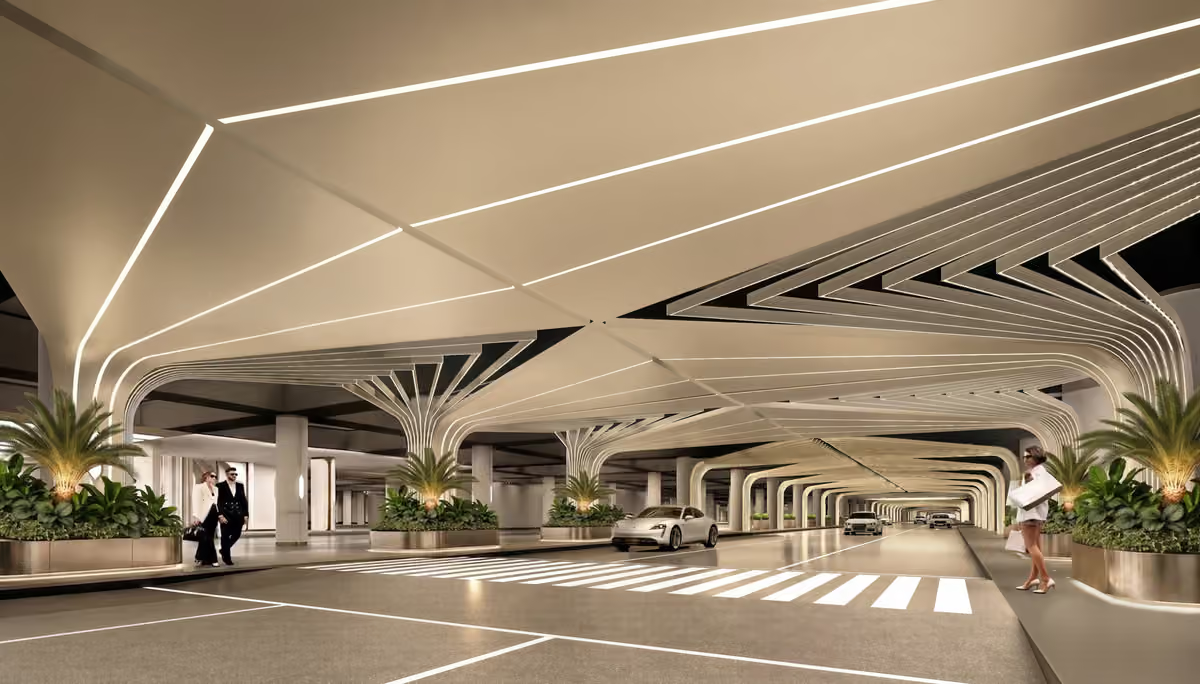
Fleets of bookable electric vehicles will travel through tunnels measuring 3.6 metres in diameter.

Parsons eyes further role in Dubai Loop

Parsons is seeking to continue its involvement in the infrastructure scheme beyond its initial short-term contract and is expected to discuss potential construction participation with The Boring Company in the coming weeks.

“It certainly is our intention. We will be talking to Dubai, to The Boring Company in due time about that,” Santoni said.

The project remains in the design phase, with construction expected to begin in about nine months, he added.

Dubai Loop’s first phase will connect DIFC with Dubai Mall through an underground route, with stations planned at Burj Khalifa, DIFC 2, Zabeel Dubai Mall Parking, and ICD Brookfield Place.Dubai Loop’s first phase will connect DIFC with Dubai Mall through an underground route, with stations planned at Burj Khalifa, DIFC 2, Zabeel Dubai Mall Parking, and ICD Brookfield Place.

Cutting travel times across Downtown Dubai

Santoni said the project could significantly improve short-distance travel between key districts such as DIFC and Dubai Mall, particularly during peak periods.

“It's very frustrating because you can see it's right there and sometimes it could take you 20-25 minutes to get there. We've all done it, but now you get into that and you exit directly there three minutes later, so you can go there for lunch and come back”.

A similar network is already operational in Las Vegas, connecting the city’s Convention Centre with Harry Reid International Airport.

Santoni said he expects the Dubai version to be successful. “it's a short distance. It's relatively straight. I suspect we're not gonna have too many problems with operations.”

Complex underground challenges

Despite the expected limited surface disruption, tunnelling beneath dense urban areas presents significant engineering challenges, particularly where underground utilities, pipes, sewer systems, and building foundations must be carefully avoided.

“The challenge is largely associated with first getting underground in a very dense area. The Boring Company technology is very applicable to dense urban environments. It minimises the footprint of the access shaft and the exit shaft of the tunnel-boring machine,” Santoni said.

UAE push for autonomous transport

The Dubai Loop also aligns with the UAE’s wider push toward autonomous mobility. The country aims for 25 percent of all trips to be autonomous by 2030.

The initial rollout of the Dubai Loop will include drivers, but the Tesla vehicles are expected to become fully self-driving soon after the system opens.

“This is the way of the future. This is how the Teslas have been designed, to become fully autonomous. I think we're going to get there very quickly,” Santoni said. “We're very close to full autonomy there.”