Property News International

Subscribe to Our Newsletter

Sign up to receive the latest tech news and updates from Property News International straight to your inbox.

By signing up, you will receive emails about property news products and you agree to our terms of use and privacy policy.

@2026 Property News International. All Rights Reserved.

Blends Media
A Blends Media Group Production

Snøhetta and NH Architecture renew Melbourne’s State Theatre

Bardia S.
Bardia S.
Oct. 09, 2026
Melbourne’s Ian Potter State Theatre has reopened following a major renewal by NH Architecture and Snøhetta. The project preserves the venue’s distinctive 1980s interiors while introducing new acoustic, accessibility and performance upgrades.
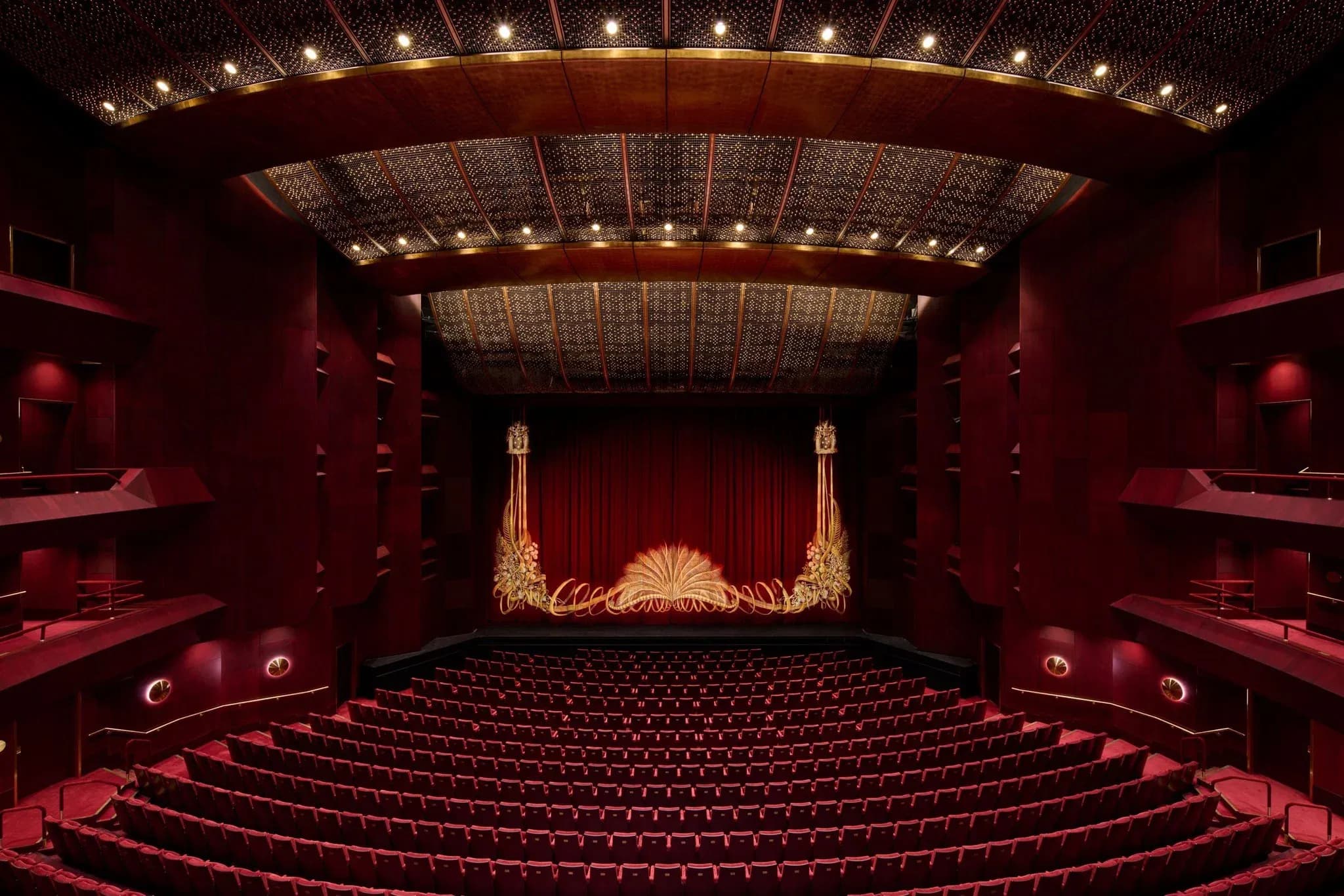
The Ian Potter State Theatre’s main auditorium and stage following its major heritage-led renewal by NH Architecture and Snøhetta.The Ian Potter State Theatre’s main auditorium and stage following its major heritage-led renewal by NH Architecture and Snøhetta. (Image source: Snøhetta / Photo by Tom Blachford)

Melbourne, Australia - NH Architecture and Snøhetta have completed the renewal of the Ian Potter State Theatre in Melbourne, updating the landmark performance venue while preserving the distinctive character of its original interior.

The 2,000-seat theatre was originally completed in 1984 by architect Roy Grounds, with interiors by designer John Truscott. The latest refurbishment focused on extending the life of the building while improving its performance, accessibility and backstage operations.

The project is now open to the public and represents the first completed milestone of the wider Melbourne Arts Precinct Transformation, which the Victorian Government describes as the largest cultural infrastructure project in Australia’s history.

The renewed Ian Potter State Theatre auditorium in Melbourne, with upgraded seating and restored heritage detailing across its multi-level interior.The renewed Ian Potter State Theatre auditorium in Melbourne, with upgraded seating and restored heritage detailing across its multi-level interior.

A retention-led approach shaped much of the work. Existing materials and architectural elements were assessed to determine whether they could be preserved, restored, adapted or reproduced rather than replaced.

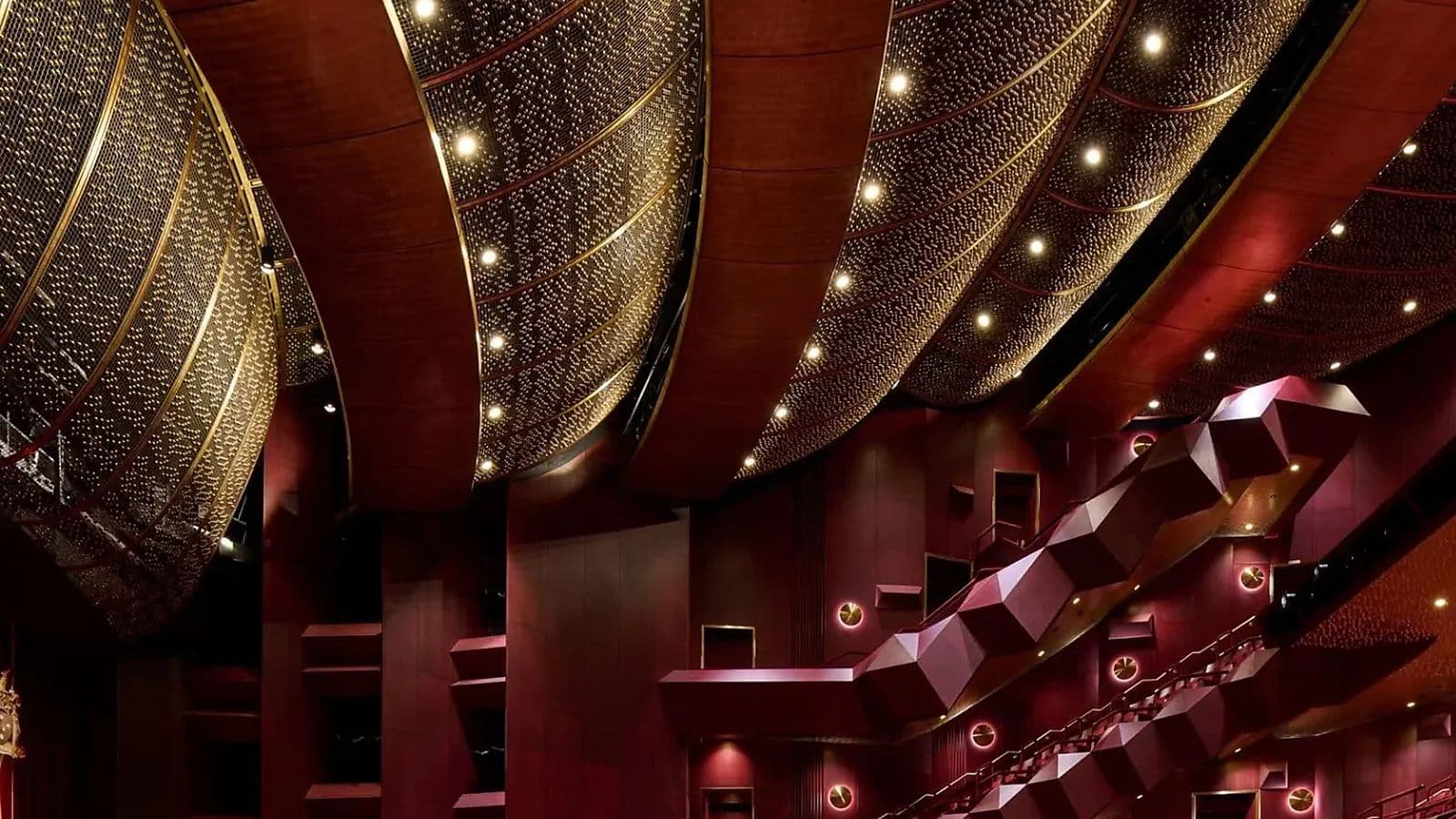
One of the theatre’s most recognisable features, its cascading brass ceiling, was carefully dismantled during the works. Around 75,000 etched brass spheres were removed, cleaned and reinstated as part of the restoration.

The auditorium also received new custom-designed seating intended to retain the appearance and character of the original interior. Timber flooring was introduced in tones that reference the red palette previously associated with the theatre.

Acoustic performance was another major focus of the refurbishment.

A new custom-moulded acoustic ceiling, formed from 20 panels, was installed within the auditorium. The panels incorporate more than 27,000 concave and convex forms designed to help diffuse sound across the space.

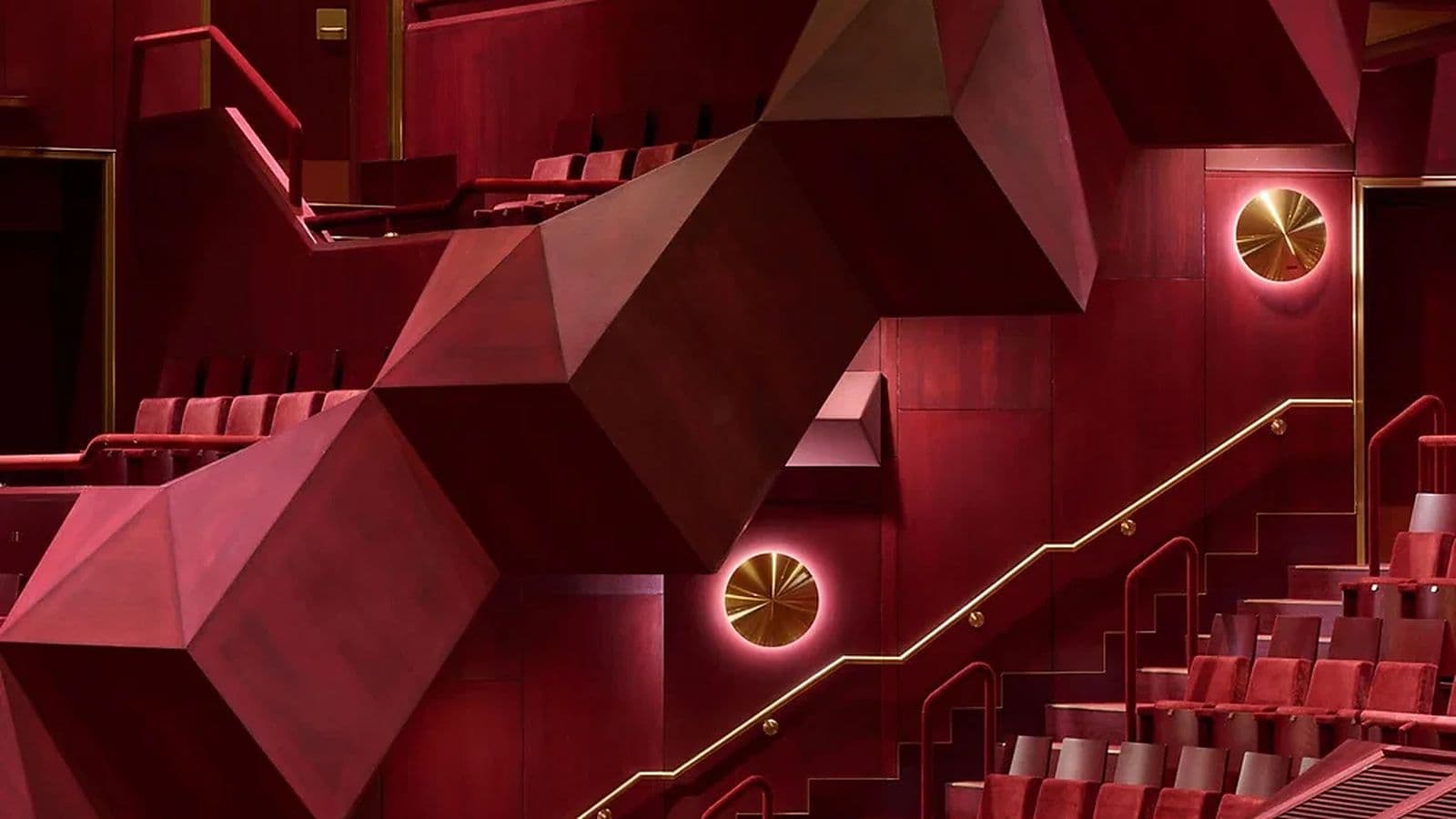
A closer view of the theatre’s tiered seating, geometric balcony forms and restored brass detailing.A closer view of the theatre’s tiered seating, geometric balcony forms and restored brass detailing.

Timber battens were also added to the rear wall of the auditorium to provide additional sound absorption.

Changes to the layout include new aisles and an extended balcony, allowing the theatre to accommodate revised seating arrangements. New lifts were also introduced to improve accessibility throughout the venue.

Behind the auditorium, the project involved a significant expansion of backstage facilities.

The refurbished auditorium combines curved seating, deep red finishes and the restored brass ceiling that defines the theatre’s interior.The refurbished auditorium combines curved seating, deep red finishes and the restored brass ceiling that defines the theatre’s interior.

A 14-metre-deep excavation created space for a new rehearsal studio and adjoining function room, adding new operational areas beneath the existing building.

The architects said the renewal was designed to balance heritage considerations with the technical demands of a contemporary performance venue.

The completed project retains the theatre’s brass detailing, red-toned interior palette and distinctive ceiling while introducing updated acoustic systems, improved circulation and expanded support spaces.

The Ian Potter State Theatre renewal forms part of the broader transformation of Melbourne’s arts precinct, which is bringing together upgrades to existing cultural venues alongside new public and cultural infrastructure.