Sign up to receive the latest tech news and updates from Property News International straight to your inbox.
By signing up, you will receive emails about property news products and you agree to our terms of use and privacy policy.
@2026 Property News International. All Rights Reserved.
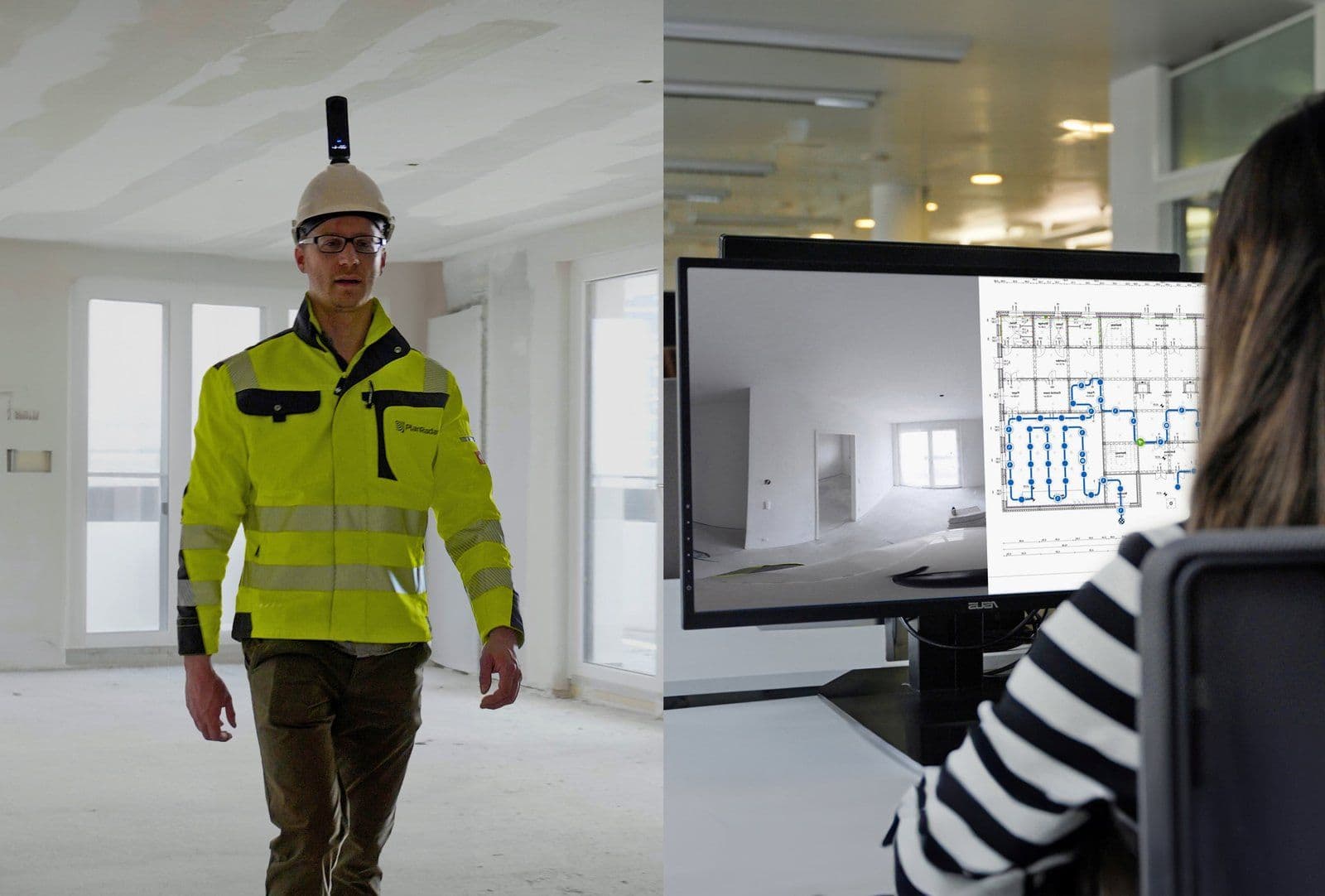
A site engineer in a PlanRadar jacket records a building interior with a helmet-mounted camera, alongside a colleague reviewing the capture on a floor plan (Image source: PlanRadar)Dubai, UAE - PlanRadar, a leading platform for digital documentation, communication and reporting in construction and real estate projects, has highlighted key project delivery risks facing construction teams as activity across the UAE continues to grow.
PlanRadar’s Construction Survey Report 2026: Managing Project Changes in the Age of AI surveyed 1,728 construction professionals responsible for on-time and on-budget delivery across 14 countries in Europe, the Middle East and Asia-Pacific, including the UAE and Saudi Arabia. The findings were also explored in PlanRadar’s webinar, Managing Mid-Project Changes in the Age of AI.
The research comes as UAE construction output is projected to reach $130.8 billion by 2029, up from a record $107.2 billion in 2024, according to Knight Frank. As project volumes and stakeholder complexity increase, the ability to manage changes, approvals and project records efficiently will remain central to delivery performance.
One of the clearest concerns identified in PlanRadar’s research is the impact of delayed approvals and slow responses. These were the most common pain points reported in the management of mid-project changes, including RFIs, change orders and variation requests. Nearly three-quarters of respondents said approvals are often received after agreed timeframes, while one in four estimated that delayed approvals typically add more than a month to project timelines.
Among teams where approvals are almost always late, month-long project delays were more than twice as likely as among those where late approvals are rare.
Ibrahim Imam, Co-Founder and Co-CEO of PlanRadar (Image source: PlanRadar)Ibrahim Imam, Co-Founder and Co-CEO of PlanRadar, said: “In a market delivering projects at the UAE’s current pace, small delays in decision-making can quickly become much larger delivery problems. Going into 2027, companies need clearer ownership, predefined approval routes and faster access to the information decision-makers need. The aim is not to eliminate change—change is inevitable—but to ensure every change is visible, traceable and acted on before it affects programme or cost.”
PlanRadar’s findings also show the financial impact of unmanaged changes. Two in three respondents said that mid-project changes lead to budget overruns in many or most of their projects. However, the research indicates that stronger process control can improve outcomes: four in five respondents using a central digital tool to track changes reported an improved ability to control costs or protect project margins.
Information fragmentation is another challenge. Nearly eight in ten respondents said that at least half of their project documentation is spread across unconsolidated channels, including emails, messages, phone calls and verbal instructions. Among those who could easily locate documentation, 70% felt confident that their records clearly showed responsibility for delays and cost impacts, double the proportion among those who found documentation difficult to locate.
Administrative workload compounds these pressures. Nearly half of respondents reported spending 11 or more hours each week on administrative tasks. Among those using a central digital tool with integrated AI functionality, two in three said they save at least two hours per week, per project, on administration and coordination.
Andrey Belogortsev, Regional Manager for MENA and APAC at PlanRadar (Image source: PlanRadar)Andrey Belogortsev, Regional Manager for MENA and APAC at PlanRadar, said: “The immediate opportunity for construction teams is to build reliable, connected workflows around the information already being generated on site. When changes, approvals and supporting evidence are captured in one accessible record, teams can identify issues earlier, engage the right people faster and maintain accountability throughout the project lifecycle.”
“AI can add real value when it is applied to repetitive, time-consuming work within those controlled workflows. It should support professional judgement—not replace it—by giving project teams more time to focus on decisions, risks and exceptions that require their expertise.”
The survey found that 58% of respondents believe AI can reduce workload across their biggest day-to-day challenges, while 65% believe it can streamline major administrative tasks.
Building on this need, PlanRadar has introduced AI Agents, allowing customers to create agents in plain language or use ready-made options to complete defined actions. Each action is logged, attributed and limited to the permissions of the user who created the agent, enabling teams to automate routine work while retaining oversight and control.
PlanRadar’s Construction Survey Report 2026 is based on a 37-question online survey conducted in January 2026 with 1,728 qualified construction professionals directly accountable for on-time and on-budget project delivery across 14 countries in Europe, the Middle East and Asia-Pacific.

Doha led the 495 property sales, while mortgage deals totalled $1.41 billion.

The underground link will run from Imam Ahmad bin Hanbal Mosque to Cultural Square.

The two-day forum will take place on 10–11 November 2026 at Palazzo Versace Dubai.

The Rental Disputes Center urges landlords and tenants to register every contract through Ejari.