Sign up to receive the latest tech news and updates from Property News International straight to your inbox.
By signing up, you will receive emails about property news products and you agree to our terms of use and privacy policy.
@2026 Property News International. All Rights Reserved.
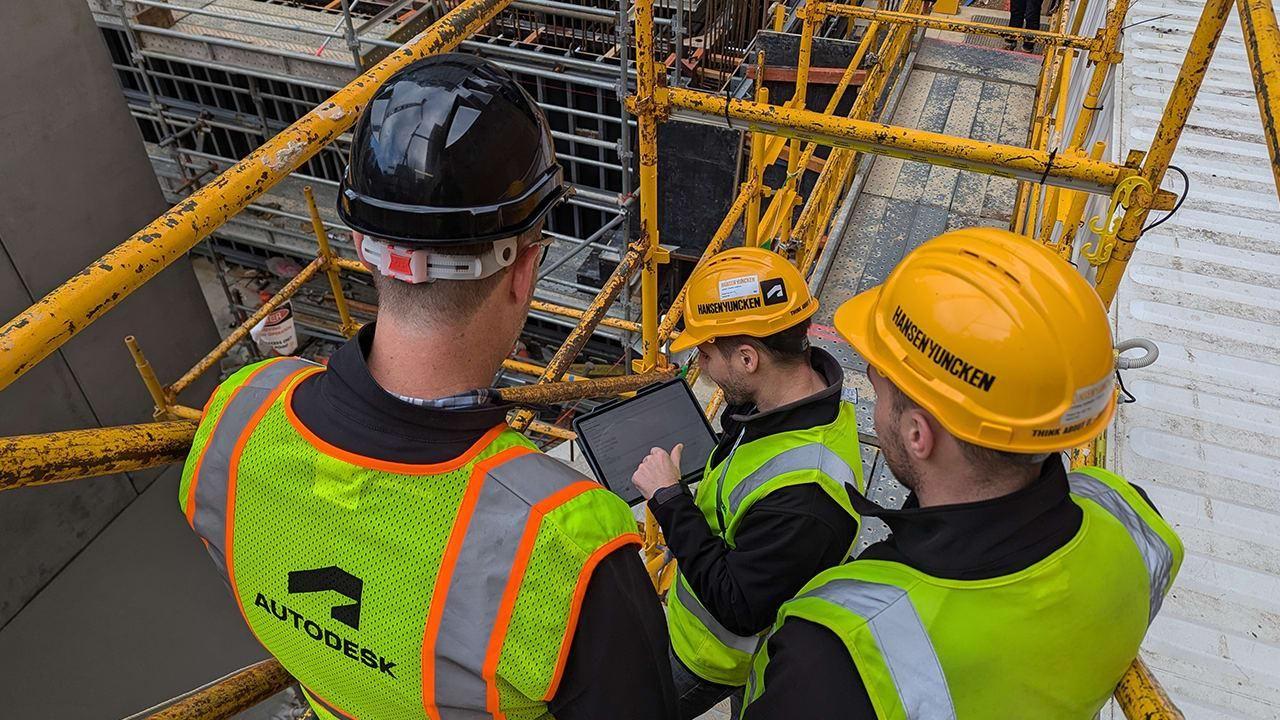
Construction professionals use digital tools to coordinate work on-site as the construction industry increases its adoption of connected technologies. (Image source: Autodesk / Hansen Yuncken)Dubai, UAE - Construction companies in the UAE and Saudi Arabia are the heaviest users of digital tools across Europe, the Middle East and Africa (EMEA), and nearly all of them expect that dependence to deepen over the next three years, according to new research from Autodesk.
The figures come from The State of Digital Construction – EMEA, a new Autodesk report on how the industry is taking up technology across the region. It found that 98% of Middle East respondents expect their organisation to lean more heavily on construction technology within three years, against 95% for EMEA as a whole.
Close to half (46%) said the increase would be significant. In Saudi Arabia, that share reached 54%.
Middle East firms also reported using Building Information Modelling (BIM), along with field management, scheduling and estimating software, at comparatively higher rates than the other EMEA markets in the survey.
Some 40% of respondents in the region said their organisation already works with BIM, the highest current adoption rate the research recorded anywhere in EMEA.
The report sets the results against the UAE’s National Digital Agenda and Saudi Arabia’s Vision 2030, both of which put construction at the centre of plans to diversify the two economies. It added that the size of the region’s projects is raising expectations on speed and coordination.
Evgeniya Maximova, Senior Manager, Construction Solutions, EMEA Emerging at Autodesk, said: “The Middle East isn’t catching up on construction technology investment, it is setting the pace in EMEA. The next stage is turning that momentum into tangible results in the way projects are delivered every day.”
She added: “For construction, that means trusted data, connected workflows and technology that works as effectively on site as it does in the office. The goal is not digitisation for its own sake. It’s less rework, better decision making, and buildings that perform.”
According to the report, technology is moving into the operating model of construction businesses instead of sitting apart as a separate function or a back-office cost. Among Middle East respondents, 38% named innovation and technology use as one of the yardsticks their organisations apply when judging whether a project has succeeded, alongside on-time delivery and sustainable delivery, which each scored 39%.
Some 44% of the region’s respondents rated field management tools as critical to carrying out a project successfully, the top result in any market surveyed.
Artificial intelligence is already shaping what firms want from their software. A third of respondents (34%) picked AI or automation as the most important factor in how their construction software develops, a higher share than in any other EMEA market. The two capabilities they want most are automated workflows for repetitive tasks and AI-based prediction of project risk.
The research also found stronger demand for better mobile access in the Middle East than in any other market it covered. Some 38% said construction management software would be worth more to them if it worked better on mobile devices, against just 22% in the UK.
Stronger reporting and documentation features, and closer integration with third-party software, came next, each chosen by 36% of Middle East respondents.
Autodesk said these priorities point to a shift from separate, unconnected applications towards integrated systems that bring project data, documents and teams together over the whole life of a project.
The report argues that the next phase of digital transformation in construction, and the question of where projects are managed, will turn on narrowing the gap between decisions taken in the office and work on site. Technology has to let teams reach up-to-date information, record changes and coordinate workflows wherever the work is happening, it said.
The region’s momentum is strong, but the study also identified an implementation gap that it said could stop organisations getting the full value from what they spend on technology, with skills deciding whether that spending pays off. The barrier cited most often in the Middle East was a lack of in-house technical expertise, named by 31% of respondents.
Maximova added: “The region’s ambition is moving faster than its skills and buying more technology won’t fix that. Software only pays back when the people on the project can use it. Businesses in the Middle Eastern firms already know this, which is why they put training and support ahead of features when they judge what works. The winners in this market will be the companies that invest in their people at the same rate as their tools.”
Software cost was the second most common barrier at 30%, the highest share in any of the markets surveyed. Concerns over data security and privacy, integration with existing systems, and the time needed to assess, integrate and onboard new technology were each named by 28%.
The report said firms are aware of the shortfall: more than a third (34%) judge their software by the quality of the training and support that comes with it, a larger share than in any other EMEA market.

Only the offer’s closing and routine regulatory filings are still outstanding, the developer said.

Nuwa Capital led the equity, with Amwal Capital Partners adding $15m of Shariah-compliant debt.

High-severity alerts fell 59% at Ghaf Woods, where a voice pilot now speaks to workers.

A fäm Properties study of over 35,000 tenancy contracts found 73% of new leases came in cheaper.