Property News International

Change region:

GlobalcheckMiddle East

Subscribe to Our Newsletter

Sign up to receive the latest tech news and updates from Property News International straight to your inbox.

By signing up, you will receive emails about property news products and you agree to our terms of use and privacy policy.

@2026 Property News International. All Rights Reserved.

Blends Media
A Blends Media Group Production

GCC Construction Salaries Set for Modest Growth in 2026: FPA Report

GCC construction salaries are expected to rise just 0–5% in 2026, even as hiring accelerates and workforce mobility reaches record levels, according to FPA.
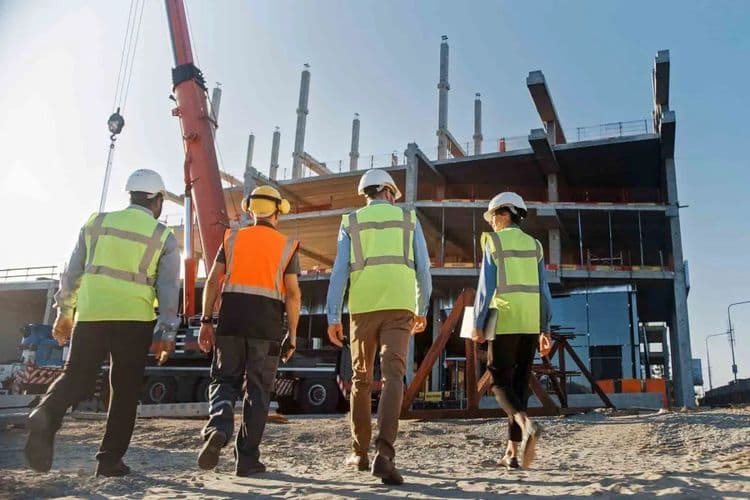
Salary growth across the GCC’s construction and real estate sector is expected to remain muted in 2026.Image: Shutterstock

Dubai, UAE: Salary growth across the GCC’s construction and real estate sector is expected to remain muted in 2026, even as workforce mobility reaches record levels and employers continue to expand headcount, according to the FPA 2026 GCC Salary Guide.

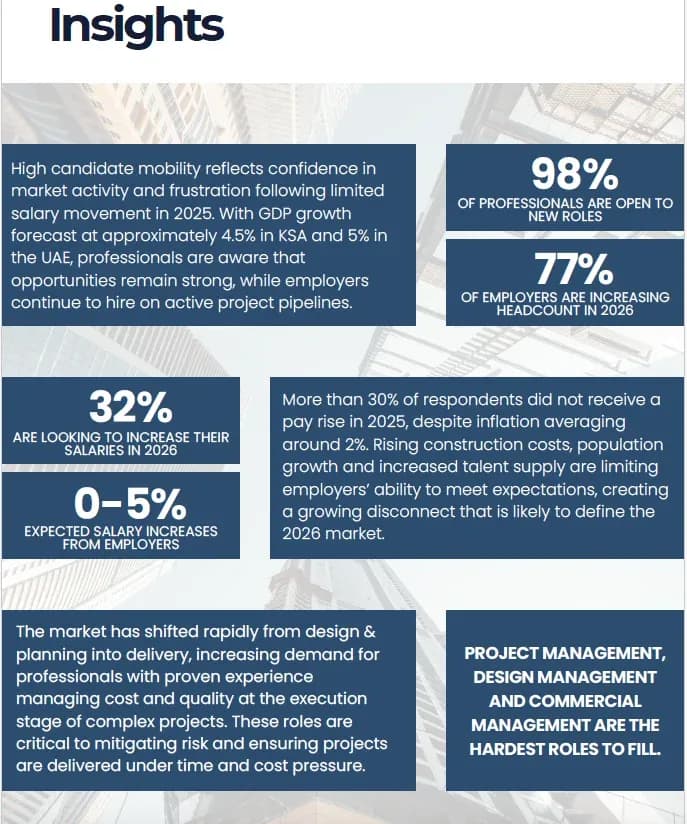
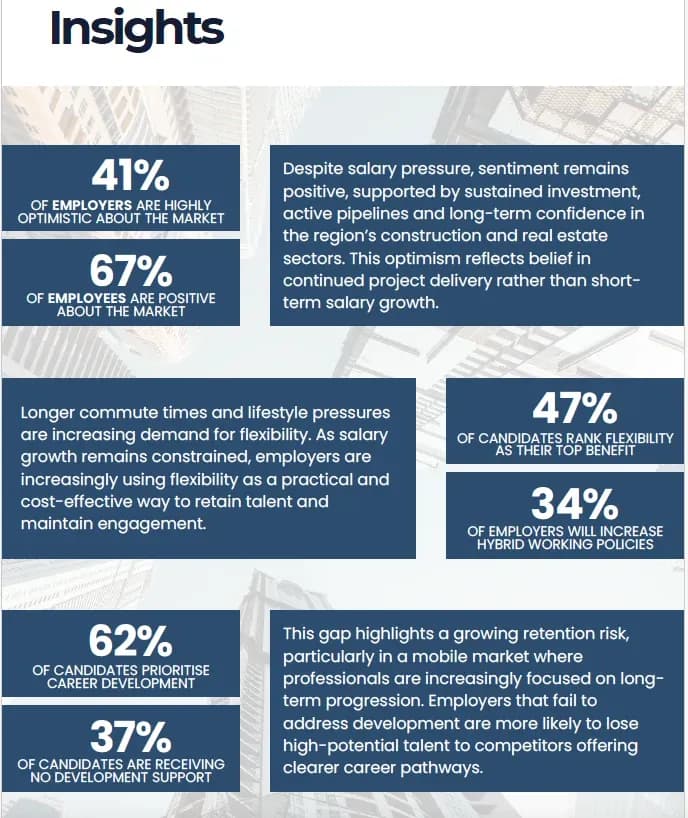
Based on responses from more than 2,300 professionals across the UAE, Saudi Arabia, Oman, Bahrain, and Qatar, the survey indicates that most roles across the region are forecast to see salary increases of just 0–5 per cent next year. Despite limited pay progression, 98 per cent of respondents said they are open to new roles in 2026, underscoring a growing disconnect between compensation trends and broader career priorities.

A market in transition

The report characterises the GCC construction and real estate labour market as being “in transition”, shaped by sustained project pipelines, strong delivery demand, and rising employee expectations. While hiring momentum remains robust, particularly in Saudi Arabia, salary budgets continue to face pressure from elevated construction costs and a growing supply of available talent.

This imbalance is contributing to higher employee mobility, as professionals increasingly prioritise long-term career development, role quality, and lifestyle benefits over short-term pay increases.

UAE: flexibility and development outweigh pay growth

In the UAE, 82 per cent of employers reported no salary increases in 2025, while 42 per cent of employees confirmed their pay remained unchanged over the past year. Looking ahead, only 35 per cent of professionals said they are actively seeking salary improvements in 2026, compared with 64 per cent who prioritise career growth and development opportunities.

Time off and workplace flexibility emerged as the most valued benefits among UAE professionals, cited by 49 per cent of respondents. At the same time, 62 per cent said they lacked access to structured development programmes or clear growth pathways.

Despite limited salary movement, hiring activity remains strong. Around 40 per cent of UAE employers increased headcount by 20–30 per cent in 2025, with 41 per cent expecting further workforce expansion of between 5–20 per cent in 2026.

FPA 2026 GCC Salary Guide.FPA 2026 GCC Salary Guide.

Saudi Arabia: rapid hiring, limited salary movement

Saudi Arabia continues to experience accelerated workforce expansion, reflecting the Kingdom’s transition into a large-scale delivery phase across infrastructure, real estate, and giga-projects.

Nearly all respondents in Saudi Arabia (99 per cent) said they are open to new opportunities, while 44 per cent of employers reported headcount increases of 20–30 per cent last year. However, salary growth has not kept pace with hiring demand.

Around 71 per cent of Saudi employers reported no salary increases in 2025, and most expect pay rises to remain within the 0–5 per cent range in 2026. Family-related benefits, including visas, medical coverage, and flight allowances, were identified as the most valued benefits by 70 per cent of professionals in the Kingdom.

Delivery roles increasingly hard to fill

Across both the UAE and Saudi Arabia, hiring demand is shifting decisively away from early-stage design and planning roles toward project delivery functions. Project management, design management, and commercial management positions were identified as the most difficult roles to fill.

This trend reflects the need for experienced professionals capable of managing cost, quality, and risk across complex, fast-moving construction programmes, particularly as projects progress from planning into execution.

FPA 2026 GCC Salary Guide.FPA 2026 GCC Salary Guide.

Retention risks grow despite hiring plans

While 77 per cent of employers across the GCC plan to increase headcount in 2026, the report highlights growing retention risks. More than one-third of professionals said they receive no meaningful development support, even as 62 per cent prioritise long-term career progression over immediate pay gains.

The study also notes that 34 per cent of employers plan to expand hybrid working policies, with flexibility increasingly used as a cost-effective retention tool. However, it cautions that organisations failing to invest in structured career pathways, skills development, and leadership progression may struggle to retain high-potential talent in an increasingly mobile labour market.