Real estate portfolios are becoming larger, more complex and increasingly data-driven, and technology is no longer simply supporting operations, it is shaping how organisations make strategic decisions. From investment management and development to leasing, finance and asset performance, owners and operators are looking for integrated platforms that provide a single view of their business while preparing them for the next wave of artificial intelligence.
Few companies have played a bigger role in that transformation than Yardi. Founded more than four decades ago, the global real estate technology provider has grown from an accounting software company into one of the industry's most comprehensive real estate management platforms, serving organisations across residential, commercial, retail and industrial sectors worldwide.
In the Middle East, where large-scale developments, giga-projects and digital transformation continue to accelerate, Yardi has become a trusted technology partner for many of the region's leading real estate organisations. Today, its platform supports a significant share of the UAE's retail real estate market while helping clients build the connected data foundations needed to unlock the full potential of artificial intelligence.
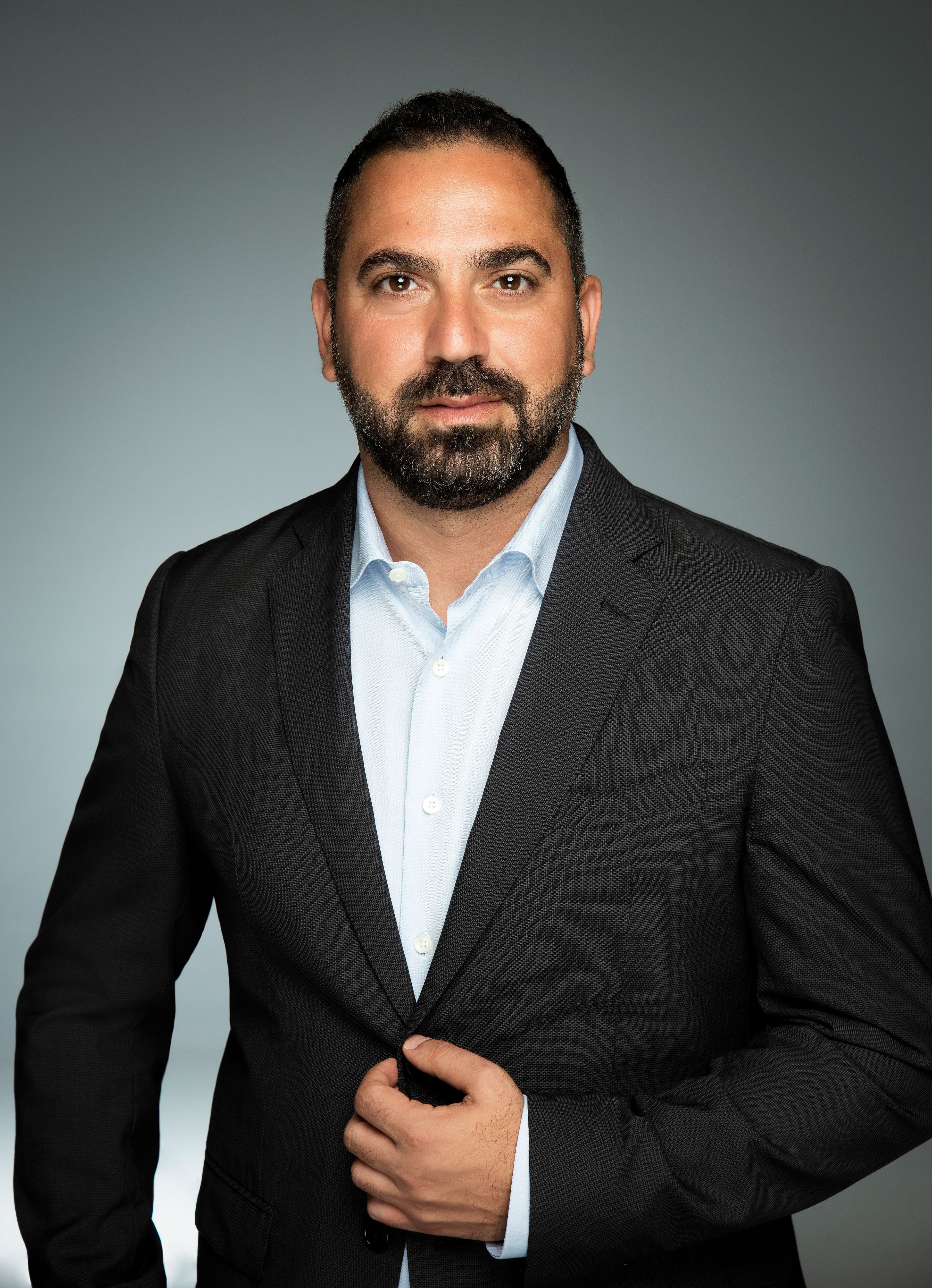
In this exclusive interview with Property News International, Said Haider, Senior Director at Yardi, discusses the company's evolution, the importance of unified data, the realities of AI adoption across the GCC, and why the future of real estate will belong to organisations that invest in technology before complexity overtakes them.
Yardi is one of the most established names in real estate technology. Can you tell us how the company began and what vision originally shaped its journey?
Yardi was founded by Anant Yardi in 1984 in Santa Barbara, California, at a time when real estate was still a largely manual, paper-driven industry. His founding conviction was straightforward but transformative: technology could fundamentally change how real estate was operated, reported on, and ultimately managed as a business. That meant building software that simplified complexity, brought transparency to what had historically been opaque, and gave decision-makers the information they needed to act with confidence.
What has made that vision endure is that it was never static. Anant built Yardi with the understanding that the industry would continue to evolve, and that the platform needed to evolve alongside it. Forty years on, that same philosophy shapes our global strategy, and it is why we have been able to grow from a single accounting product to an end-to-end real estate intelligence platform operating across the world's most dynamic markets.
How has Yardi's mission evolved over the years, particularly as the company expanded its presence in the Middle East?
The evolution has been significant, and the Middle East has been a particularly important part of that story. When Yardi first entered the region, the priority was practical: helping real estate organisations replace fragmented, manual processes with structured, scalable technology. That meant earning trust by understanding the region's regulatory environment, its operational realities, and its pace of growth, rather than simply transplanting solutions designed for other markets.
Over time, the mission expanded. What began as a focus on accounting and leasing now spans the full real estate lifecycle, investment management, development, finance, property operations, and asset performance. And more recently, a new dimension has emerged: helping clients build the connected data foundation they need to genuinely benefit from AI and analytics. That is where the frontier of value creation is today, and it is where much of our focus lies.
What do you see as Yardi's core value proposition, what makes it stand out as a technology partner for the real estate industry?
The honest answer is integration, not as a marketing term, but as a structural reality. Yardi's platform was built entirely in-house, which means every module - leasing, finance, development, operations, asset management - shares a single database. That is architecturally different from solutions assembled through acquisitions, where integration is always a work in progress and data reconciliation is a permanent overhead.
In practice, that means a client's leasing pipeline, financial performance, and maintenance records all exist within the same system, with no translation layer between them. Executives get a single version of the truth. Teams stop spending time reconciling data and start using it. And as AI capabilities mature, having that connected, trusted data environment becomes the prerequisite for meaningful adoption. It is not an aspiration, but a requirement.
What also distinguishes Yardi is breadth without specialisation trade-offs. Most technology providers in this space focus on a single asset class. Yardi serves clients managing residential, commercial, retail, and industrial portfolios, often simultaneously, without any reduction in depth or functionality.
As real estate organisations become more complex, how does Yardi help different stakeholders work from a single view of the business?
The challenge in any large real estate organisation is that different stakeholders have different priorities, and historically, different systems. Developers need visibility into project progress and cost. Asset managers need to run valuations, model scenarios, and track performance across a portfolio. Finance teams need accurate, audit-ready reporting. Investors expect timely, transparent returns data. Tenants want responsive, digital experiences.
When those needs are served by disconnected systems, the organisation pays a hidden tax: time spent reconciling data, decisions made on information that is days or weeks old, and a senior leadership team that never quite has the full picture. Yardi's model eliminates that tax. Every function operates on the same platform and draws from the same data. Stakeholders get the depth they need for their role, within an architecture that keeps the whole organisation aligned.
Read more: Inside Seef Properties’ Shift to Cloud-Driven Asset Management with Yardi
With AI gaining momentum across the real estate industry, what should leaders be thinking about as they evaluate where and how to apply it?
The first thing I tell clients is: don't lead with AI. Lead with your data. AI is only as valuable as the information it can access and trust. Across the GCC, many organisations are still navigating legacy systems, siloed data, and inconsistent data standards. Deploying AI on top of that infrastructure does not fix those problems. It inherits them.
The organisations that will extract genuine value from AI are those investing now in a clean, connected, and integrated data environment. Once that foundation exists, AI stops being a pilot project and starts being a capability embedded in daily operations, surfacing anomalies in leasing performance, flagging maintenance patterns before they become costly, and accelerating financial close cycles. The technology is ready. The question for most organisations is whether their data infrastructure is.
What does that data fragmentation actually look like day to day inside a typical real estate organisation, and how does Yardi's approach address it?
It looks like a Monday morning where the CFO's numbers don't match the asset manager's report, and two teams spend the afternoon tracing the discrepancy back to a spreadsheet export that was three days old. It looks like a leasing director who cannot tell you the current vacancy position across the portfolio without calling three people first. It looks like executives making portfolio decisions based on information that was accurate last quarter.
That is the operational cost of fragmentation, and it is more common than most organisations would like to admit. Yardi addresses it at the foundation by creating a single database across all business functions. When leasing, finance, and operations share one source of data, those Monday morning reconciliations disappear. And when that foundation is in place, analytics and AI tools have something worth working with.
When people hear "AI in real estate," it can mean very different things. What does it actually look like inside Yardi's platform?
That is a fair point. "AI" has become one of the most overloaded terms in enterprise technology. Inside Yardi, it is delivered through Yardi Virtuoso, our AI platform, and it is embedded across the ecosystem rather than bolted on as a separate module. That distinction matters. Virtuoso has access to the operational data your organisation already lives in, it does not require a separate data pipeline or a lengthy integration project.
In practice, that translates to things like automated lease abstraction, intelligent workflow routing, anomaly detection in financial data, and AI-assisted decision support across leasing, operations, and asset management. The goal is not to replace professional judgment. It is to give your teams better information, faster, so that judgment is applied to the right problems at the right time.
How does Yardi tailor its approach to meet the needs of clients ranging from growing real estate businesses to large, diversified portfolio owners?
The starting point is always the same: understand the operational challenge before proposing a solution. That sounds obvious, but it is surprisingly rare in enterprise technology sales, where vendors often lead with capability and work backward to the problem. We start with where the organisation is today, what decisions are being made on incomplete information, where the process friction is, what growth is expected in the next three to five years, and design toward that.
The scale of the solution differs, but the methodology does not. Whether we are working with an organisation standardising its operations for the first time or one consolidating systems across a portfolio that has grown faster than its infrastructure, the outcome we are working toward is the same: a unified operational view that supports confident, efficient decision-making at every level.
Over nearly two decades of supporting technology adoption in the region, what are the biggest changes you have seen in how real estate leaders approach technology?
The most significant shift has been from technology as a back-office necessity to technology as a strategic asset. When I began working in this market, conversations were predominantly about replacing manual processes and reducing administrative overhead. Today, the conversation is about competitive advantage: how connected data, analytics, and AI can help an organisation see things earlier, decide faster, and execute more efficiently than its competitors.
The scale of adoption reflects that shift. Nearly 80% of retail real estate in the UAE is now managed on Yardi's platform. That is not just market penetration, it is a signal of how deeply technology has become embedded in how the industry operates. What is also notable is the seniority of the conversations. Technology decisions that used to sit with IT departments now sit at the board level, because leaders understand that the quality of their data infrastructure determines the quality of their strategic decisions.
As the GCC's real estate ambitions accelerate, from giga-projects and new cities to rapid portfolio growth, what do you think will separate the organisations that succeed from those that struggle to scale?
The ability to manage complexity without losing clarity. The ambition across the region is extraordinary, and it is real. But ambition at that scale creates operational demands that outpace the systems many organisations are currently running on. When you are managing a portfolio that doubles in size over three years, the processes and platforms designed for half that scale will eventually become constraints.
The organisations that thrive will be those that invest in the operational infrastructure to match their growth trajectory, unified data environments, scalable technology platforms, and the analytical capability to make portfolio-wide decisions with confidence. The ones that struggle will be those that treat technology as a lagging investment rather than a leading one.
What role do you see Yardi playing in the next phase of the Middle East's real estate transformation?
I see Yardi playing a foundational role, not simply as a software vendor, but as a strategic infrastructure partner for the region's leading real estate organisations. The next phase of transformation is not about digitising individual workflows. It is about building the connected intelligence layer that allows organisations to operate at the pace and complexity the market is demanding.
As more clients across the GCC establish the data foundation required to leverage AI meaningfully, Yardi will continue expanding its capabilities: more embedded intelligence, deeper analytics, and greater automation across the real estate lifecycle. The ambition is not just to help our clients keep pace with the market. It is to help them lead it.