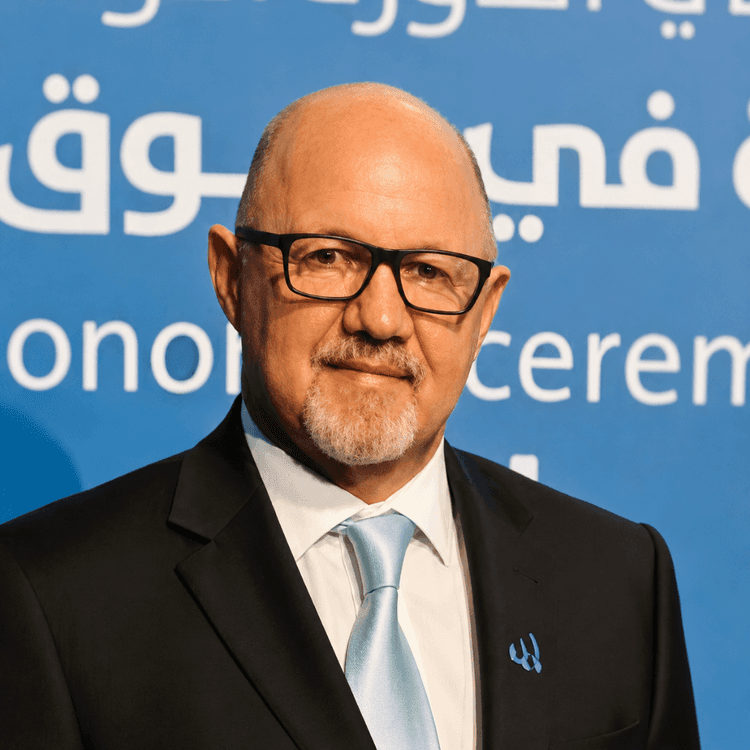
His time at Al Naboodah has been mostly a story of moving up through the same organization rather than arriving straight into a top job. He started as a divisional manager, then moved into commercial roles, then general management, before eventually taking on group-level operating responsibility. That kind of route through an organization tends to leave someone with a fairly granular understanding of how contracts get won, priced, and delivered, and it shows in how closely Perrins is said to track commercial performance across the group's various projects.
Al Naboodah Construction Group itself traces back much further than Perrins' arrival. The wider Al Naboodah business was founded in 1958 by brothers Saeed and Mohammed Juma Al Naboodah, and moved into contracting in 1969 as Dubai's building boom picked up pace. Decades of infrastructure and civil works followed, including work on Palm Jumeirah, Business Bay, Yas Island, the Dubai Water Canal, road networks around the city, and Dubai's airports. The 2007 restructuring brought these various construction interests into a single group employing well over ten thousand people.
Running a group of that size means Perrins spends a lot of his time on the commercial and operational machinery behind the scenes: contract structuring, risk allocation, resourcing across projects, and keeping delivery consistent across a portfolio that spans roads, marine works, buildings, and utilities infrastructure. He has also had to manage the group through several different cycles in the UAE construction market, from the post-2008 slowdown through the Expo 2020 building push and the market conditions that followed it.
His commercial background shows up in a fairly disciplined approach to the business: pricing risk correctly, managing cash and subcontractors carefully, and being selective about which projects the group takes on. That approach has kept Al Naboodah Construction Group as one of the more consistently active contractors in Dubai's infrastructure and building sector, even as newer entrants and giga-project work elsewhere in the region have shifted where the bigger contracts are coming from.