Saudi Arabia, 4 August 2026: Saudi Arabia's retail and food & beverage market has maintained strong momentum during the first half of 2026, supported by resilient consumer spending, stable inflation and continued expansion in the Kingdom's non-oil economy, according to Knight Frank's latest Saudi Arabia Retail Market Overview – Summer 2026.
The report shows that total consumer spending across point-of-sale (POS) transactions, cash withdrawals and e-commerce purchases increased by 6.8% year-on-year during the first quarter of 2026 to SAR 425bn, building on the record SAR 1.57 trillion spent through official payment channels during 2025. Economic conditions also remained supportive, with Saudi Arabia's economy expanding by 3% during Q1 2026, driven by 2.9% growth in non-oil activities, while inflation remained contained at 1.8%, reinforcing consumer confidence despite heightened regional geopolitical tensions.
Digital retail continues to gain market share across the Kingdom. E-commerce spending increased by 42% year-on-year to SAR 98.4bn, while POS spending rose by 4.4% to SAR 189.7bn. Cash withdrawals declined by 7% to SAR 136.8bn, highlighting consumers' continued shift towards cashless payment methods and omni-channel shopping behaviour. Spending growth remained strongest across discretionary retail categories, with jewellery recording a 47% increase in POS transactions, followed by clothing and accessories (25.9%) and telecommunications (23%), reflecting continued demand for lifestyle, fashion and premium consumer goods.
Faisal Durrani, Partner – Head of Research, MENA, said: "Saudi Arabia's retail market continues to benefit from strong economic fundamentals. Consumer spending has remained resilient despite regional uncertainty, supported by sustained non-oil economic growth, stable inflation and rising household incomes. These factors continue to underpin retailer confidence and reinforce the Kingdom's position as one of the region's most attractive retail investment markets.
“Entertainment, wellness and community uses are becoming critical success factor determinants. Consumers increasingly expect destinations to offer a broader ‘day-out’ experience, combining shopping and dining with family entertainment, ‘edu-tainment’, fitness, events and social activities. This is encouraging developers to rethink the role of retail space and to place greater emphasis destination curation, placemaking and how complementary uses work together to enhance the overall customer experience”.
Retail fundamentals remain stable
Retail market fundamentals remained broadly stable across Saudi Arabia's three largest metropolitan areas during the first half of 2026. Riyadh continued to record healthy occupier demand, with average lease rates for regional and super-regional malls increasing by 1.2% year-on-year to SAR 2,650 psm, while occupancy remained stable at 91%. Jeddah's market also remained resilient, with occupancy improving to 88% despite a modest easing in headline rents as new supply entered the market. In the Dammam Metropolitan Area, occupancy increased to 94%, supported by balanced market conditions and sustained demand for well-located retail space.
Retail supply continues to expand across the Kingdom's major urban centres, reflecting confidence in Saudi Arabia's long-term consumption outlook. Retail stock has reached approximately 4.2 million sqm in Riyadh, 3.0 million sqm in Jeddah and 1.4 million sqm in the Dammam Metropolitan Area. Much of the future development pipeline is increasingly focused on mixed-use, lifestyle-led and destination-oriented schemes that integrate retail, hospitality, entertainment and leisure uses to create stronger customer engagement and longer dwell times.
Food & beverage continues to shape occupier demand
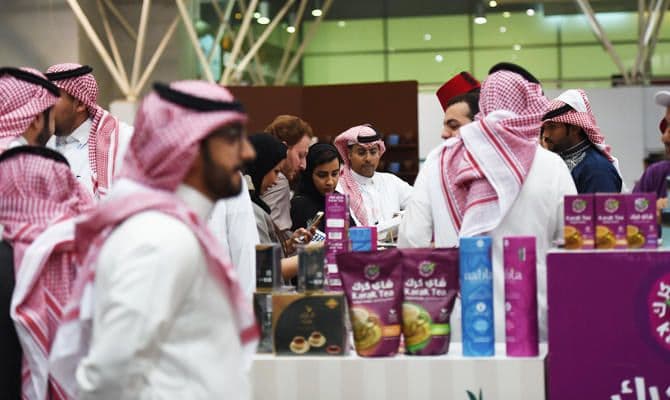
Food and beverage operators remain among the most active occupiers across Saudi Arabia's retail market. The report highlights growing demand for health-focused dining concepts, convenience-led restaurant formats and affordable casual dining experiences, reflecting changing consumer preferences across the Kingdom.
At the same time, developers are placing greater emphasis on integrating restaurants, cafés, entertainment, wellness and leisure facilities within retail destinations to encourage longer dwell times and strengthen destination appeal. This trend is becoming increasingly evident across both traditional shopping centres and lifestyle retail developments, where F&B has become a key driver of footfall rather than a complementary retail offering.
Jonathan Pagett, Partner – Head of Retail Advisory, MENA, said: "Food and beverage continues to play an increasingly important role in shaping successful retail destinations as consumers seek experiences rather than simply places to shop. At the same time, rising construction costs are creating a growing distinction between existing retail assets and new developments. Developers are increasingly faced with three strategic choices: reduce build quality to remain aligned with prevailing market rents, deliver premium schemes that command higher lease rates, or create high-quality destinations that justify established rental levels by generating stronger footfall, longer dwell times and higher tenant sales.
“Ultimately, the most successful projects will be those that differentiate themselves through placemaking, destination quality and customer experience, rather than competing on rental levels alone."
Lifestyle retail continues to expand
Lifestyle retail remains one of the fastest-evolving segments of Saudi Arabia's retail market as consumers increasingly seek integrated destinations that combine shopping, dining, leisure and social experiences. Riyadh's lifestyle retail market has now reached approximately 485,000 sqm across 28 developments, with occupancy averaging 96%. Food and beverage operators account for approximately 76% of tenants across these schemes, with more than 434 restaurants and cafés highlighting the growing importance of dining-led placemaking.
Jeddah's lifestyle retail sector is also expanding rapidly. The city currently comprises approximately 291,000 sqm across 19 developments, with a further 277,600 sqm expected to be delivered by 2029. New waterfront, mixed-use and community-oriented developments are broadening the city's retail offering and reinforcing the shift towards destination-led retail environments centred around hospitality, leisure and entertainment.
Amar Hussain, Associate Partner – Research, MENA, explained: "Saudi Arabia's retail market continues to mature as both occupiers and developers adapt to changing consumer expectations. While new supply will increase competition across the Kingdom's major cities, demand remains strongest for well-positioned schemes that combine retail, food and beverage, leisure and entertainment. As the market evolves, destination quality and customer experience are expected to become increasingly important differentiators."