United States, San Francisco – City officials in San Francisco have approved Align Real Estate’s redevelopment of the Marina Safeway into 848 homes, clearing one of the city’s most disputed housing proposals while opponents still contest its fast-track approval in court.
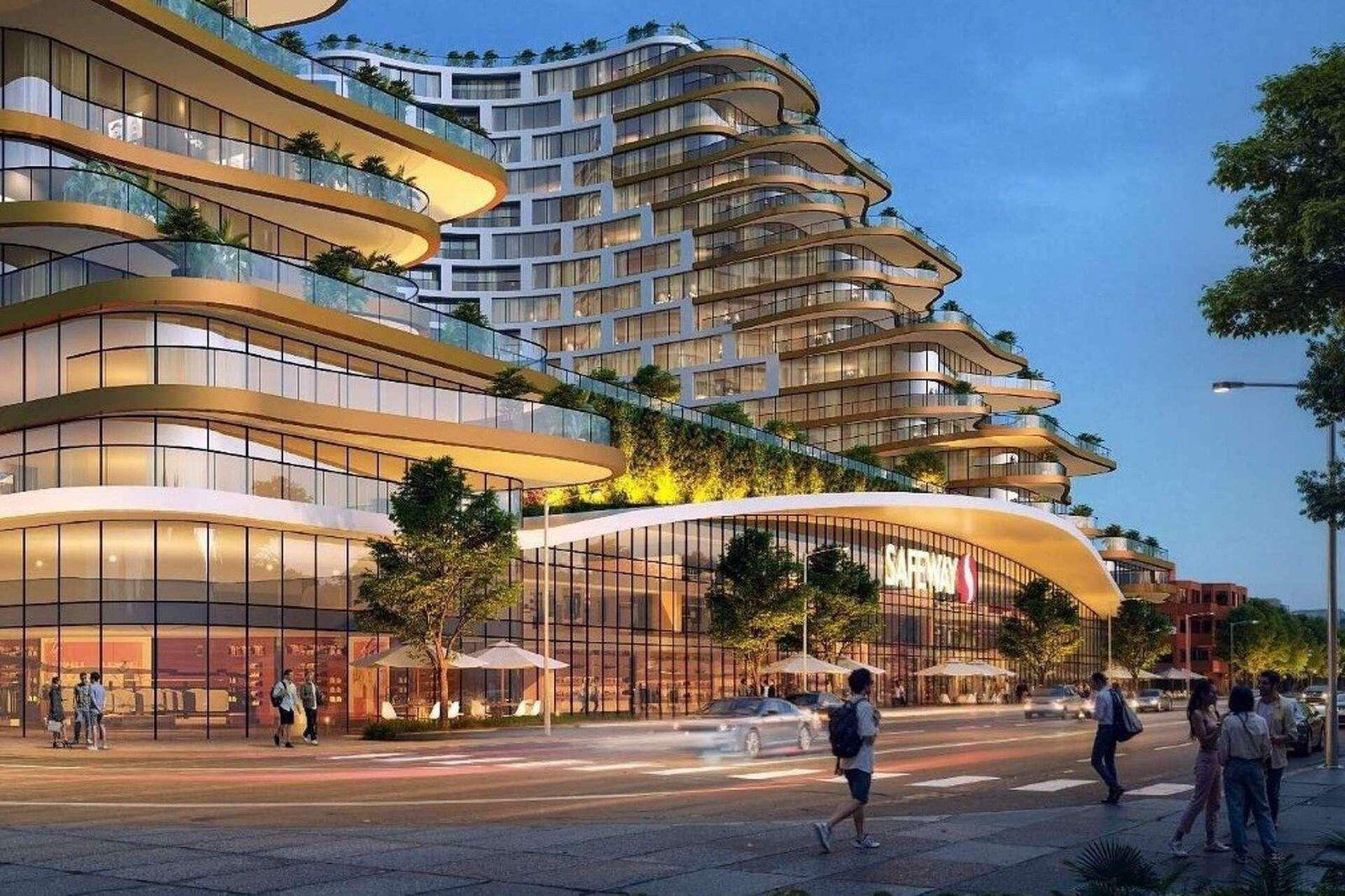
At 15 Marina Boulevard, the scheme would demolish the decades-old waterfront supermarket and put up two towers of 22 and 18 storeys, with a new Safeway store alongside the 848 homes.
City records show the approval was issued on Friday, under the accelerated timetable set by Assembly Bill 2011. The decision follows a year-long dispute over whether the project qualified under that California law.
AB 2011 obliges cities to give streamlined approval to eligible housing on commercially zoned land, with neither the public hearings that large projects usually go through nor environmental review under the California Environmental Quality Act (CEQA).
Dave Balducci, Principal of Align Real Estate, said: “We appreciate the diligent work of city staff in moving this important project forward. This approval brings us one step closer to welcoming new families to a neighborhood that has seen far too little housing development, while delivering a modern grocery store for the entire community.”
Align is the project sponsor acting for the property’s owner, Albertsons Companies, and applied in December 2025 to demolish the store at 11 and 15 Marina Boulevard, according to KQED. A later revision lowered both towers while raising the unit count, and the application includes 86 affordable homes.
The developer would not say whether financing is in place or when building work might start.
Large-scale housing construction in San Francisco has been largely on hold for years, even as rents have climbed and the market has begun to show early signs of recovery.
Many developers still describe the economics as difficult, with raising capital a major obstacle. A city analysis published earlier this year put development costs, excluding land, at $700,000 to $1.2 million per home across its market-rate housing models.
The dispute has not ended with the approval: opponents have taken their challenge to the city’s approval process to federal court.
The suit names Align, the city and PG&E. It argues the city confirmed the project’s AB 2011 eligibility before more than 40,000 sq ft beneath the store had been tested for environmental factors, even though petroleum contamination had already been found in the soil and groundwater.
Before the Safeway opened in 1959, the site was home to a PG&E steam power plant.
Align has said it will meet every environmental testing requirement under the state law. City planners say further assessment, and any cleanup that is needed, can take place during permitting and before residents move in, and state regulators have said the known contamination poses no current exposure risk.
Since it was proposed a year ago, the scheme has drawn opposition from Marina residents and from the city’s most senior officials. Mayor Daniel Lurie has accused Align of trying to “sneak in” the plan before San Francisco’s Family Zoning Plan came into force earlier this year.
That large-scale rezoning replaced the density formula for the Safeway site, which the developer combined with state housing laws to arrive at 848 homes in towers of up to 22 storeys. City officials have estimated that under the new rules the project might have held 500 to 600 homes in substantially shorter buildings.
Marina Supervisor Stephen Sherrill has described the project as out of scale with the neighbourhood. Earlier this year he also argued that nearby parks and open space, including Fort Mason and the Marina Green, do not qualify as “urban uses” under AB 2011.
The law requires at least 75% of a site’s neighbouring parcels to have urban uses before a project can receive streamlined approval, and city planners have rejected Sherrill’s interpretation.
Align has said the existing Safeway will close during construction, with a new store opening in its place.