Property News International

Subscribe to Our Newsletter

Sign up to receive the latest tech news and updates from Property News International straight to your inbox.

By signing up, you will receive emails about property news products and you agree to our terms of use and privacy policy.

@2026 Property News International. All Rights Reserved.

Blends Media
A Blends Media Group Production

Dubai RTA opens 1,650-metre Al Khaleej Street Tunnel in Deira

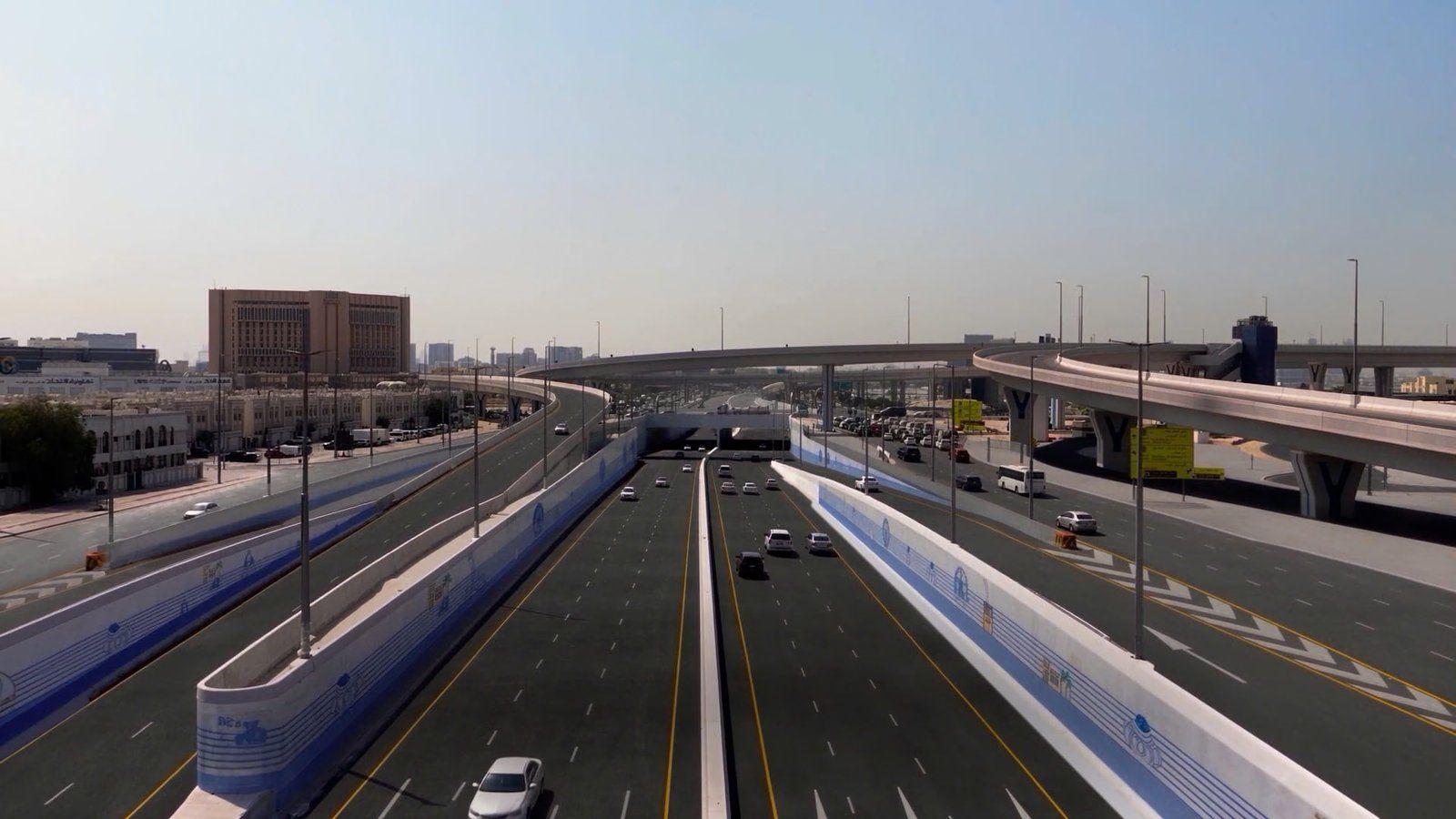
Traffic on the approach to the newly opened Al Khaleej Street Tunnel in Deira, part of the RTA’s Al Shindagha Corridor Improvement ProjectTraffic on the approach to the newly opened Al Khaleej Street Tunnel in Deira, part of the RTA’s Al Shindagha Corridor Improvement Project (Image source: Government of Dubai Media Office)

Dubai, UAE - Motorists coming off Infinity Bridge into Deira now have a free-flowing route to Al Wuheida Street after Dubai’s Roads and Transport Authority (RTA) opened the 1,650-metre Al Khaleej Street Tunnel on Sunday, 8 November.

The tunnel begins where the Infinity Bridge ramp ends in Deira and emerges at the junction of Al Khaleej Street and Al Wuheida Street. It carries three lanes each way, which together can handle 12,000 vehicles an hour. The RTA awarded the construction contract in April 2024.

Opening the tunnel is a further milestone for the Al Shindagha Corridor Improvement Project, the RTA said, adding that the work follows the leadership’s directives to keep expanding the emirate’s roads and infrastructure in step with its fast urban and population growth.

According to the authority, the scheme is designed to ease traffic, link homes and businesses more closely with major developments, make it easier for residents and visitors to get around and raise quality of life.

Mattar Al Tayer, Director General and Chairman of the Board of Executive Directors of the Roads and Transport Authority, said: “The opening of Al Khaleej Street Tunnel marks further progress on Al Shindagha Corridor Development Project, one of Dubai’s major strategic road infrastructure projects. It reflects RTA’s commitment to completing the development of key road corridors, strengthening integration across the road network, and delivering sustainable traffic solutions that accommodate continued growth in vehicle volumes, keep pace with the emirate’s urban and economic development, and support Dubai’s objectives of providing a safe, seamless and sustainable mobility system.”

He added: “The tunnel represents a significant addition to Deira’s road network, an area experiencing rapid urban and commercial expansion, particularly with the development of new residential and tourism destinations, including Abu Hail, Al Wuheida and Al Mamzar, as well as major developments such as Dubai Islands, Waterfront Market and Al Hamriya Port.”

Al Tayer went on: “The project will enhance traffic flow along Al Khaleej Street, provide free-flowing traffic for motorists travelling from Infinity Bridge towards Deira and Al Mamzar and vice versa, and strengthen connectivity between residential areas, commercial centres and tourist destinations. It will also facilitate access for residents and visitors, enhance the area’s appeal, support economic and commercial activity, and improve quality of life.”

The tunnel is one piece of a wider corridor that, Al Tayer said, runs for 13 km over Sheikh Rashid Road, Al Mina Street, Al Khaleej Street and Cairo Street. Work on the multi-phase scheme began in 2016, according to the RTA’s project page.

The corridor takes in upgrades to 15 intersections and serves a string of residential districts and large developments, chief among them Dubai Islands, Dubai Waterfront, Dubai Maritime City and Port Rashid. The RTA estimates it will serve about one million people.
Once the corridor improvements are finished, journeys that now take 1 hour 44 minutes will take 16 minutes by 2030, Al Tayer said. He linked the cut to the project’s effect on traffic flow and on the efficiency of the road network, saying it would save road users time and effort.

Beyond the tunnel itself, the scope covers turning the roundabouts on Cairo Street and Al Wuheida Street into signal-controlled junctions, traffic upgrades along Cairo Street, and a connection from the Dubai Islands bridge ramp into the new tunnel heading towards Al Mamzar.

The RTA said these changes will improve the movement of traffic and access to housing and major developments, support business and tourism, and tie established neighbourhoods more closely to newer urban areas.

Construction has logged almost 11 million work hours with no injuries, while keeping to the highest occupational safety standards, the authority said. It put this down to efficient management of site operations and to work keeping to the approved project schedule.

Some 2,200 engineers, technicians and workers have been involved, using 350 pieces of heavy and light equipment and machinery across the sites.

Of the material dug out to build the tunnel, estimated at about 522,000 cubic metres, 77% has gone on to be reused in projects carried out by the RTA and other entities. The authority said this makes better use of resources, cuts construction waste and supports sustainable building practice.

The tunnel is also being turned into a single large artwork under the Dubai Tunnels initiative. The RTA said the programme is meant to improve the city’s urban landscape and bring more art into its main infrastructure and public facilities, in a way that reflects Dubai’s urban character and modern visual identity.

Emirati artist Maryam Al Hathboor designed the piece, which shows the Dubai skyline drawn in the manner of banknote illustrations. According to the RTA, its fine lines and detailing point to the commercial importance of the surrounding district and to the city’s architectural identity, as well as the emirate’s economic standing and development.

The mural will stretch along the tunnel walls and pick out recent additions to the skyline, Infinity Bridge among them, with its details revealed little by little as drivers pass through. The authority described the effect as a dynamic visual experience that reflects Dubai’s development and innovation and brings art and infrastructure together.

Mosaic was chosen for the mural for its efficiency, durability and long service life, which the RTA said will help the artwork keep its quality over time. The installation uses 35 million mosaic pieces.

On the other side of the creek, the RTA finished the Al Shindagha Corridor works in Bur Dubai in 2025 and is now building a direct entry and exit link between Dubai Islands and Bur Dubai.

At its heart is a bridge across Dubai Creek between Infinity Bridge and the Port Rashid redevelopment area, about 1,425 metres long with four lanes each way and a combined capacity of around 16,000 vehicles an hour.

The bridge will sit 18.5 metres above the water, leaving a 75-metre-wide navigation channel so that different types of vessels can pass beneath.

A dedicated pedestrian and cycling track with two lifts will join the two ends of the bridge, and roughly 2,000 metres of at-grade roads will connect it to the existing network on both the Dubai Islands and Bur Dubai sides.