Property News International

Subscribe to Our Newsletter

Sign up to receive the latest tech news and updates from Property News International straight to your inbox.

By signing up, you will receive emails about property news products and you agree to our terms of use and privacy policy.

@2026 Property News International. All Rights Reserved.

Blends Media
A Blends Media Group Production

Ajman launches 30km waterfront programme as $44m beach project completes

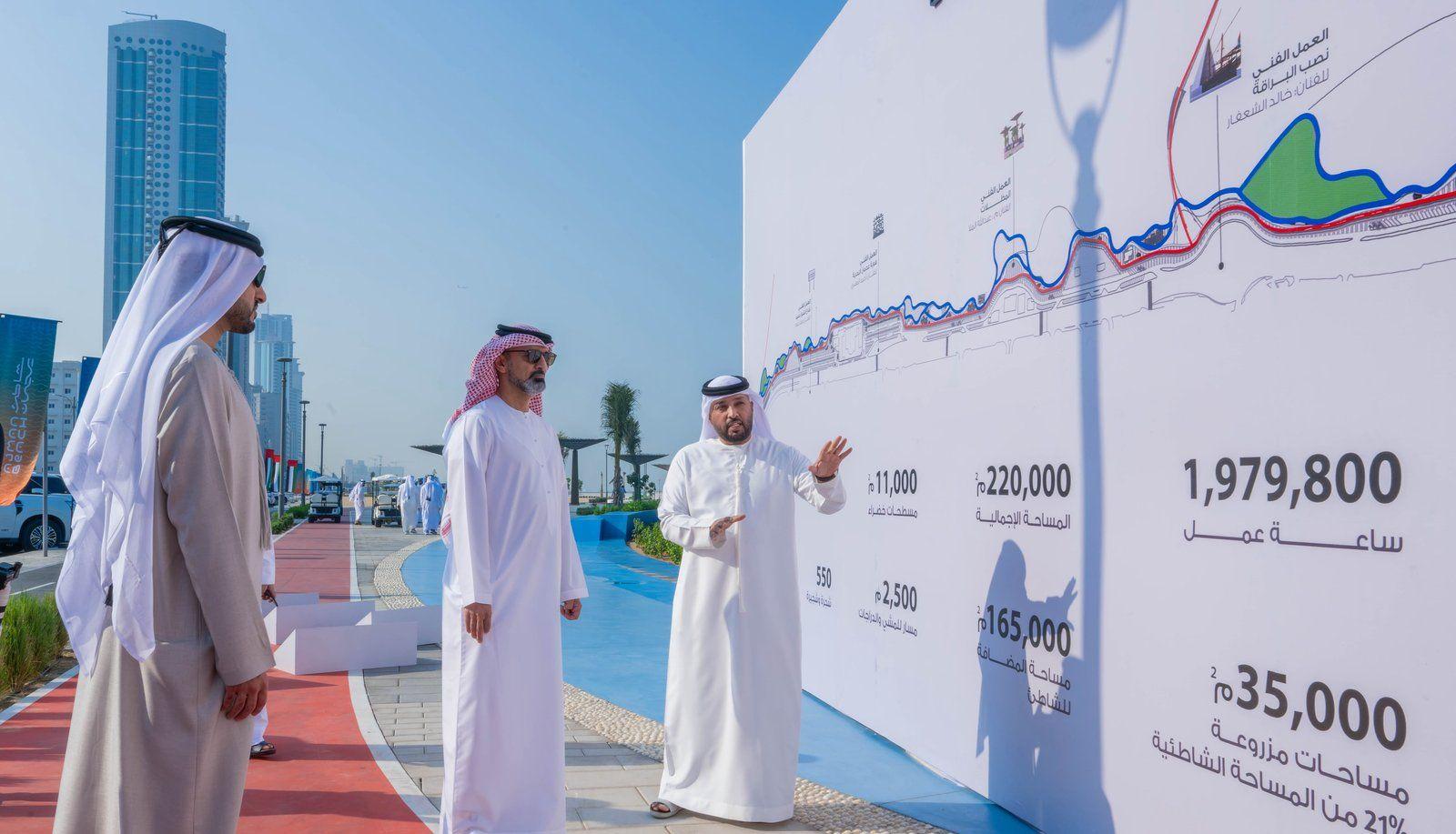
Sheikh Ammar bin Humaid Al Nuaimi, Crown Prince of Ajman, receives a briefing on the Ajman Beach development beside a board showing the project’s figuresSheikh Ammar bin Humaid Al Nuaimi, Crown Prince of Ajman, receives a briefing on the Ajman Beach development beside a board showing the project’s figures (Image source: Ajman Media Office)

Ajman, UAE - H.H. Sheikh Ammar bin Humaid Al Nuaimi, Crown Prince of Ajman and Chairman of the Executive Council, has launched the Ajman Waterfront Programme, a 30-kilometre plan made up of seven waterfronts, and marked the completion of a beach expansion that cost more than $44.4 million (AED 163 million).

The beach works were carried out by Ajman Municipality & Planning Department. The department said they belong to its wider effort to upgrade the seafront, add public facilities and improve residents’ daily lives, supporting Ajman’s growth as a prosperous, sustainable city under Ajman Vision 2030 and the targets of the Ajman Urban Master Plan 2040.

Sheikh Ammar said the programme reflects the emirate’s commitment to a complete waterfront and leisure offer that raises living standards and answers what residents and visitors want.

He stressed the need for projects that pair beauty and practicality with environmental sustainability, saying such schemes help make Ajman an appealing, future-ready place to live and to visit as a tourist.

Sheikh Rashid bin Humaid Al Nuaimi, Chairman of Ajman Municipality & Planning Department, joined him on the tour. Also present were Dr Engineer Khalid Moeen Al Hosani, Executive Director of the Public Health and Environment Sector; Dr Engineer Mohammed Ahmed bin Omair Al Muhairi, Executive Director of the Infrastructure Development Sector; and Dr Engineer Alia Mujallad Al Shamsi, Acting Director of the Planning and Survey Department and Head of the Project Team, with experts, specialists and members of the project team also in attendance.

Sheikh Rashid briefed the Crown Prince on how the project was phased and what it set out to achieve, covering its facilities, services and green areas as well as the engineering and environmental solutions applied.

According to Sheikh Rashid, the works enlarged Ajman Beach from 55,000 square metres to 220,000 square metres, an addition of 165,000 square metres. He said the result is a waterfront and leisure destination open to every part of the community, bringing nature, sport and recreation together.

The department said the larger beach widens the community’s public space and facilities, gives families somewhere to spend time together and draws more people into sport and outdoor activity.

The breakwaters now carry a promenade, while a combined walkway and cycle path stretches 2,500 metres. A dedicated accessible route gives people of determination safe, easy access to the breakwater and the water’s edge.
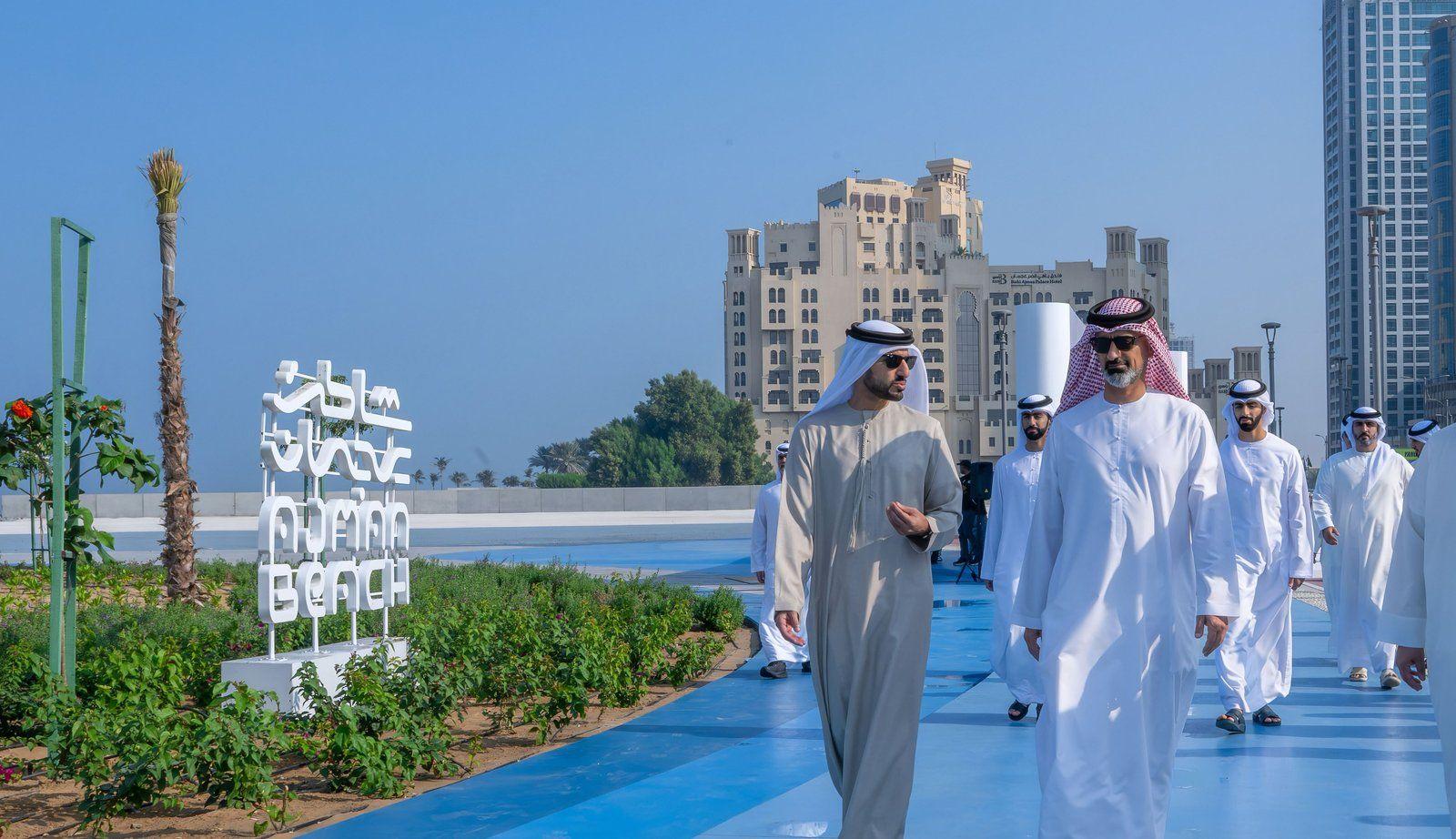

Officials walk along the blue pathways and planted areas of the expanded Ajman BeachOfficials walk along the blue pathways and planted areas of the expanded Ajman Beach (Image source: Ajman Media Office)

Sports facilities take in courts for beach volleyball and beach football. Families have dedicated zones fitted with seating and shading, and the Corniche now offers 1,000 parking spaces.

On the design side, shade structures draw on Emirati heritage and modern lighting covers the site at night. Blue pathways mirror the motion of the waves and visually tie the beach to the Corniche, and six artworks installed on the waterfront give it a distinct aesthetic identity, the department said.

The artworks follow Ajman Vision 2030’s aim of making the emirate a centre for arts and culture. According to the department, building art into the design produces a unified visual composition suited to the urban and coastal setting, with forms that can be seen from several angles, at ground level and from the air.

It said this lends the seafront a look of its own and makes it more appealing as a spot where art meets natural beauty and local character.

A shell walkway on Ajman Beach is, according to the department, the first and longest continuous sensory pathway of its kind, built from intact seashells and oyster shells. It stretches 2,500 metres and reaches up to 40 centimetres in width.

Over one million whole shells were used. They were recovered during the marine excavation and land reclamation carried out for the waterfront scheme, then set in concrete without altering their natural shapes.

The department presents the path as a working example of the circular economy in coastal infrastructure, converting what was dug up offshore into sustainable public assets that bring aesthetic, environmental and community benefits. It said the route lifts quality of life and gives walkers a sensory experience underfoot, and that it is also designed for people of determination who are blind or visually impaired.

Landscaping covers 35,000 square metres, or 21% of the beach area: 11,000 square metres of lawns and 24,000 square metres of flowering ground cover. Some 550 trees and shrubs were also planted, which the department said give the beach a more natural, attractive look.

The department said reusing the one million shells from the reclamation works to build 2,500 metres of pathways reflects its commitment to using available resources well and to sustainable environmental practice. It added that more development schemes and focused initiatives will follow, intended to secure a sustainable and prosperous future for the city and make Ajman a more attractive place to live and visit.

On the engineering side, specialised marine dredgers raised three million cubic metres of sand from the seabed, cleaned it and pumped it ashore onto the site. Some 368,000 tonnes of rock went into the works.