Property News International

Subscribe to Our Newsletter

Sign up to receive the latest tech news and updates from Property News International straight to your inbox.

By signing up, you will receive emails about property news products and you agree to our terms of use and privacy policy.

@2026 Property News International. All Rights Reserved.

Blends Media
A Blends Media Group Production

Sheikh Mohammed inaugurates $381m Hatta hydroelectric plant

Dubai’s Ruler opened DEWA’s pumped-storage hydroelectric plant in Hatta, inspected two housing schemes and was updated on tourism, commercial and transport work under the area’s master development plan.
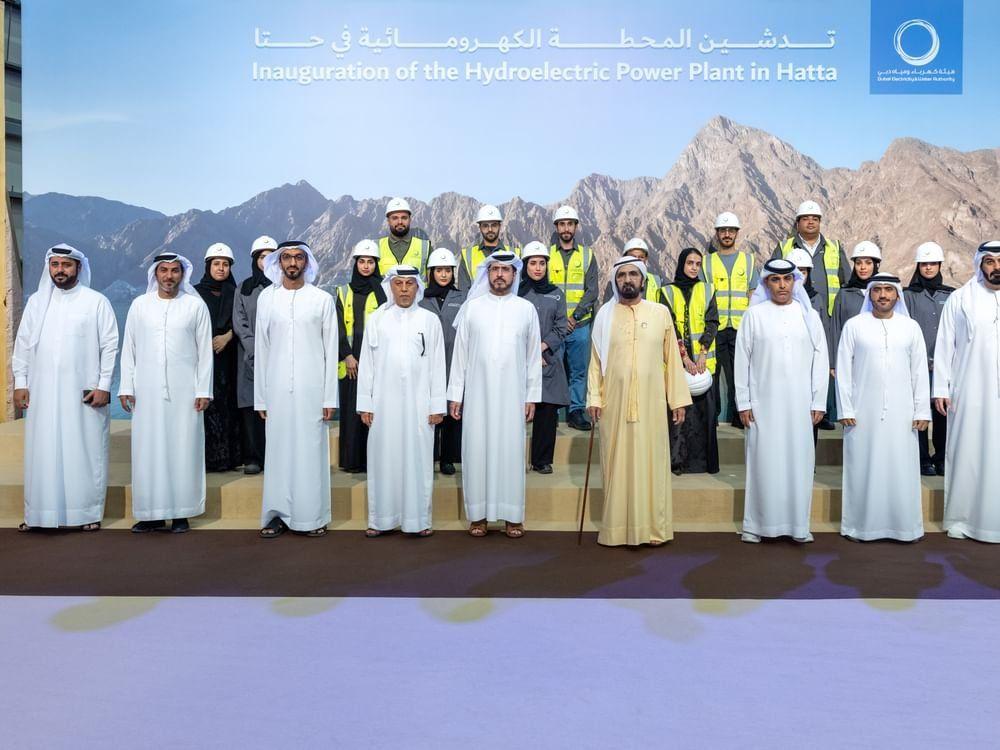
His Highness Sheikh Mohammed bin Rashid Al Maktoum with senior officials and the DEWA team during the inauguration of the Hatta hydroelectric power plant.His Highness Sheikh Mohammed bin Rashid Al Maktoum with senior officials and the DEWA team during the inauguration of the Hatta hydroelectric power plant. (Image source: WAM)

Hatta, UAE - His Highness Sheikh Mohammed bin Rashid Al Maktoum, Vice President, Prime Minister and Ruler of Dubai, inaugurated a $381 million (AED 1.4 billion) pumped-storage hydroelectric plant in Hatta on 26 November, during a visit to check how the area’s development projects are progressing.

On the tour, Sheikh Mohammed also went through future plans for Hatta intended to improve people’s quality of life and drive the area’s economic, social and tourism development, the Emirates News Agency (WAM) reported.

The schemes belong to the Hatta Master Development Plan, which Sheikh Mohammed launched in 2021 as part of the Dubai 2040 Urban Master Plan. Its goals are a better quality of life for residents and a stronger standing for Hatta as a sustainable tourism destination that draws visitors in every season.

Mattar Al Tayer, Director General and Chairman of the Board of Executive Directors of the Roads and Transport Authority (RTA) and Chairman of the Supreme Committee to Oversee the Development of Hatta, presented an update on current projects and initiatives and on the rollout of the Hatta Master Development Plan 2040. The plan aims for an economic impact of about $327 million (AED 1.2 billion) by 2040.

Four schemes led the presentation. Hatta Beach is a tourism, leisure and commercial development, and the Hatta District project is a commercial centre close to Hatta Heritage Village. Near Wadi Hub sits the Hatta Hotel and Resort project, and the Hatta Service Centre includes 13 commercial units serving the local community.

The list also covered a residential project for Emirati citizens, the Hatta Wedding Hall, a 12.5-kilometre mountain hiking trail at Umm Al Nusour and plans to redevelop Hatta Sports Club.

Al Tayer then set out the RTA’s own work in Hatta, which is designed to improve connectivity and mobility and to meet the area’s future development needs.

That work comprises six mobility hubs for residents and visitors, road improvement and development works, and cycling tracks running for more than 17 kilometres. More than 660 additional parking spaces are part of the package, and the Hatta Express runs direct from Dubai Mall to Hatta, carrying approximately 2,000 visitors a day.

Sheikh Mohammed told the entities involved to match investment opportunities to what Hatta needs, bring in more private sector participation, broaden the local economy and improve services.

At the hydroelectric plant, Saeed Mohammed Al Tayer, Managing Director & CEO of the Dubai Electricity and Water Authority (DEWA), took Sheikh Mohammed through the main features of the project, which was delivered under Hatta’s comprehensive development plan.
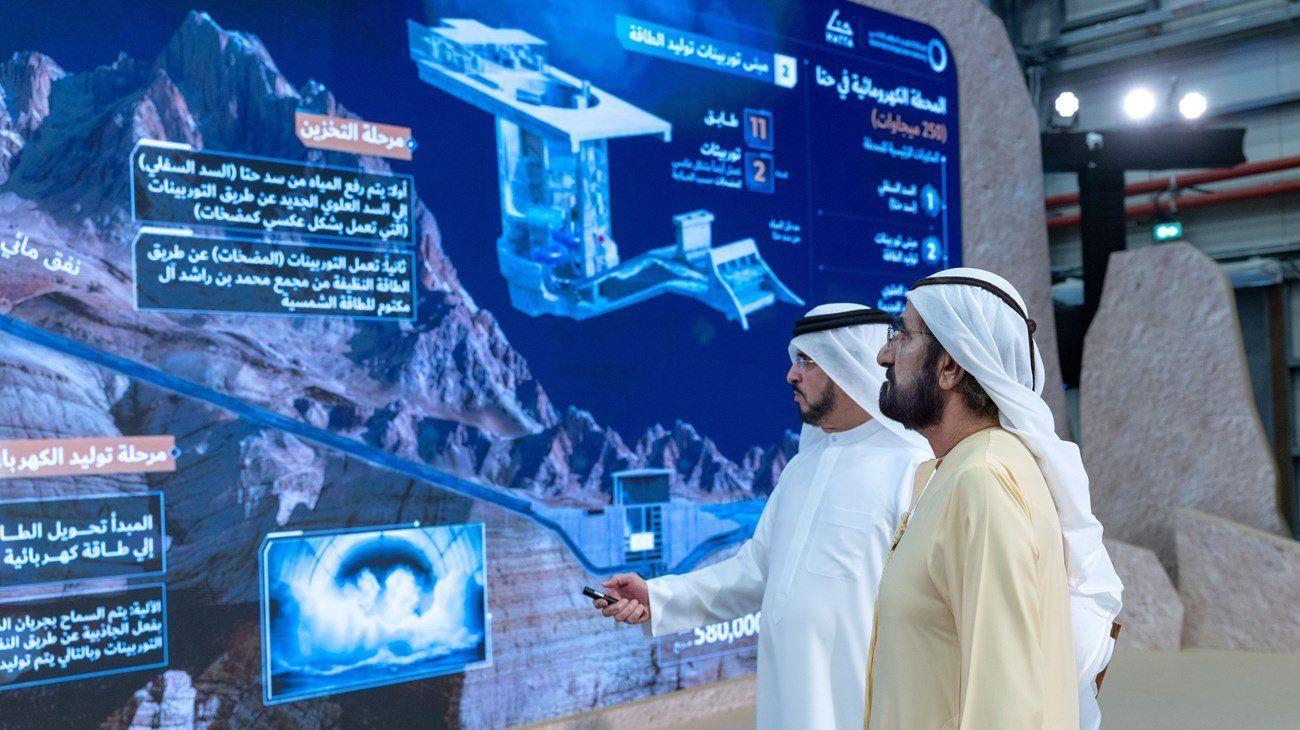
His Highness Sheikh Mohammed bin Rashid Al Maktoum receives a briefing on the Hatta pumped-storage hydroelectric power plant.His Highness Sheikh Mohammed bin Rashid Al Maktoum receives a briefing on the Hatta pumped-storage hydroelectric power plant. (Image source: WAM)

WAM described the plant as the first of its type in the GCC. It can generate 250 megawatts (MW) and store 1,500 megawatt-hours (MWh), and has an estimated operating life of 80 years. The project logged more than 22 million work hours.

Sheikh Mohammed watched the plant’s advanced turbines at work. They lift water from Hatta Dam, which holds 9 million cubic metres, to an upper dam with a capacity of 5.3 million cubic metres, using clean energy produced at the Mohammed bin Rashid Al Maktoum Solar Park. When the water is released back down to Hatta Dam, it generates electricity.

DEWA began trial operation and electricity exports from the plant to Dubai in August 2025. At the time, it put Hatta’s peak electricity demand at approximately 39 MW, with the surplus to be exported to Dubai.

Sheikh Mohammed praised DEWA’s work towards the goals of the UAE’s Net Zero 2050 Strategy and Dubai’s Clean Energy Strategy 2050, and said protecting the environment is central to sustainable development. He posed for commemorative photographs with the DEWA team, who thanked the leadership for its continued support and encouragement.

During the visit, Sheikh Mohammed also met citizens, business owners and community leaders from Hatta, which WAM said reflects his commitment to staying close to local communities and looking after their wellbeing. He heard their views and proposals on the area’s development, and they discussed plans for services and projects to come and the steps needed to deliver them.

The meeting also looked at how to encourage entrepreneurship, especially among young people, given the part it plays in Dubai’s economy. The talks centred on making it easier for residents to set up their own businesses and make use of the opportunities created by Hatta’s natural and tourism assets.

Attending the meeting were Mattar Al Tayer; Saeed Mohammed Al Tayer; Helal Saeed Almarri, Director General of the Dubai Department of Economy and Tourism; Omar Bushahab, Director General of the Dubai Land Department; and Mohammed Hassan Al Shehhi, CEO of the Mohammed Bin Rashid Housing Establishment (MBRHE).

Sheikh Mohammed said a future that is more sustainable and prosperous depends on investing in people, developing their skills and giving them the chance to grow and succeed in many fields. He also stressed the need for infrastructure that is highly efficient and reliable, so that people can reach their full potential, innovate and take an active part in shaping the country’s future.

He said spreading development to every region of the country, empowering local communities and involving citizens in national development remain key priorities, as do equal opportunities, getting the most out of development and drawing on local talent and resources for sustainable growth. WAM said this reflects the human-centred approach to development the UAE follows, which regards people as its greatest asset and makes their wellbeing and aspirations the focus of national development.

Sheikh Mohammed described Hatta as among Dubai’s leading tourist destinations, known for its natural beauty and its cultural and historical heritage. He said the work to build on the area’s particular strengths aims to open up new opportunities for its residents and allow them to contribute to its long-term development and prosperity.

He also called at Hatta Majlis, a gathering space for the community that holds around 100 people and is meant to strengthen social ties, encourage the exchange of knowledge and protect Emirati values and identity.

At another stop, Sheikh Mohammed looked at artefacts from the Suhaila archaeological site, located in the Hajar Mountains, which date from the late Islamic period. Pottery, coins, jewellery, metal objects and items of daily use are among the finds, which show how the communities living there adapted to their surroundings and kept up links with places as distant as the Far East.

Around 17 villages make up the site, containing 157 houses, seven defensive towers and 67 agricultural terraces. More than 630 archaeological features have been recorded there, and over 400 artefacts have been recovered so far.

Sheikh Mohammed said Hatta matters to the cultural and historical identity of the UAE and could become a sustainable tourism model. He called for its heritage and natural environment to be preserved, for economic opportunities to be created, for private sector participation to grow and for young entrepreneurs to be supported.

Housing projects in Hatta were also on the itinerary. Sheikh Mohammed said integrated communities that support quality of life and family stability, while keeping each area’s distinctive character, are a priority as set out in the Dubai Social Agenda 33.

He toured Makan 1, a $163 million (AED 600 million) project of 344 villas that was completed three years ago, and Makan 2, a $136 million (AED 500 million) scheme of 213 villas developed by MBRHE.

Sheikh Mohammed directed that allocation procedures for Makan 2 be speeded up so the villas are handed over promptly. The units are scheduled to be allocated by the end of December 2026.