Dubai, UAE: Dubai’s Roads and Transport Authority (RTA) has awarded the contract for Phase I of the Dubai Walk Master Plan in Al Ras, marking a key step in the emirate’s ambition to become a pedestrian-friendly city with enhanced mobility infrastructure and public realm experiences.
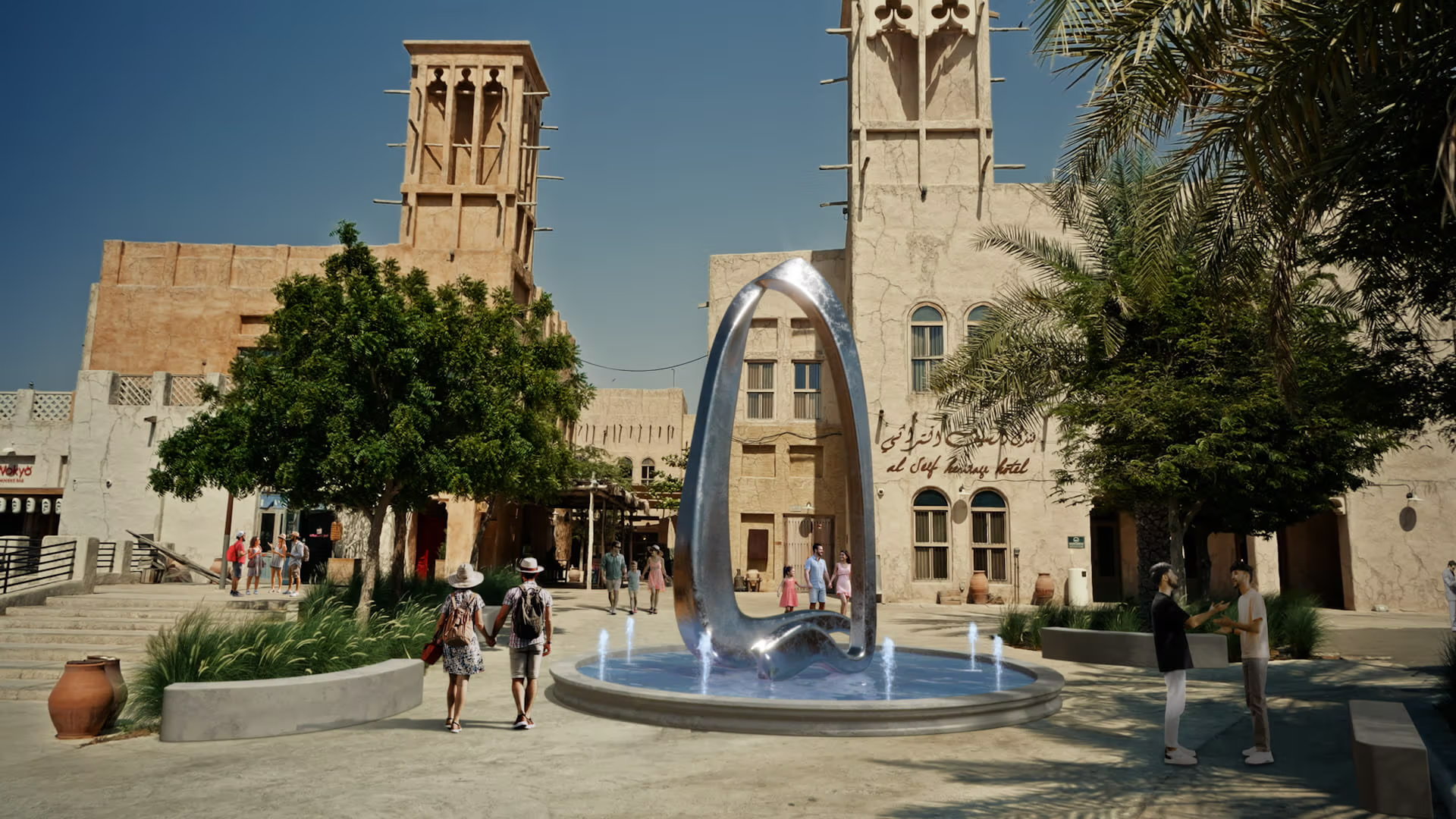
The first phase focuses on the development of the Historic Al Ras Walkway, delivering 12 km of pedestrian walkways and 5 km of cycling tracks, alongside the rehabilitation of 10 artistic spaces in collaboration with the Dubai Culture and Arts Authority and local Emirati artists.
The project aligns with Dubai’s broader urban development strategies, including the Dubai Urban Plan 2040 and the Quality of Life Strategy 2033, both of which prioritise accessibility, sustainability and community wellbeing.
His Excellency Mattar Al Tayer, Director General, Chairman of the Board of Executive Directors of the Roads and Transport Authority, said:
The Pedestrian Master Plan plays a key role in strengthening Dubai’s global competitiveness in walkway infrastructure and soft mobility. It also advances a key objective of the Dubai Urban Plan 2040 — the 20-minute city — by providing the infrastructure required to enable residents to access more than 80% of essential services within a 20-minute journey.
“The plan supports Dubai’s Quality of Life Strategy 2033 and contributes to enhancing community wellbeing by transforming Dubai into a pedestrian-friendly city, elevating pedestrian safety standards, and strengthening connectivity between various districts and the existing walkway network. It also integrates creative, aesthetic and cultural dimensions into soft mobility components, reinforces the distinctive identity of urban areas to enhance the emirate’s visual landscape, and contributes to the beautification of public spaces across Dubai.”
“It further strengthens collaboration with strategic partners in advancing creative elements within mobility infrastructure and facilities, while empowering youth and reflecting future mobility trends through their engagement in proposing innovative concepts for the design of walkways and associated amenities,” Al Tayer noted.
Enhancing connectivity across districts
The Dubai Walk Pedestrian Master Plan establishes a comprehensive framework for a city-wide, accessible walkway network designed to meet international safety standards while offering a comfortable and engaging pedestrian environment.
The plan targets the development and enhancement of over 6,000 km of walkways across 160 areas by 2040, alongside the construction of 110 pedestrian bridges and underpasses to improve inter-district connectivity.
The initiative aims to increase the share of walking and soft mobility trips from 16% in 2025 to 25% by 2040, reinforcing Dubai’s transition toward more sustainable urban mobility.
The Historic Al Ras Walkway will connect key heritage landmarks, including Al Ahmadiya School, Sheikh Saeed Al Maktoum House, Al Ras Public Library, Al Fahidi Fort and Al Shindagha Historic District.
The project will also integrate seamlessly with public transport networks, including 11 metro, bus and marine transport stations, supporting first- and last-mile connectivity while encouraging greater use of public transit.
Urban design interventions will focus on preserving the historic character of the area, incorporating widened pavements, shading structures, seating areas, expanded green spaces and context-sensitive wayfinding systems.
A central feature of the project is the rehabilitation of 10 artistic spaces, with contributions from Emirati artists showcasing murals, sculptures and public installations. These elements will be enhanced through advanced architectural lighting to highlight the area’s heritage and cultural identity.
Joint initiatives between RTA and the Dubai Culture and Arts Authority will activate the walkway through ongoing artistic programmes and seasonal events, creating a dynamic and engaging public realm.
Smart and sustainable pedestrian infrastructure
The wider master plan integrates a range of advanced urban features designed to enhance pedestrian comfort and usability. These include shaded walkways, misting systems to mitigate heat, interactive digital elements, and recreational and fitness installations.
Additional features include rest areas, commercial spaces, barrier-free access and a comprehensive wayfinding system supported by innovative ground markings, directional signage and sustainable lighting solutions.
Walkways will also be integrated into navigation systems and smart applications, supporting Dubai’s broader smart city ecosystem.
The first phase of the Dubai Walk Master Plan is scheduled for delivery between 2025 and 2027, with subsequent phases extending through to 2040.
Key infrastructure elements include pedestrian bridges linking major districts such as Al Nahda and Al Mamzar, Al Warqa’a and Mirdif, Mushrif and Al Khawaneej, and Dubai Silicon Oasis and Dubailand.
Through a combination of connectivity, sustainability and design innovation, the initiative reinforces Dubai’s commitment to creating a more accessible, liveable and globally competitive urban environment.