Al Meydan Street Corridor
The development extends from the intersection of Al Meydan Street with First Al Khail Street to Umm Suqeim Street, passing through key roads including Al Khail Road, Latifa bint Hamdan Street and Al Marabea’ Street.
The scope also includes the development of Al Marabea’ Street up to Sheikh Mohammed bin Zayed Road.
RTA said the project forms part of a broader strategy to develop Dubai’s strategic road corridors, increase network capacity and provide sustainable traffic solutions capable of supporting current and future developments.
First Contract Covers 14 Kilometres
The first contract covers approximately 14 kilometres, including the development of Al Meydan Street between Latifa bint Hamdan Street and Umm Suqeim Street and Al Marabea’ Street between Dubai Hills and Sheikh Mohammed bin Zayed Road.
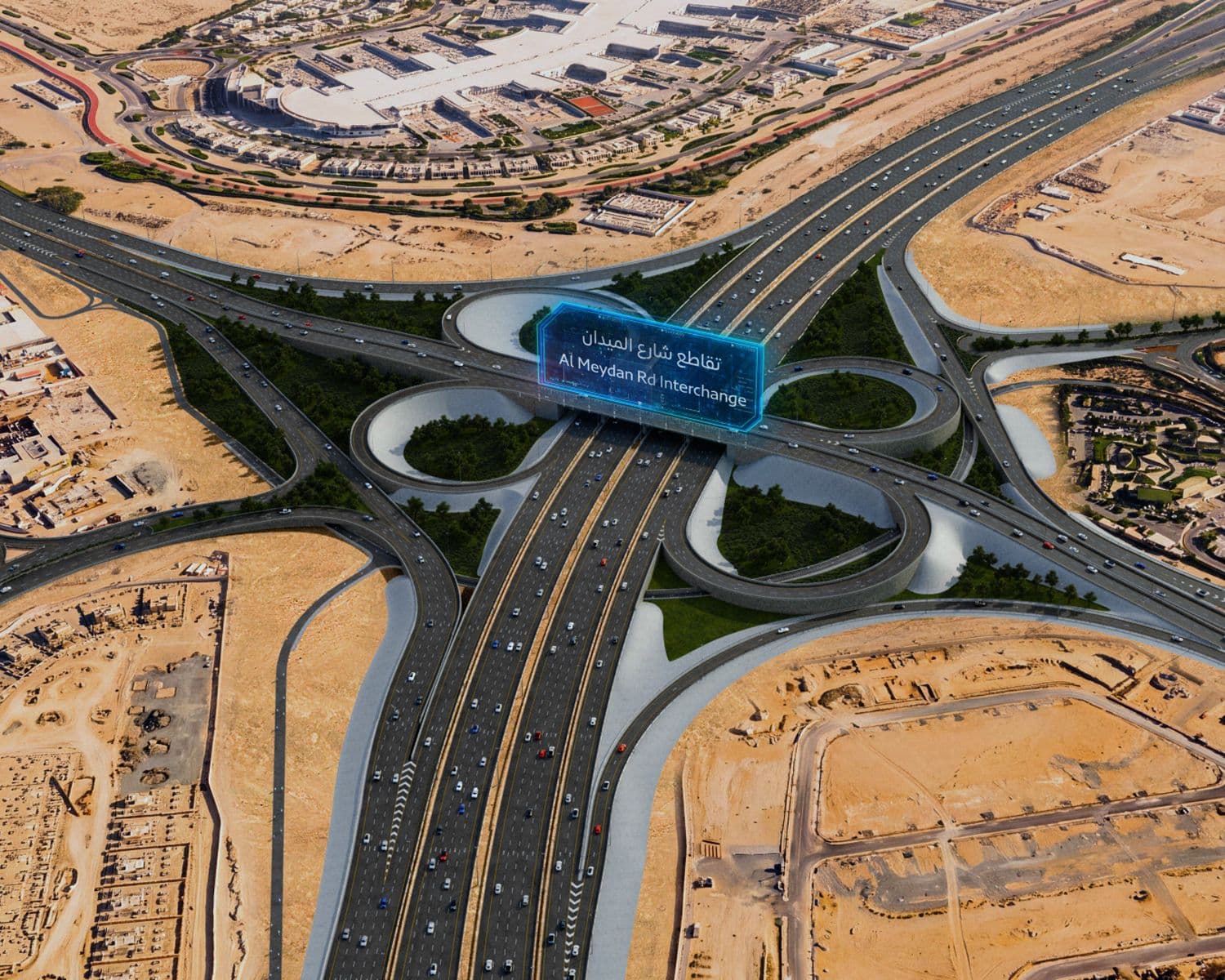
The intersection of Al Marabea’ Street and Al Meydan Street will be transformed into a grade-separated interchange with four lanes in each direction.
The interchange will include 1,600 metres of bridges and provide a combined capacity of 14,400 vehicles per hour in both directions, allowing free-flow movement and establishing a direct connection between Umm Suqeim Street and Latifa bint Hamdan Street.
A direct connection will also be created between Al Marabea’ Street and Sheikh Mohammed bin Zayed Road, with three lanes in each direction and capacity for 7,800 vehicles per hour.
The contract additionally includes a 700-metre elevated link on Dubai–Al Ain Road towards Nad Al Hamar Street, designed to improve accessibility for Nad Al Sheba and strengthen its connection with Dubai’s main road network.
Second Contract Adds Multi-Level Interchange
The second contract covers Al Meydan Street from First Al Khail Street through Al Khail Road to Muscat Street.
It includes approximately 2 kilometres of new surface roads connecting Al Meydan Street with Latifa bint Hamdan Street, alongside improvements at the intersection of Al Khail Road and the collector road towards Ras Al Khor Street.
The signalised intersection between Al Meydan Street and Muscat Street will be converted into a multi-level, grade-separated interchange providing free-flow movement in all directions.
The interchange will include 1,400 metres of bridges, with four lanes in each direction and a combined capacity of up to 14,400 vehicles per hour.
An integrated cycling network and underpasses beneath Al Meydan Street will also be developed to connect cycling routes with the existing network and provide additional sustainable mobility options.
Integration With Latifa bint Hamdan Street Project
The Al Meydan Street project will complement the recently awarded Latifa bint Hamdan Street Development Project, creating an interconnected network between several of Dubai’s major arterial roads.
These include Sheikh Zayed Road, Al Khail Road, Sheikh Mohammed bin Zayed Road, Emirates Road and Sheikh Zayed bin Hamdan Al Nahyan Street.
The combined infrastructure will serve areas including Dubai Hills, Nad Al Sheba, Mohammed Bin Rashid Gardens, Dubai District One, Al Barari, and communities along Al Meydan Street and Latifa bint Hamdan Street.
RTA recently commenced work on the 12-kilometre Latifa bint Hamdan Street Development Project, which will create a new corridor connecting Sheikh Zayed Road with Emirates Road.
The project includes seven bridges spanning 2,300 metres and eight tunnels extending 900 metres, with capacity for approximately 16,000 vehicles per hour in both directions. Daily trips are expected to exceed 130,000.
Once completed, the corridor is expected to reduce travel time between Umm Al Sheif Street and Emirates Road by 54%, from 33 minutes to 15 minutes. It is also scheduled for completion by the end of 2028.