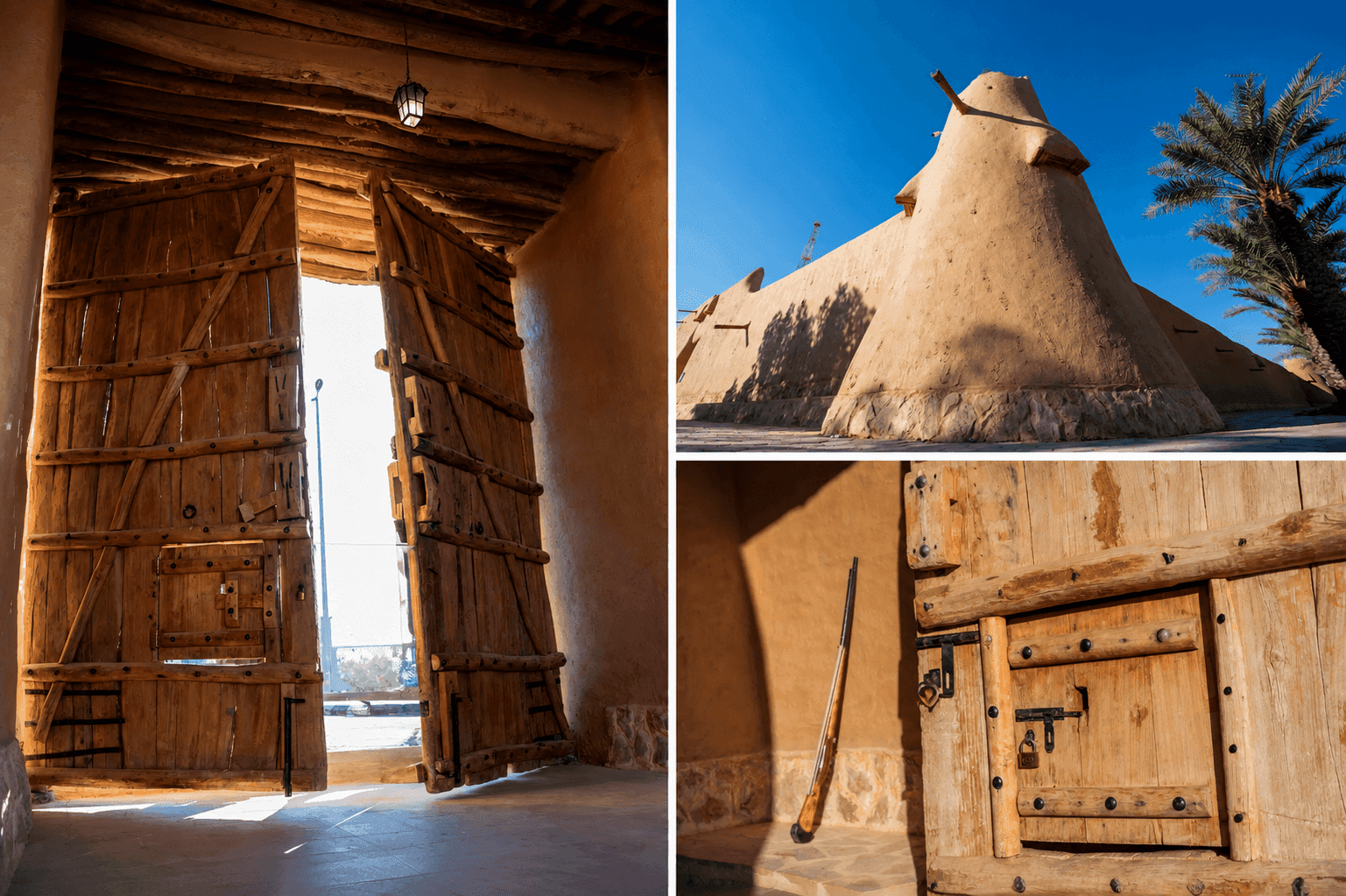
RAFHA, SAUDI ARABIA: The large wooden doors found across historic mud buildings in Saudi Arabia’s Northern Borders Region offer a distinctive record of the area’s traditional architecture, combining practical functions with local craftsmanship and architectural identity.
According to the Saudi Press Agency (SPA), these doors were designed as integral elements of the buildings they served, with their scale and construction reflecting the location, purpose and function of each structure.
Laynah Preserves Traditional Architecture
The historic village of Laynah provides one of the region’s notable examples, particularly through the entrance to the historic King Abdulaziz Palace.
Built in 1354–1355 AH using mud, adobe and stone, the palace features a main wooden entrance positioned at the center of its southern façade, alongside a secondary entrance.
The scale of doors in traditional buildings was closely linked to their intended function. King Abdulaziz Palace was more than a residence, also serving as the seat of the emirate.
The complex incorporated several facilities, including a mosque, a well, horse facilities, a spacious courtyard and towers used for guarding and surveillance.
Local Materials and Craftsmanship
The surviving doors also demonstrate how local craftsmen combined wood with mud, stone and adobe to create architectural components that balanced durability, security and visual character.
Rather than functioning solely as entrances, the doors formed part of a broader architectural approach shaped by the environmental conditions of the Northern Borders Region and the materials available locally.
This relationship between materials and function remains visible across Laynah’s historic buildings, where preserved doors, defensive towers and mud walls continue to illustrate the region’s traditional building methods.
The surviving structures provide a physical record of an architectural heritage in which locally sourced materials, craftsmanship and practical requirements collectively shaped the built environment.