Riyadh, Saudi Arabia - Saudi Arabia has put World Cup stadiums, a bigger Riyadh Metro network and tens of thousands of new homes at the top of its construction agenda for 2027, according to the Ministry of Finance’s final budget statement.
Published on November 24, the statement projects spending of about $371.2 billion (SAR 1,392 billion) and revenue of about $320.5 billion (SAR 1,202 billion), leaving a deficit of $50.9 billion (SAR 191 billion), or around 3.6% of GDP.
With cuts planned to bring that gap down, the government is concentrating on finishing a selected group of giga-projects and having infrastructure ready for international events, among them Expo 2030 and the 2034 FIFA World Cup.
AGBI said the shift in priorities is likely to sharpen competition among construction companies for contracts.
Minister of Finance Mohammed bin Abdullah Aljadaan said money is steered towards the programmes and projects that deliver most for the economy and society, weighing how far each has progressed and how ready it is.
The squeeze on capital spending began before the Iran war. At the end of 2024 the Public Investment Fund agreed to reduce funding across its project companies, AGBI reported, with some budgets falling by as much as 60%.
Officials have said individual projects will be scaled back, delayed or brought forward to make room for Expo and the FIFA tournament.
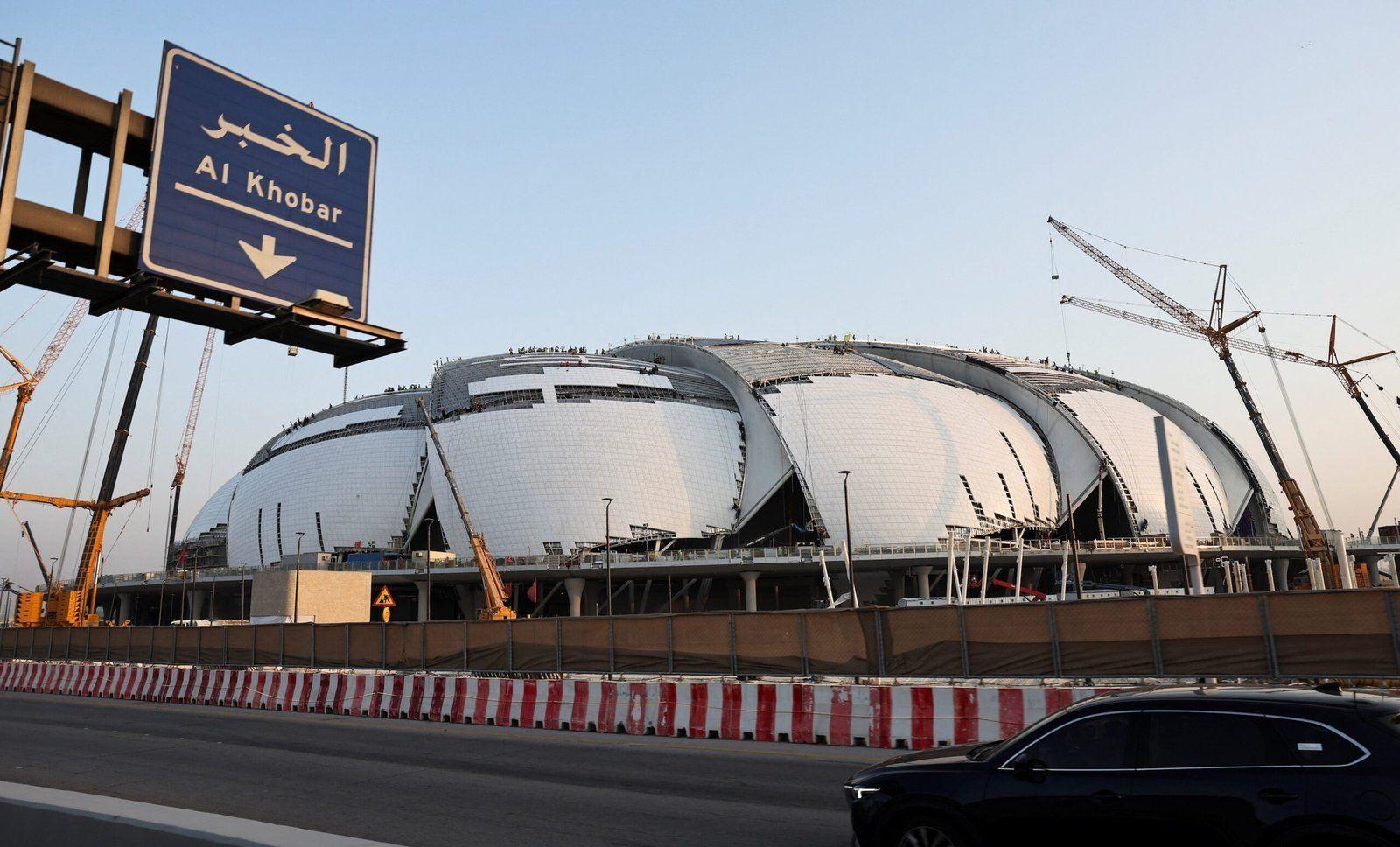
According to the statement, the World Cup will use 15 stadiums in five host cities. Four existing venues are being renovated, three are under construction and eight have yet to be built. The ministry also lists the 2027 AFC Asian Cup among the events it is preparing for.
In the capital, the upgrade of King Fahd International Stadium is 72% complete and will lift its capacity to 70,000 seats, the government said.
Expo 2030 is due to open in Riyadh on October 1, 2030. Murad AlSayed, Expo’s chief delivery officer, told a conference in September that “there is no negotiation in that”.
Six Riyadh Metro lines are already in service. In 2027 the statement commits the Royal Commission for Riyadh City (RCRC) to the first phase of a new seventh line, which will run 66km with 19 stations and carry 25,000 passengers an hour.
The new line includes an 8.4km branch linking King Saud University with Diriyah Gate, a giga-project of homes and cultural venues on the capital’s northern edge. The ministry puts its expected return to GDP at about $18.7 billion (SAR 70 billion).
A metro station serving Expo 2030, also north of Riyadh, is on the list too. The statement says work on it begins in 2026, and RCRC started construction of the Expo 2030 station earlier this month.
Housing is the third pillar. Vision 2030 targets home ownership of 70% among Saudi citizens, up from 47% in 2016, and the rate reached 66% at the end of 2025, with the statement giving 66.24%.
The government has pledged 80,000 homes next year. The statement describes the target as housing units and developed land to be provided with domestic and international real estate developers in regions across the kingdom.
Neom, once among the kingdom’s most prominent giga-projects, appears in the statement only through its port, where the expansion of the T1 container terminal has reached 80% and trial operation of the new berths is under way. Plans for a $2.5bn NEOM stadium for the 2034 World Cup were shelved in October.
Other giga-projects have moved further ahead. The Red Sea International Company has completed about 98% of the first phase of the Red Sea project, including 11 resorts with 1,405 hotel units, while the Qiddiya entertainment development near Riyadh has entered its second phase, the statement said.
London-based consultancy Capital Economics said on November 24 that the deficit could widen to between 5% and 6% of GDP over 2028-29. Such an outcome, it said, “would probably force the government to consider further fiscal consolidation measures, including more spending cuts and possibly tax hikes too”.
The ministry also said the new Government Tenders and Procurement Law stops a government body that has not dealt with overdue payments to contractors from signing new contracts.