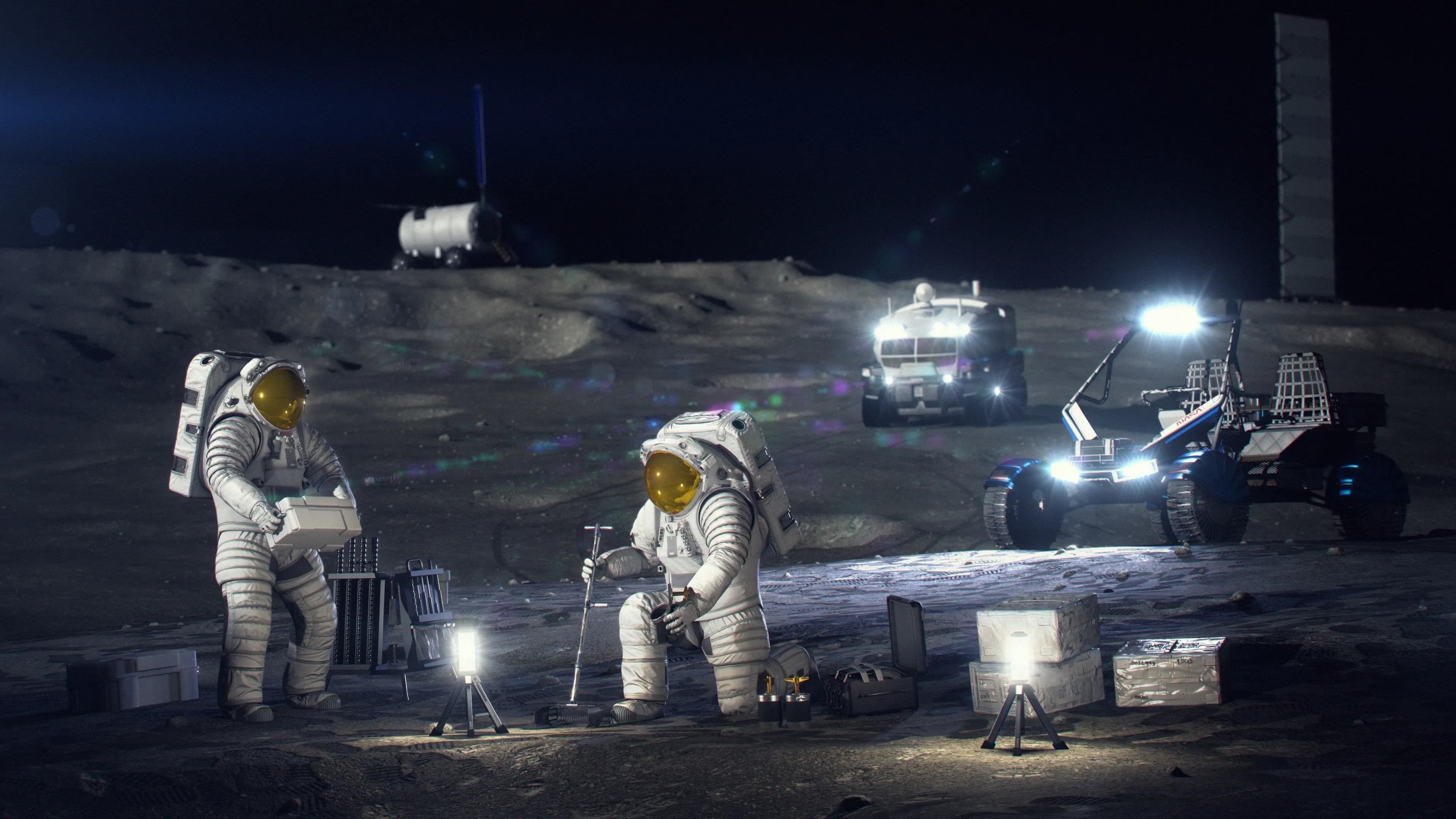
WASHINGTON, US - NASA has begun the implementation phase of its long-term plan to establish a permanent human presence on the Moon, initiating requests for lunar landers, robotic rovers, and autonomous drones as part of a broader multi-phase strategy linked to the Artemis programme.
The announcement comes less than two months after the successful Artemis 2 lunar flyby mission, which marked a major milestone in the United States’ renewed push toward deep space exploration and long-duration lunar operations.
NASA unveiled the first phase of its lunar base strategy by awarding contracts worth hundreds of millions of dollars to four American aerospace and space technology companies tasked with supporting upcoming missions to the Moon’s surface.
Under the initial phase, Blue Origin, the aerospace company founded by Jeff Bezos, will provide two cargo landers designed to transport lunar terrain vehicles and mission equipment to the Moon’s surface, targeting areas near the lunar south pole.
The lunar terrain vehicles will be manufactured by Astrolab and Lunar Outpost, while Firefly Aerospace, which successfully completed a lunar landing mission last year, will oversee the deployment of the programme’s first drones to the Moon.
NASA stated that the equipment is scheduled to arrive ahead of the first Artemis astronaut landing mission, which is currently provisionally targeted for 2028.
The agency’s broader lunar strategy is structured across multiple phases extending into the 2030s, as NASA and its commercial partners work toward establishing a long-term operational infrastructure on the Moon.
The second phase of the programme, expected to run from 2029 into the early 2030s, will focus on the initial construction of permanent infrastructure, including a dedicated lunar power grid designed to support extended operations and future habitation systems.
During the third phase, planned for the 2030s, NASA aims to fully prepare the lunar base for long-duration astronaut stays within specialised permanent habitats built to support scientific research, exploration, and sustained human activity on the lunar surface.
The Moon’s south pole has become a major focus for international lunar exploration efforts due to its potential water ice reserves, which could support future fuel production, oxygen generation, and long-term habitation.
NASA’s Artemis programme forms part of a wider global race involving government agencies and private aerospace companies seeking to establish strategic footholds in lunar exploration and future deep-space missions, including eventual human missions to Mars.
The implementation of permanent lunar infrastructure also represents a significant shift toward commercially supported space development, with private companies increasingly playing a central role in transportation, robotics, logistics, and surface operations.