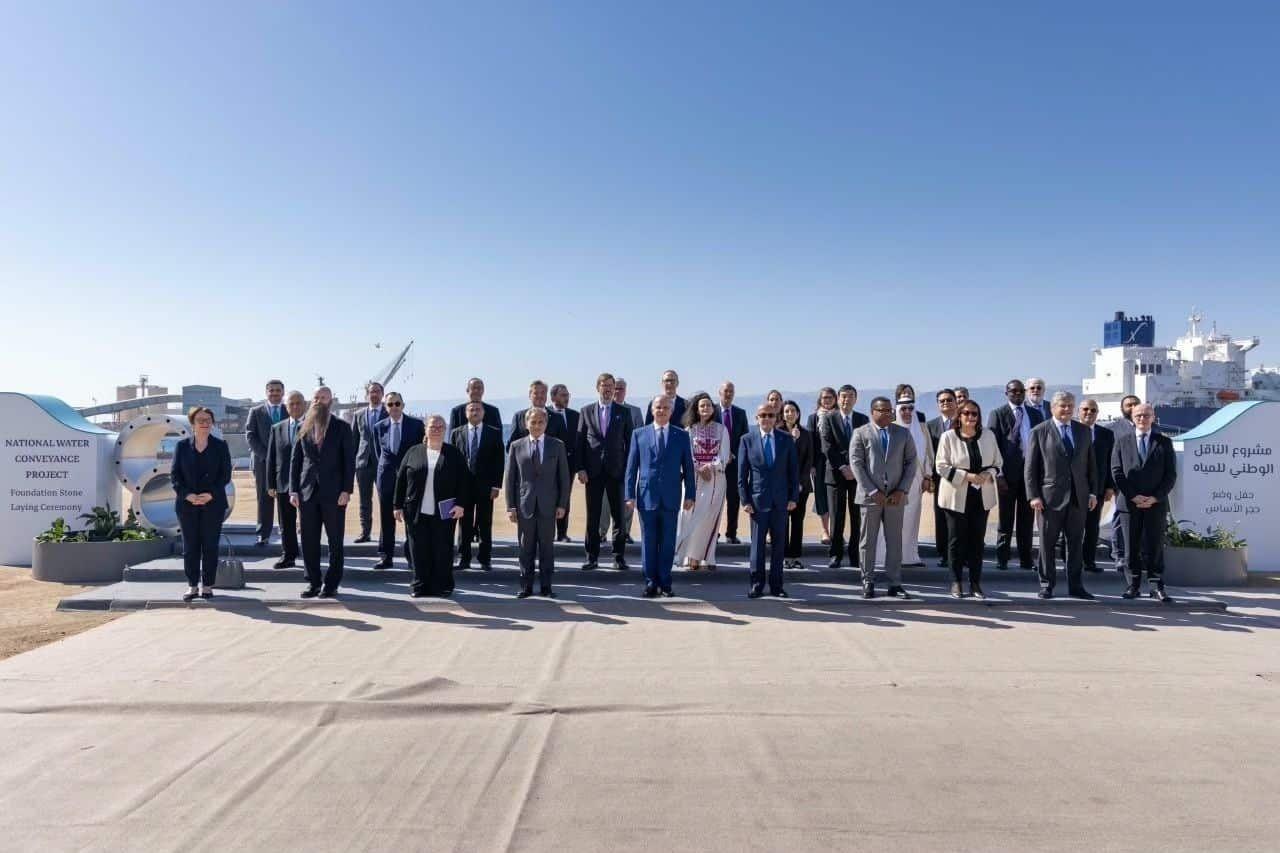
Aqaba, Jordan - Construction has started on the $6.7 billion Aqaba-Amman Water Desalination and Conveyance Project, a 30-year public-private partnership led by Meridiam, after ground was broken at a ceremony in Aqaba on 18 November 2026.
Prince Faisal bin al-Hussein of Jordan was patron of the event. Guests included Raed Abu al-Soud, Jordan’s Minister of Water and Irrigation, and Meridiam’s Founder and CEO, Thierry Déau. France sent its Minister Delegate for Foreign Trade and Investment Attractiveness, Nicolas Forissier, and its Ambassador to Jordan, Franck Gellet.
Meridiam described the scheme as critical infrastructure and a national priority for Jordan, saying it will do much to secure the kingdom’s water supply for decades and to help ease a chronic shortfall.
According to the company, few countries face greater water stress than Jordan, where most homes today get water on fewer than two consecutive days each week.
Thierry Déau, Founder and CEO of Meridiam, said: “The Aqaba-Amman project is much more than a major infrastructure project. It addresses one of the most fundamental needs of the Jordanian people: reliable access to water. This is what infrastructure is ultimately about: anticipating critical needs and delivering lasting impact for people, communities and the environment. We are proud to contribute our long-term vision and expertise, alongside our partners, to making such a complex and essential project a reality.”
Alongside Meridiam, the consortium brings together international and regional players: SUEZ, VINCI Construction Grands Projets, the Jordan Social Security Investment Fund (SSIF) and Orascom Construction.
Under the 30-year concession, the consortium will finance, design, build, operate and maintain the desalination facilities, the water conveyance infrastructure and the solar generation assets, SUEZ said in its own announcement. SUEZ will design and build the reverse osmosis plant with Orascom Construction, and the two companies will then run the plant, the transmission network and the solar plant.
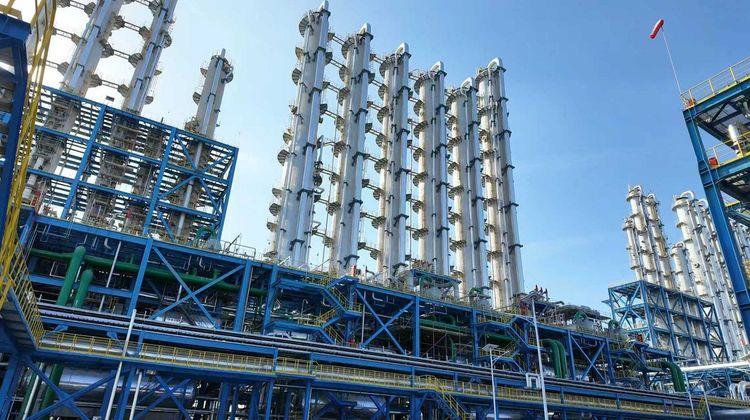
The centrepiece is a desalination plant that Meridiam counts among the biggest anywhere. Its design output is more than 300 million cubic metres of drinking water a year, which the company compares to filling roughly 330 Olympic pools daily.
SUEZ puts the plant’s capacity at 851,000 cubic metres per day and says it will be delivered in a single phase over a four-year construction programme.
When it is finished in 2030, the scheme should add 110 litres of drinking water per person each day. Across 2030-2040, Meridiam expects it to cover about 40% of what Jordan’s population needs.
Some 418 km of pipe will move the desalinated water from Aqaba, on the Red Sea, to Amman, a route Meridiam called a major water corridor through the country.
Renewable energy will meet much of the scheme’s power demand, about 80% of what the desalination plant uses, according to Meridiam. A 280 MW solar plant will support that supply; the company said it will be Jordan’s largest, occupying land equal to around 700 football pitches.
Meridiam said the benefits go past water supply, to the environment and society. Together, those features are forecast to lower carbon emissions by a minimum of 6.7 million tonnes across the concession, and the company described it as a possible template for cutting emissions from big water networks.
The scheme should create more than 33,000 jobs while it is built and 2,600 once it is running.
Backers include a wide group of development finance institutions from around the world and investors focused on climate, which Meridiam said shows how much the scheme matters to Jordan and to the wider international community.
Its funding mixes sponsor equity, financing in international and local currencies, and grants, an arrangement the company tied to the size and long life of the asset.
The Green Climate Fund (GCF), for which Meridiam is an Accredited Entity, is a major supporter, which Meridiam said reflects how strongly the scheme is linked to climate goals.