Manama, Bahrain - The six member states of the Gulf Cooperation Council (GCC) are due to sign the General Railway Agreement when the bloc’s transport ministers meet in Bahrain on November 8, a step intended to speed up one of the region’s biggest joint transport schemes.
Sheikh Abdullah bin Ahmed Al Khalifa, Bahrain’s Minister of Transportation and Telecommunications, said faster delivery of the railway is now a priority across the Gulf.
He pointed to the need for close coordination between the six states, and for them to finish the regulatory and legislative frameworks the network needs before trains can run on it.
Under the GCC General Secretariat's published specifications, passenger trains are designed to operate at approximately 220 km/h, while freight trains are expected to run at speeds of 80 to 120 km/h, BETH Analysis said.
Full operation is scheduled for December 2030. Finished cross-border stretches linking neighbouring countries could open before then, according to the same analysis.
The railway is intended to establish an integrated transport corridor connecting ports, industrial centres and commercial markets across the Gulf. According to the GCC General Secretariat, the network is expected to improve passenger and freight connectivity, facilitate regional trade and support economic integration among the six member states.
The planned agreement represents a further step towards developing a unified regional railway system, with implementation requiring coordination on infrastructure, regulations and cross-border operations among the participating countries.
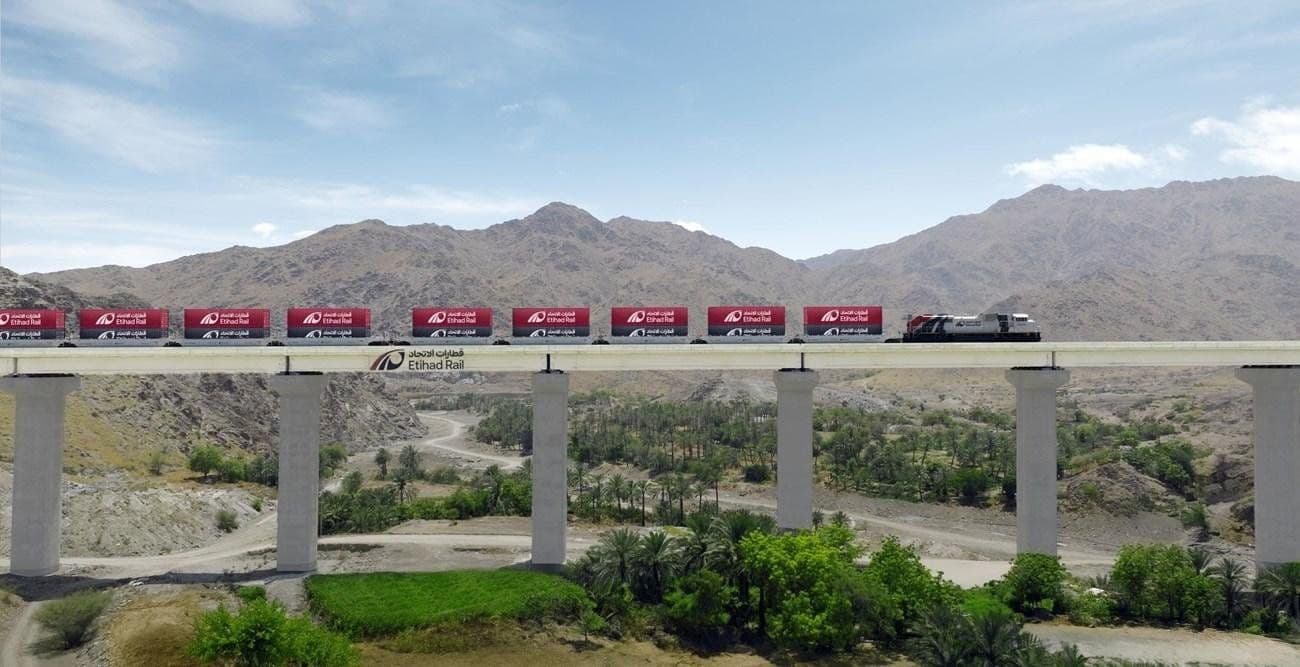
The GCC Railway Project will require extensive rail infrastructure development across the six member states, including railway lines, stations, bridges and cross-border connections.
The rail link, planned at about 2,100km, was first agreed by Saudi Arabia, the UAE, Kuwait, Qatar, Oman and Bahrain back in 2009. Sheikh Abdullah announced the November 8 meeting at the Fujairah Energy Markets Forum in October.
At the GCC summit in Bahrain in December 2025, Gulf leaders approved the General Agreement for connecting member states through the GCC Railway Project. The planned November 8 signing represents a further step towards establishing the regulatory framework for the network.
The UAE and Saudi Arabia signed a memorandum of understanding in October on general principles for a joint rail network able to carry cargo, and agreed to carry out technical and economic studies. In May, the head of the GCC Railway Cooperation Authority put the project at around 50% ready.
Bahrain will join the network through the King Hamad Causeway, a new 57km link to Saudi Arabia beside the King Fahd Causeway with four road lanes and two rail tracks, running from a planned King Hamad International Station at Ramli to Dammam Railway Station, according to the Ministry of Transportation and Telecommunications.
The ministry expects the GCC railway to carry about 8 million passengers a year by 2050, with the Ramli freight yard handling 600,000 containers and 13 million tons of bulk freight.