Property News International

Change region:

GlobalcheckMiddle East

Subscribe to Our Newsletter

Sign up to receive the latest tech news and updates from Property News International straight to your inbox.

By signing up, you will receive emails about property news products and you agree to our terms of use and privacy policy.

@2026 Property News International. All Rights Reserved.

Blends Media
A Blends Media Group Production

Fastmarkets Middle East Iron & Steel 2025 Opens in Dubai

Middle East Iron & Steel 2025 opens in Dubai, gathering global leaders to address trade shifts, oversupply, protectionism, and the region’s growing role in low-carbon steel.
Global steel leaders gather in Dubai for MEIS 2025Delegates gather at MEIS 2025 as global steel leaders discuss trade shifts and decarbonisation. (Image: WAM)

Dubai, UAE: Dubai hosted the opening day of the 28th edition of Middle East Iron & Steel (MEIS) 2025, bringing together senior steel and metals executives from more than 55 countries. The event, organised by Fastmarkets, drew global attention as industry leaders examined shifting trade patterns, supply pressures, and the accelerating transition toward low-carbon steel.

This year’s conference comes at a pivotal moment for the sector. Global oversupply, rising protectionism, and redirected exports continue to reshape market exposure, while the EU’s Carbon Border Adjustment Mechanism (CBAM) is exerting new pressure on producers. Against this backdrop, the Middle East supported by a USD 3 trillion project pipeline and a fast-growing industrial base is emerging as a decisive force in global steel supply and investment.

Middle East Strengthens Position as a Strategic Global Steel Hub

Executives opened the discussions by noting that the global center of gravity in steel is shifting. While established markets in Europe and parts of Asia face volatile demand and tightening tariffs, the Middle East’s scale, energy advantages, and predictable project pipeline are positioning the region as a cornerstone of long-term competitiveness.

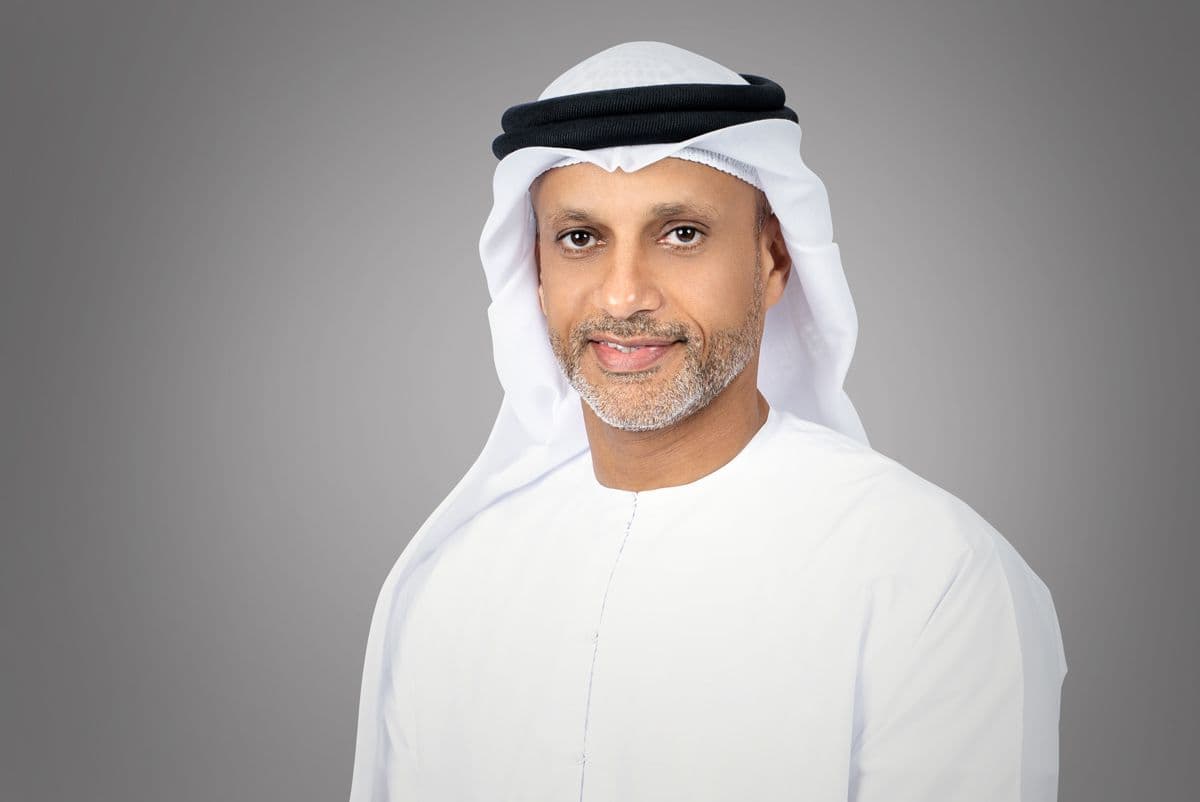
“In an evolving geopolitical landscape, resilience and strategic foresight have become decisive advantages. At EMSTEEL, we are strengthening supply chains, accelerating decarbonization, and deepening regional partnerships so that uncertainty becomes an opportunity, not a constraint, for our industry and for the UAE’s industrial future,” said Eng. Saeed Ghumran Al Rumeithi, Group CEO EMSTEEL.

A recurring theme throughout the day was the region’s structural strength, reliable access to raw materials, large-scale urban and infrastructure development, and long-term certainty for manufacturers.

Eng. Saeed Ghumran Al Rumeithi, Group CEO EMSTEEL.Engineer Saeed Ghumran Al Remeithi, Group Chief Executive Officer of EMSTEEL

Rising Protectionism Reshapes Global Trade Flows

Protectionist policies dominated parts of the dialogue, with leaders noting that global volatility is increasingly driven by national industrial strategies.

Raju Daswani, CEO of Fastmarkets, highlighted the impact of tariff regimes, stating: “Protectionist measures have made steel markets far more volatile. We’ve seen sharp movements in HRC benchmarks across Europe and the US as tariffs and quota regimes tighten. The doubling of US Section 232 tariffs is just one example of how national industrial strategies are now driving global price behaviour.”

Industry heads from across MENA noted that redirected steel, particularly surplus from oversupplied markets, is flowing into open-border regions, including parts of the Middle East.

Sharjeel Azhar, CEO of Al-Ittefaq Steel, warned of the underlying imbalance: “There is a massive oversupply of 500–600 million tonnes, which is distorting trade flows and reshaping market exposure.”

Others stressed that while temporary safeguards may ease pressure, long-term stability depends on innovation and fair competition.

Rafic Daou, Vice Chairman and Managing Director of Suez Steel, remarked that the industry “thrives when borders are open,” provided that market conditions remain fair and transparent.

Dilip George, Group CEO of Foulath Holding, added that predictable trade frameworks are essential for investment confidence.

Decarbonisation Becomes a Defining Competitive Advantage

The transition to low-carbon steel was a central focus of MEIS 2025. Executives highlighted hydrogen-based DRI technologies, renewable-powered electric arc furnaces, circular production models, and carbon-capture systems as the innovations that will determine global competitiveness in the decade ahead.

With vast renewable resources, deep industrial zones, and strong government backing, the Middle East is increasingly viewed as one of the few regions capable of scaling green-steel production quickly enough to meet global demand.

A Record-Breaking Edition for the Region’s Largest Steel Event

With more than 1,400 delegates from 55+ countries, MEIS 2025 marks the largest edition in its 28-year history. The strong turnout reflects the region’s growing influence in shaping the future of international steel production, pricing, and technology adoption.

At a time of heightened geopolitical tension, market volatility, and pressure to decarbonise, MEIS continues to serve as the region’s most authoritative platform—bringing together policymakers, financial institutions, technology innovators, and major steel producers to forge new partnerships and define the path forward.