Sign up to receive the latest tech news and updates from Property News International straight to your inbox.
By signing up, you will receive emails about property news products and you agree to our terms of use and privacy policy.
@2026 Property News International. All Rights Reserved.
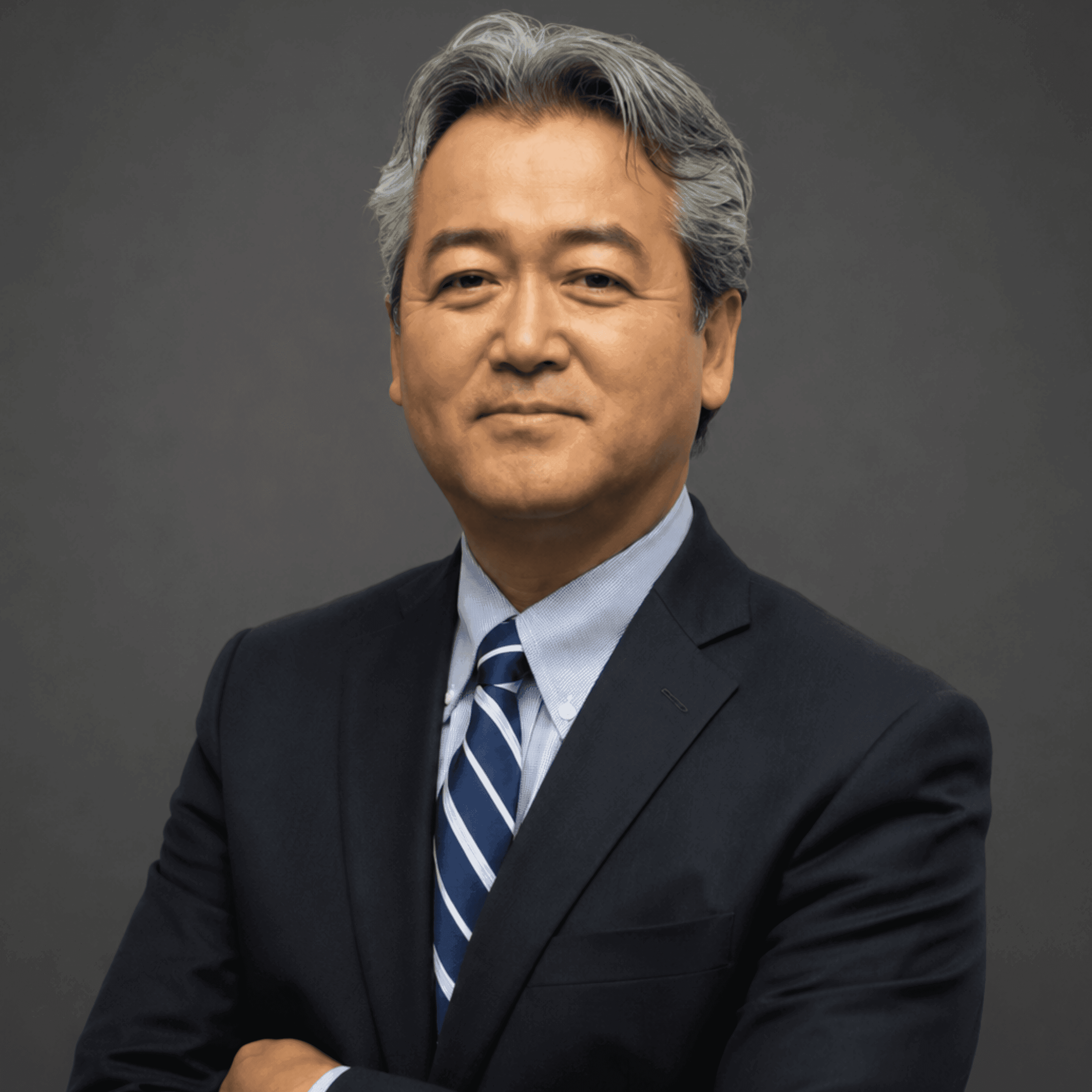
Tatsuya Suzuki, Chief Executive Officer of Kasumigaseki Capital MENA. Image: SuppliedThe GCC continues to attract global institutional capital and record levels of real estate investment, i and nternational developers are increasingly looking to the region as a long-term growth market. Among them is Kasumigaseki Capital MENA, the regional arm of Japan-listed Kasumigaseki Capital, which has built a reputation for combining disciplined investment, specialised asset development and long-term value creation across logistics, hospitality and healthcare.
In this exclusive interview with Property News International, Tatsuya Suzuki, Chief Executive Officer of Kasumigaseki Capital MENA, discusses the company's expansion into the Middle East, the opportunities it sees in the UAE and wider GCC, and how Japanese expertise in quality, efficiency and asset management can contribute to the region's evolving real estate landscape. He also shares insights on sustainability, technology, branded developments and the company's long-term vision for supporting the next phase of growth across the GCC.
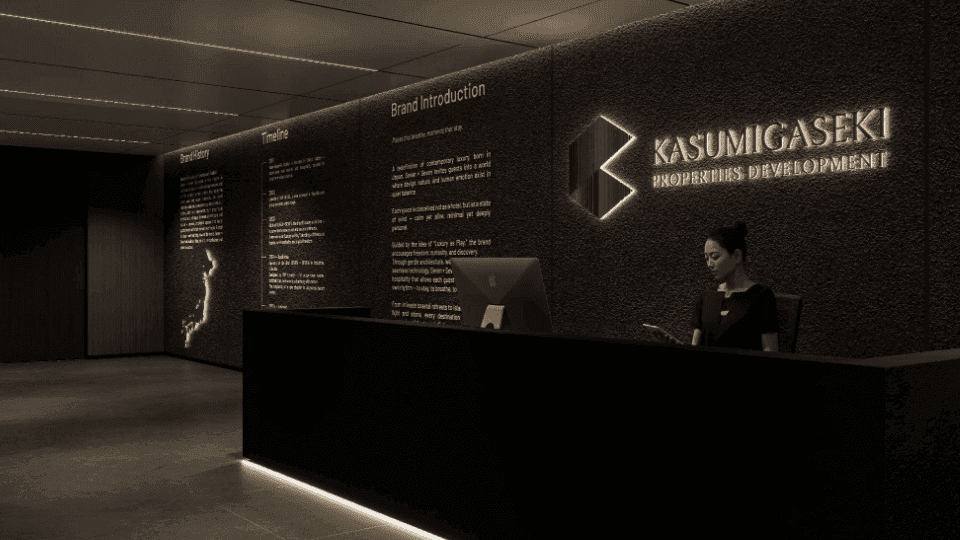
The Kasumigaseki Capital headquarters showcases the company's commitment to innovation, quality and long-term value creation. Image: SuppliedKasumigaseki has established a strong reputation in Japan's real estate sector. What motivated the company's expansion into the Middle East, and why do you see the GCC as a strategic growth market?
Kasumigaseki Capital was built on a simple idea, captured in our corporate philosophy: “Turning challenge into value.” In Japan, we have grown into a consulting-led developer and fund manager, addressing social challenges across logistics, hospitality and healthcare. We are listed on the Prime Market of the Tokyo Stock Exchange (ticker 3498), and our combined development pipeline and assets under management have reached roughly USD 5.17 billion as of February 2026. Taking that proven model into markets – one that pairs genuine growth with real social purpose - was, for us, a natural next step.
Over the years, we have deliberately chosen to work in areas that address social challenges head-on: fluorocarbon-free cold and frozen warehouses that use natural refrigerants to reduce environmental impact; hotels that support Japan’s ambitions as a tourism destination; and healthcare facilities that answer the needs of a super-ageing society. That consistent test — genuine growth combined with real social purpose — travels with us into the Middle East, entirely unchanged.
We chose Dubai as our first base in the region for clear reasons: the powerful demographic and economic momentum embodied in the Dubai 2040 Urban Master Plan, a transparent and predictable policy framework, and some of the safest streets in the world. We began by establishing our local subsidiary Kasumigaseki Capital Mena, and learning the market through transactions on the ground — and we are now evolving toward the same fund-based development model we operate in Japan.
We see the GCC as a strategic growth market because it is a region that builds for the long term, guided by vision rather than short-term speculation. As our Chairman, Mohammad Khalifa Majid Alabbar Alfalasi, has said, the UAE has consistently shown that it is a market built for the long term — its economic resilience, transparent regulatory environment and visionary leadership continue to inspire the confidence of international investors. We, too, have come not for a quick return, but to walk alongside this region for the long haul.
The UAE continues to attract global institutional investors. What characteristics of the region's real estate market make it particularly attractive for Japanese investors and developers?
Three characteristics stand out.
First, exceptional growth potential. According to the official Dubai 2040 Urban Master Plan, Dubai's resident population is projected to reach 5.8 million by 2040, up from about 3.3 million in 2020. The plan also forecasts a daytime population of approximately 7.8 million, reflecting commuters, tourists, and visitors, which points to sustained, demand-led appetite for real estate. That is already visible in the numbers: according to the Dubai Land Department, transaction value in the first quarter of 2026 rose about 31 per cent year on year, to a record of roughly AED 252 billion. Even against a backdrop of regional uncertainty, the market’s underlying strength is showing up in the data.
Second, world-class design and sophistication. In Dubai, the standard of design and quality on offer rivals — and often surpasses — that of the world’s leading cities, and its landmark developments and branded residences frequently set the global benchmark. That exceptional design, and the refined, meticulously finished spaces it produces, is itself a powerful draw for investors worldwide and for discerning end-users who recognise true quality. For a company as devoted to design and craftsmanship as we are, it is an ideal market in which to pursue the very highest standards.
Third, safety and stability. Dubai offers world-class security, low country risk, and consistent, transparent policy. Just as importantly, this is not a market built on heavy bank borrowing; it is underpinned by disciplined capital, which makes it far more resilient when conditions shift. Indeed, through the recent period of regional tension, the market steadied quickly, and institutional capital has, if anything, leaned further in. Few markets offer that combination.
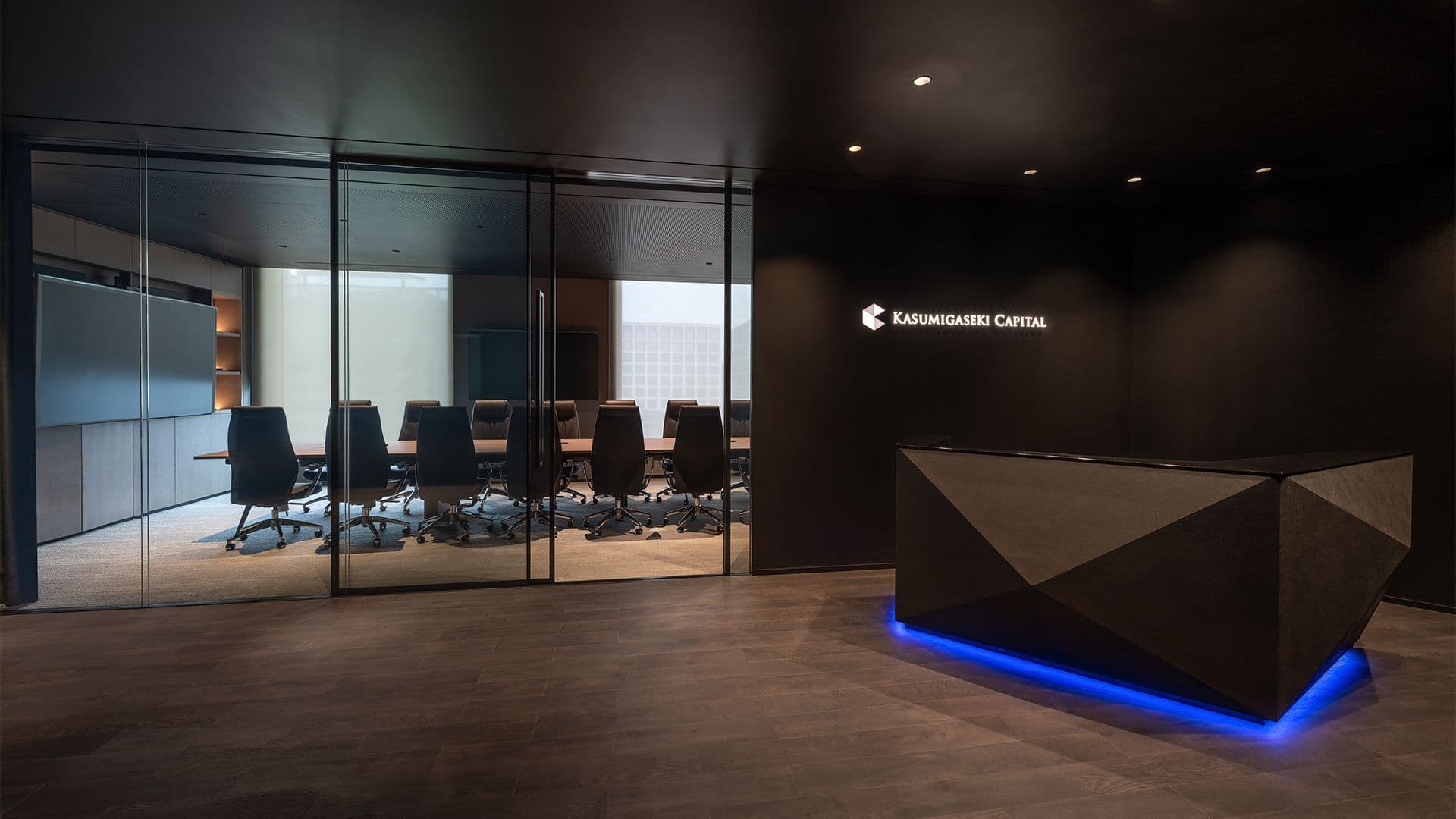
Kasumigaseki Capital MENA's office reflects the company's focus on modern design, operational efficiency and long-term investment. Image: SuppliedHow do you see Japanese development expertise, particularly in quality, efficiency and long-term asset management, contributing to projects across the Middle East?
The philosophy behind Japanese development is rooted in three fundamental values. Hinshitsu an uncompromising standard. Applied to every material, decision and person we build for, regardless of price point. Kakushin — human-centred, practical innovation; and Anshin — reliability, integrity, and dependable delivery and after-sales support.
On our Middle East projects, we care less about how a building looks in a photograph and more about how it works day to day: layouts that use space intelligently, finishes that stand up to real life, and details that reduce the burden of upkeep — homes that remain comfortable long after handover.
Our business model itself is an advantage, too. Our “circulation” approach — from land acquisition through development and fund formation to, ultimately, a REIT — means we do not sit on assets; instead, we keep adding value over time through project and asset management. We can also transfer the operational know-how built in Japan directly overseas: labour-light hotel operations, automated cold-storage logistics, and the running of healthcare facilities. Our joint venture with Daito Trust Construction on the Emerald Hills project is the first expression of precisely that approach.
Sustainability has become a defining priority for the real estate industry. How is Kasumigaseki integrating ESG principles and innovation into its investment and development strategy in the region?
For us, sustainability is not an add-on; it is built into our philosophy of “turning challenge into value.”
In Japan, our logistics business has moved to fluorocarbon-free cold and frozen warehouses using natural refrigerants, paired with solar power — reducing environmental impact while automation tackles the very real challenge of labour shortages. In healthcare, we supply hospice residences that allow people to live with dignity, addressing a shortage of facilities in a super-ageing society. In hospitality, we combine efficient, digitally enabled operations with a genuine contribution to regional revitalisation.
That thinking carries straight into our work in Dubai. Durability, designs that lower the maintenance burden, and layouts that waste nothing are, in themselves, an environmentally and socially responsible approach. We treat ESG not as a compliance exercise but as long-term value creation — and we embrace innovation, from real-time operational dashboards and keyless check-in to warehouse robotics, to solve social challenges and deliver returns at the same time.
As competition intensifies across the GCC property sector, which asset classes or market segments do you believe present the strongest long-term opportunities for investors?
The strongest long-term opportunities, in our view, lie in segments underpinned by real demand and genuine brand strength.
First, branded and premium residences. Through premium branded residential developments, we demonstrate how a clear vision, exceptional design, and attention to detail can set a new benchmark in the market.
Second, logistics and cold chain. The expertise built in Japan through LOGI FLAG — across chilled, frozen and automated warehousing — is, we are convinced, highly competitive in fast-growing markets.
Third, hotel-anchored mixed-use. Models that combine several income streams — like the hotel-and-residences development we have begun in Miami — deliver the scalability and stability that institutional investors look for.
There is talk of oversupply, but we see the deliveries arriving in 2026 and 2027 as a healthy cooling that guards against overheating. Prime assets in locations such as Downtown, Dubai Marina, Palm Jumeirah and Dubai Hills should continue to benefit from long-term appreciation. And our circulation model — ultimately channelling projects into funds and REITs — is precisely the framework for maximising the value of those quality assets.
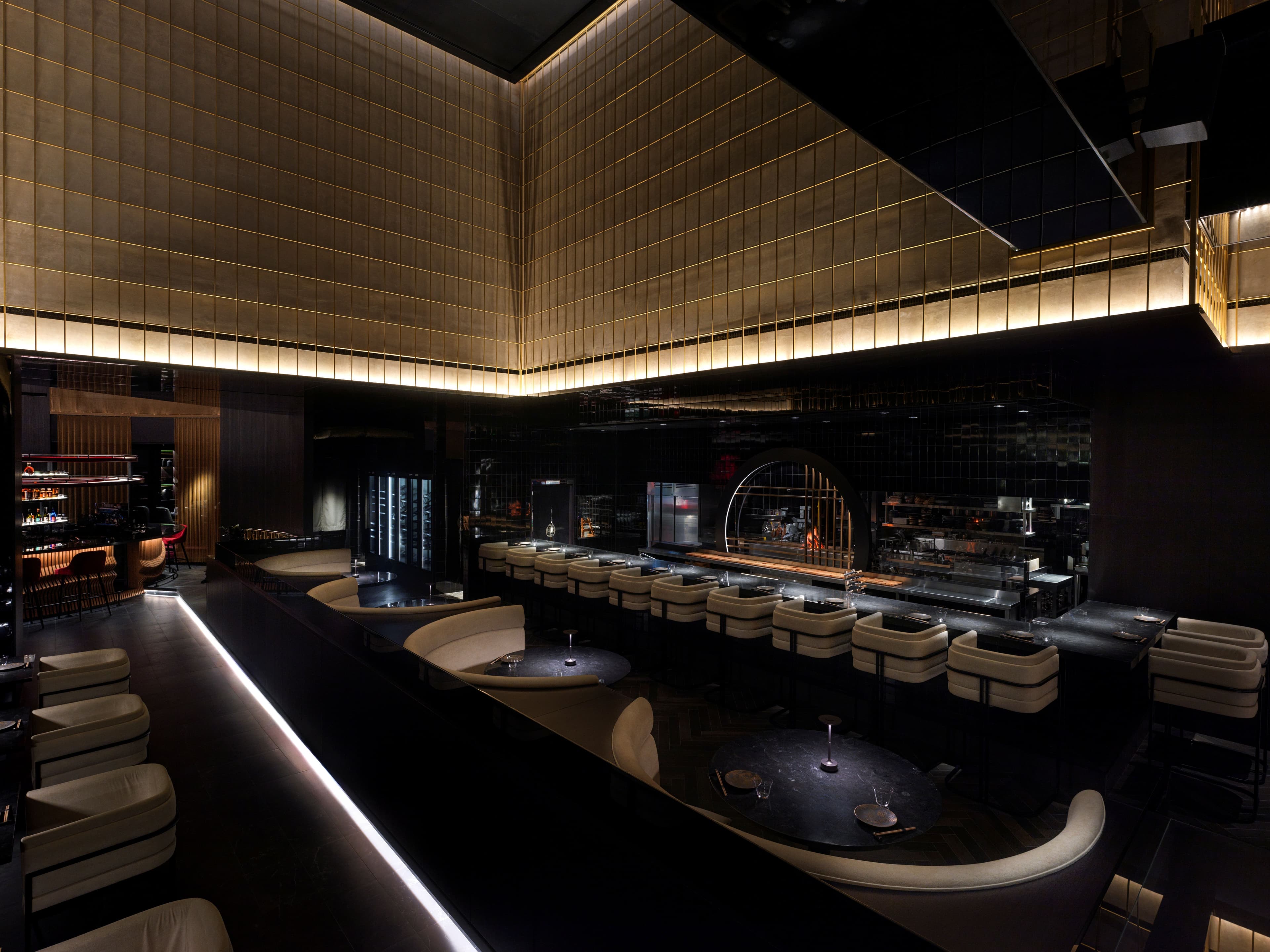
Kasumigaseki Capital combines premium design with hospitality expertise across its international real estate portfolio. Image: SuppliedTechnology is reshaping every stage of the real estate lifecycle. Which innovations do you believe will have the greatest impact on investment, development and property management over the next five years?
The innovations with the greatest impact will be those that connect the entire real estate lifecycle.
First, automation in logistics. Automated frozen warehouses, AGVs (automated guided vehicles), AMRs (autonomous mobile robots), robotic arms and de-palletising robots solve labour shortages and take people out of harsh, sub-zero working environments.
Second, the digitalisation of hotel operations. A “self-hospitality” model built around keyless check-in and real-time dashboards delivers high profitability at low labour cost, turning operations from a matter of individual skill into a repeatable product.
Third, data-driven decision-making. From investment and development through to operations and management, analytics improve both accuracy and speed — and Dubai itself is maturing into an ecosystem shaped by data.
And we should not overlook financial innovation. The machinery that circulates capital, scale and demand through funds and REITs is one of the most powerful “technologies” for accelerating development. By bringing all of this together, we intend to build the next generation of development models in the Middle East.
What is your long-term vision for Kasumigaseki Capital MENA, and what role do you hope the company will play in shaping the future of the GCC's real estate landscape?
Our long-term vision for Kasumigaseki Capital Mena is to become one of the most trusted developers in the UAE — delivering well-planned, durable living environments that support everyday life, and expanding from individual projects into whole communities. By fusing Japanese craftsmanship with financial discipline — continuing to work in areas that address social challenges, from the environment to tourism and ageing societies, and exploring new forms of social contribution unique to Dubai — we want to contribute to Dubai 2040 and to the wider development of the UAE and the GCC.
Let me be candid about how we feel. The region has been through a difficult period. And yet, Kasumigaseki Capital Mena still believes wholeheartedly in the future of the UAE and the GCC. The stable leadership, the safety and the unwavering long-term vision this region has shown prove their worth precisely in moments of challenge. We are deeply grateful for the strong support of the Dubai Government, and we are firmly committed to contributing to the growth of Dubai, the UAE and the GCC.
Indeed, in May 2026 our Group Founder and Chairman, Hiroyuki Ogawa, had the honour of meeting His Highness Sheikh Maktoum bin Mohammed bin Rashid Al Maktoum, First Deputy Ruler of Dubai, Deputy Prime Minister and Minister of Finance, together with senior officials including the Minister of State for Financial Affairs and the Director General of the Dubai Department of Economy and Tourism. The discussions explored Dubai’s sustained economic growth and its standing as a leading global hub for investment and business, as well as opportunities and strategic partnerships across real estate, hospitality, logistics, healthcare and urban development. On that occasion, His Highness affirmed Dubai’s commitment to strengthening international partnerships that serve its long-term economic vision. That warm and powerful support from the government is a genuine source of encouragement, and one for which we are deeply grateful.
As our Chairman, Mohammad Khalifa Majid Alabbar Alfalasi, puts it, the UAE is a market built for the long term. We share that conviction: we have not come for a quick return, but to stay and to build for the long term.

Marriott International signs agreements to develop nine hotels and branded residences across Egypt

Bruno Guélaff's people-centred approach to architecture, interiors and timeless design

HOLM Developments expands internationally with its first residential project in Batumi, Georgia

Amna Fayaz discusses how acoustics is shaping healthier, smarter and more productive workplaces