DUBAI, UAE – Dubai’s real estate market continues to operate at record pace, with rising transaction volumes, stronger investor confidence and a growing project pipeline placing new pressure on how developments are planned, approved and delivered.
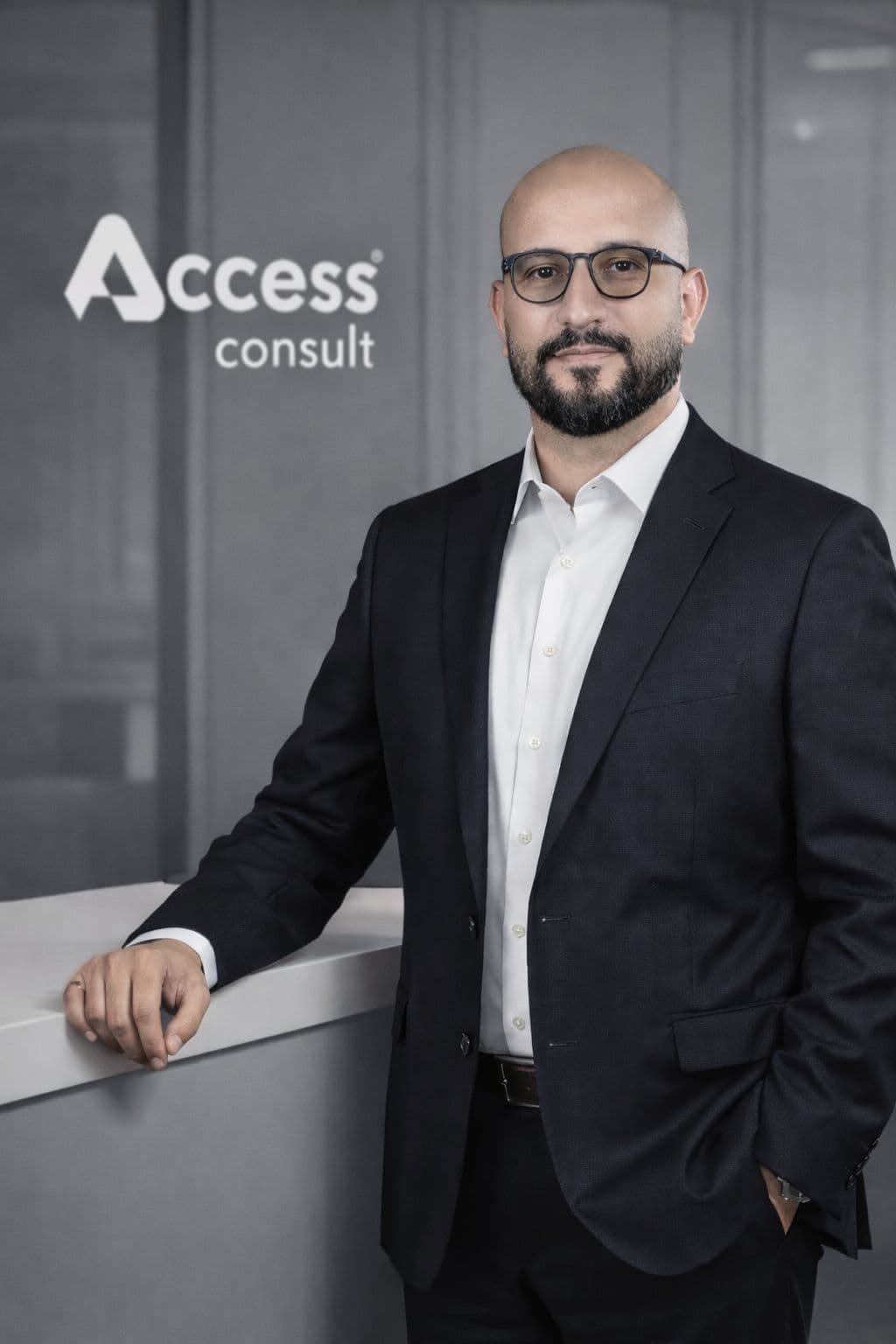
In this interview with Property News International, Mohamed Salah Seguen, CEO at Access Consult, discusses how Dubai’s development cycle is evolving, why authority coordination now needs to begin earlier, and what will define the most successful project teams over the next 12 to 24 months.
Interview: Mohamed Salah Seguen, CEO at Access Consult
Dubai recorded more than $249.7 billion in real estate transactions in 2025. From your perspective, how is this level of activity reshaping the development cycle in the emirate?
Dubai’s transaction volume reflects very strong market confidence, but it is also placing greater pressure on the full development cycle. In 2025, the sector recorded over 270,000 property sales, marking a 20% increase in volume compared to 2024, underlining the market’s resilience and continued investor trust. As activity rises, timelines become tighter and expectations around delivery become much higher. This means projects can no longer move in isolated stages. Feasibility, concept design, approvals, procurement, and execution now need to be far more closely aligned from the outset.
In practice, this is driving a stronger need for early planning and better coordination across all stakeholders, in line with the ambitions of the Dubai Real Estate Sector Strategy 2033 and the emirate’s wider economic growth vision.
What are the biggest pressure points you are currently seeing across project approvals, design coordination and delivery planning?
The biggest pressure points today come from the combination of speed, complexity, and alignment.
Approval pathways are becoming more demanding, with tighter compliance expectations and less room for incomplete or poorly coordinated submissions. At the same time, design coordination is under pressure because architecture, structure, MEP, budget, and authority requirements all need to move together. Delivery planning is another major area, especially when ambitious timelines are not matched by procurement readiness or clear technical information.
Clients think delays come only from external approvals, but in many cases they also come from internal misalignment between project vision, commercial goals, design intent, and execution planning.
You mentioned that approvals are now part of project strategy. How early should developers address authority coordination, and where do delays most commonly arise?
Authority coordination should begin at the concept stage, not after the design is developed. In Dubai’s current environment, approvals affect planning, design direction, technical decisions, and programme certainty, so they need to be treated as part of the project strategy from the outset.
This has become even more important with frameworks such as the unified Dubai Building Code, which has standardised technical requirements across mainland Dubai as well as private development zones and free zones, reducing regulatory guesswork but requiring compliance to be embedded much earlier.
The authorities approvals are well known to professionals, projects are often set back by issues that arise before submission, such as incomplete coordination between disciplines, design assumptions that do not fully reflect actual constraints, or late commercial and technical changes.
How is Dubai’s evolving regulatory environment changing the way design compliance is approached from the concept stage?
Dubai’s regulatory environment is pushing the industry toward a far more proactive approach to compliance. Design teams can no longer treat compliance as a final-stage check before submission. It now needs to be embedded from concept stage through the full design process.
Recent measures, including Abu Dhabi’s new administrative decisions implementing Law No. (3) of 2015 as amended by Law No. (2) of 2025, and Dubai’s Law No. (3) of 2026 on the quality and safety of buildings, reflect a clear shift toward higher standards around safety, quality, sustainability, and long-term building performance.
In practice, this changes how teams approach massing, access, services, buildability, and technical planning from day one. The result is a more disciplined process overall.
Value engineering is often misunderstood as a cost-cutting exercise. In today’s market, what does effective value engineering look like in practice?
In an industry under constant pressure to deliver on budgets, timelines, and performance, value engineering has become a non-negotiable. It is about improving efficiency, constructability, and long-term value while protecting the core vision of the project. This means making better decisions on materials, systems, layouts, coordination, and buildability without compromising compliance, performance, or market positioning.
The most effective value engineering happens early, when there is still room to optimise the project strategically. Through early collaboration, brainstorming, and tools such as BIM and artificial intelligence, teams can solve problems more intelligently and use resources more efficiently without sacrificing quality.
It is also important to look beyond upfront cost and consider life cycle value, including maintenance and operational performance over time. This has become even more relevant as frameworks such as Al Sa’fat place greater emphasis on measurable energy performance and sustainability outcomes, making smart system and material choices increasingly important not for smoother project closeout.
What does true execution readiness mean before mobilisation begins, and why is it becoming more important in Dubai’s current market environment?
Before mobilisation, there needs to be sufficient design clarity, coordinated technical information, authority alignment, procurement readiness, realistic scheduling, and a shared understanding of how the project will move into construction.
In Dubai’s current market, this is even more critical because timelines are ambitious and expectations are high. It is also becoming more important in a market where off-plan sales continue to dominate. With 69.6% of residential transactions in Dubai recorded as off-plan in 2025, execution readiness is crucial because construction progress directly affects escrow release mechanisms and project liquidity. Mobilisation should therefore be a controlled transition into execution, supported by clarity, readiness, and real alignment across the team.
What factors will define the most successful projects and development teams in Dubai over the next 12 to 24 months?
The most successful projects over the next 12 to 24 months will be the ones that combine speed with discipline. The market will continue to reward ambition, but only where it is supported by strong planning, technical rigour, and delivery control. Success will depend on early clarity, integrated design, compliance awareness, strong authority coordination, realistic programme planning, and informed decision making from the outset.
Teams that are collaborative, technically strong, and commercially aware will stand out most. In Dubai’s current environment, moving quickly matters, but moving clearly, with alignment and control from concept through execution, will be the real differentiator.