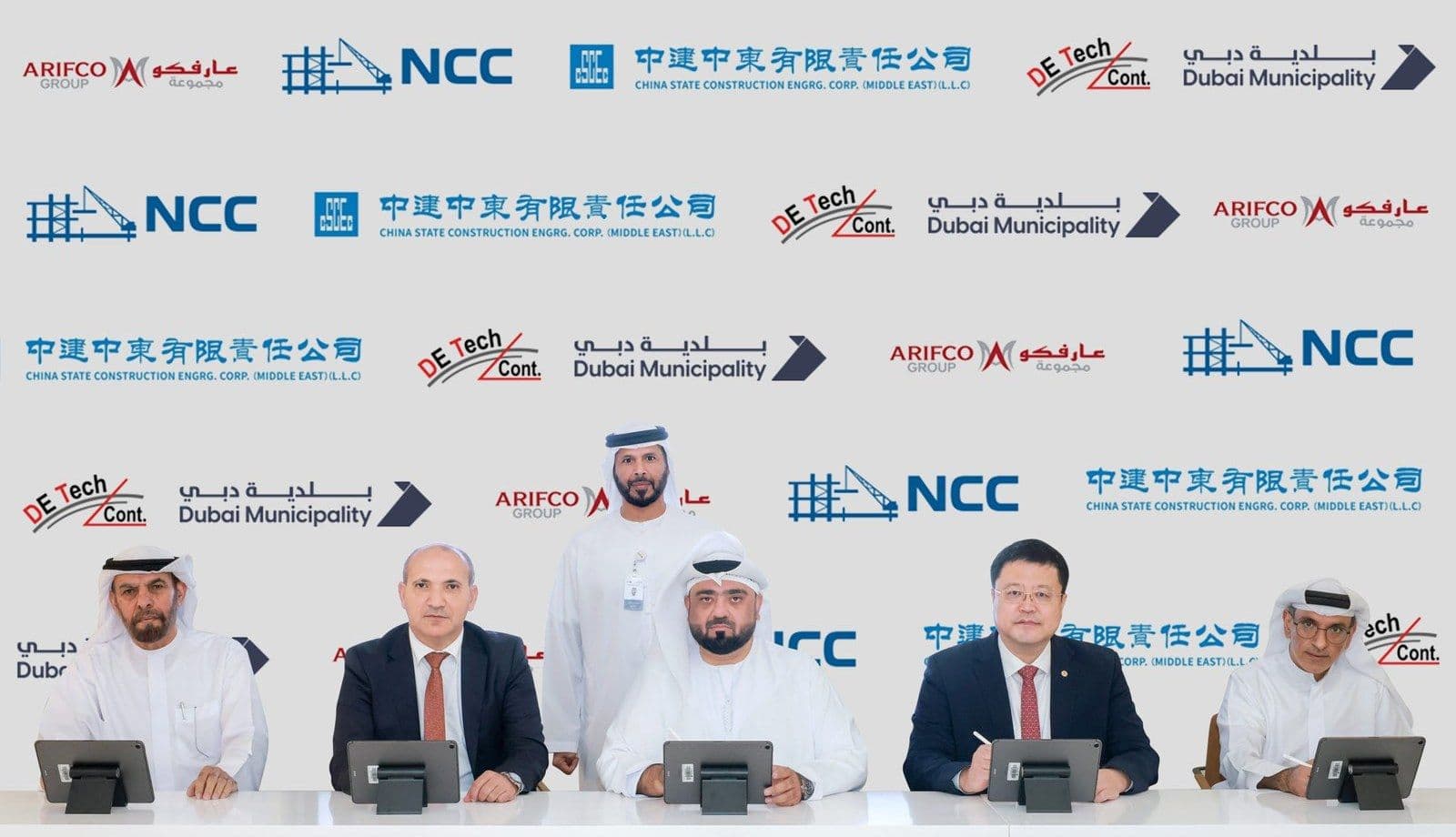
Dubai, UAE - Dubai Municipality has awarded four contracts worth a combined $817 million (AED 3 billion) under the third phase of its Tasreef stormwater drainage programme, covering about 100 kilometres of new and extended main drainage lines.
Pipes on the new lines will measure up to 3 metres in diameter, according to the municipality, which said the work will make the city’s drainage network more resilient.
Dubai’s Ruler had directed the work: His Highness Sheikh Mohammed bin Rashid Al Maktoum, Vice President and Prime Minister of the UAE and Ruler of Dubai, has called for infrastructure that is advanced, resilient and leads the world, and for stormwater drainage efficient enough to keep pace with the emirate’s growth.
Together, the four projects span close to 100 square kilometres of districts the municipality describes as key economic, commercial, industrial and tourism corridors. New drainage systems will reach Al Marmoom, Al Quoz and Al Barsha, as well as Umm Suqeim, Jumeirah, Al Safa, Al Manara, Al Wasl, Al Satwa, Al Bada’a and Za’abeel, and each of these districts will be linked into the municipality’s core network.
The municipality said the works will raise the volume of water the network can carry, make its operations more resilient and support sustainable urban growth.
Phase 3 is the latest integrated extension of Tasreef, which Dubai Municipality is delivering at a total cost of $8.17 billion (AED 30 billion). The authority calls it one of the UAE’s largest strategic and transformational infrastructure projects, and classifies it as the region’s largest integrated stormwater collection programme in a single system, as well as one of the most operationally efficient.
Once complete, the programme is intended to give Dubai a highly resilient, advanced drainage system able to meet the city’s future needs.
According to the municipality, Tasreef will lift stormwater drainage capacity by 700% and cut the cost of building pumping stations, and of operations and maintenance, by 20%. It is also designed to prepare the city for climate-related change and lengthen the network’s lifespan, and is aligned with two wider plans: the UAE’s Net Zero 2050 Strategy and the Dubai 2040 Urban Master Plan.
Eng. Marwan Ahmed bin Ghalita, Director General of Dubai Municipality, said: “Dubai Municipality continues to implement the phases of the ‘Tasreef’ Programme, one of Dubai’s largest strategic infrastructure projects, enhancing its efficiency and resilience, making it more sustainable and strengthening its ability to address both future climate change and accommodate population and urban growth. Our objective is to build a comprehensive and integrated model for a leading future city, characterised by a sustainable urban system and advanced infrastructure that serve people, enhance their quality of life and well-being, and strengthen their safety and security. At the same time, it provides a stable and enabling environment for the growth of businesses and economic, commercial and tourism activities, reinforcing Dubai’s position as the world’s best city to live, work, invest and visit.”
Eng. Adel Mohammed Al Marzouqi, CEO of the Waste and Sewerage Agency at Dubai Municipality, said: “The third phase of the Tasreef Programme’s projects will serve areas that represent vital arteries across the emirate, marking another pivotal step in developing Dubai’s stormwater drainage system as well as making it more resilient and efficient in managing rainfall under different conditions and future climate changes. We are committed to ensuring that these projects advance the broader objectives of the Tasreef Programme by reducing water accumulation, protecting residents and assets, improving the quality of services, enhancing the city’s readiness and traffic flow, and safeguarding the sustainability of its resources.”
Dubai Municipality said it is delivering its strategic projects to approved timelines and operational plans, and remains committed to an integrated, resilient drainage system that lowers the risk of water accumulation, makes infrastructure more efficient and sustainable, and improves Dubai’s ability to respond to climate change. It said the work also supports the emirate’s aim of being recognised worldwide for the quality of its infrastructure and public services.
Under Tasreef’s first phase, the municipality’s $136.1 million (AED 500 million) Deira stormwater project had completed 36% of its own first stage by April and is scheduled for full completion by the end of 2027.
The network upgrade for Jumeirah and Umm Suqeim ranks among the biggest of the four new schemes. Roughly 42 kilometres of trunk drainage pipes will be built there, adding capacity and making the system tougher and more efficient.
Its aim is to ready the infrastructure on the main corridors through both districts. Communities served stretch from Al Manara beside the Dubai Water Canal, Al Safa 1 and 2 and Jumeirah 3 down to Umm Al Sheif and Umm Suqeim 1, 2 and 3.
A second scheme, a network development and capacity project in the strip between Al Khail Road and Sheikh Zayed Road, includes 14 kilometres of trunk lines that the municipality said will meet the highest international standards. It is meant to deliver resilient, sustainable infrastructure that can absorb residential and urban growth and strengthen the city’s readiness and resilience.
Routes it will serve include Sheikh Zayed Road, Umm Suqeim Road and the stretch from the Al Khail Road interchange towards Umm Suqeim, plus Al Zumurrud Street, Al Waha Street, Al Marabea Street, First Al Khail Street and the smaller roads connecting them. Al Barsha 1 and Al Quoz Industrial Areas 1, 3 and 4 also fall within its scope.
The third project lays main drainage lines along Al Wasl Road for neighbourhoods on the eastern side of the Dubai Water Canal, an area of up to 25 square kilometres. Dubai World Trade Centre 1 and 2, Al Satwa, Al Bada’a, Jumeirah 1 and 2, Al Wasl and Za’abeel 2 are among the districts it covers.
Its integrated network combines main and secondary conveyance lines with associated infrastructure over a total length of 21 kilometres. The municipality said this will allow large volumes of water to be drained and managed flexibly and help stop water from pooling.
The fourth contract covers Al Marmoom, where the authority plans an integrated, sustainable drainage network serving the area’s key districts, which it said will keep services running and raise the quality of local urban infrastructure. The Al Marmoom works comprise 23 kilometres of stormwater drainage infrastructure.