Dubai, UAE - Sheikh Hamdan bin Mohammed bin Rashid Al Maktoum has approved a $2.61 billion (AED 9.59 billion) plan to develop Dubai’s community services and facilities up to 2040, along with a $545 million (AED 2 billion) Dubai Metro extension to Al Maktoum International Airport City.
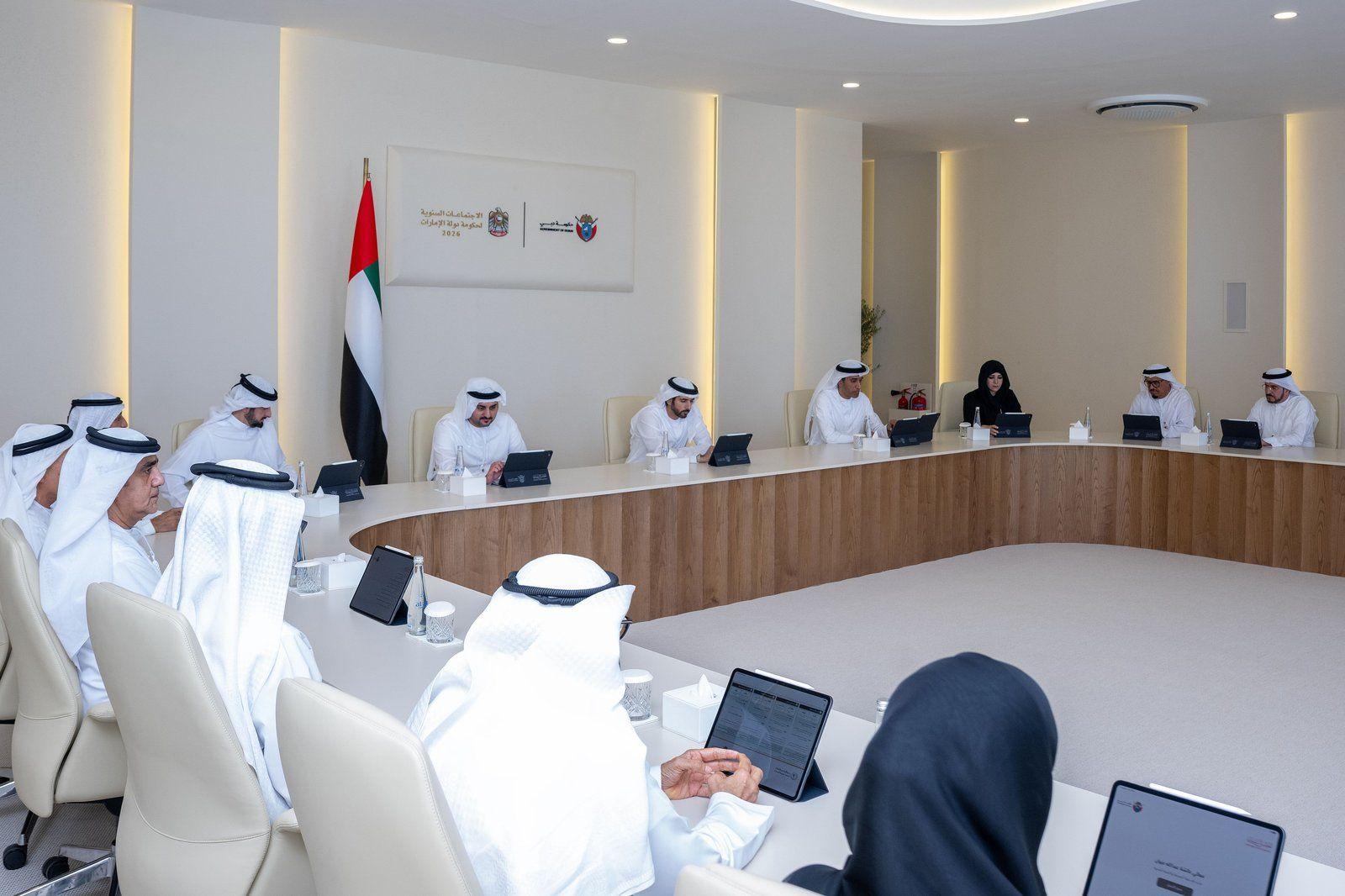
The Crown Prince of Dubai, who chairs The Executive Council of Dubai and is also Deputy Prime Minister and Minister of Defence, gave the go-ahead at a council meeting held within the UAE Annual Government Meetings 2026, the Emirates News Agency (WAM) reported.
At the same session, the council adopted the results of a study into where Dubai’s real estate market is heading, and an investment policy for endowments and minors’ funds.
Sheikh Hamdan said that, under the vision of the Ruler of Dubai, Sheikh Mohammed bin Rashid Al Maktoum, who is also Vice President and Prime Minister, the emirate keeps putting money into infrastructure built for the future and into joined-up community services. He said this is how the Dubai Plan 2033, which takes in both the Dubai Social Agenda 33 and the Dubai Economic Agenda (D33), becomes projects that keep up with Dubai’s growth.
Also present were the First Deputy Ruler of Dubai, Sheikh Maktoum bin Mohammed bin Rashid Al Maktoum, who is Deputy Prime Minister and Minister of Finance, and the Second Deputy Ruler, Sheikh Ahmed bin Mohammed bin Rashid Al Maktoum.
In July, the council approved $4.9 billion (AED 18 billion) of projects across the emirate.
Sheikh Hamdan said: “The stability and prosperity of our community remain our priority. We approved a comprehensive plan to develop integrated public services and facilities that foster social cohesion. Our goal is for the people of Dubai to experience the benefits of the city’s growth in their everyday lives.”
The 2040 plan is meant to spread public services and facilities efficiently and fairly between the residential communities Dubai already has and those still being planned, so that they serve both citizens and residents as the city grows.
The Supreme Committee for Urban Planning in Dubai will oversee the work, with Dubai Municipality coordinating, guided by two frameworks: the Dubai 2040 Urban Master Plan and, on the social side, the Dubai Social Agenda 33. Delivery will come in phases, with citizens’ residential areas first.
The programme covers core facilities for safety, security, healthcare, education and sport. It also provides places for family and community activities and amenities designed for senior Emiratis, which the council said will widen access to services, meet the needs of every generation and strengthen family ties and social cohesion.
Turning to the Metro, Sheikh Hamdan said: “Al Maktoum International Airport City is one of our most significant strategic projects, reinforcing Dubai’s position as a global aviation hub. The extension is part of an integrated transport system that matches the ambitions of this global project. We continue to invest in infrastructure that anticipates future aspirations, connects the emirate and strengthens Dubai’s competitiveness.”
The extension adds a 3-kilometre line with two new stations, running from Route 2020 to Al Maktoum International Airport City.
Trains are due to start running in 2031. The project is a joint effort between the Dubai Engineering Projects Establishment and the emirate’s Roads and Transport Authority (RTA).
At the airport, the new section will tie into the West Terminal of Al Maktoum International Airport, where it will connect with the airport express line and with Etihad Rail’s high-speed rail network.
According to the council, the line will make journeys simpler for passengers, airport employees and visitors, ease congestion on the roads around it and improve links to urban centres throughout the emirate.
On property, Sheikh Hamdan said: “Dubai’s real estate sector continues to demonstrate strong, resilient performance, bolstered by investor confidence and diverse range of investment opportunities. The findings of the new study will guide policy and development decisions made with the private sector, supporting the Dubai Real Estate Sector Strategy 2033 and further solidifying Dubai’s position as one of the world’s most competitive and sustainable real estate markets.”
The Dubai Land Department carried out the market study in support of the Dubai Real Estate Sector Strategy 2033. That strategy aims to double real estate’s contribution to Dubai’s GDP to $19.88 billion (AED 73 billion), lift transaction volumes by 70% so that the market’s total value reaches $272 billion (AED 1 trillion), and raise real estate portfolio values twofold to $5.45 billion (AED 20 billion).
According to the study, occupancy currently stands at 97% for residential property, 98% for retail and 94% for offices.
By 2030, it forecasts 365,000 new homes, plus around 1.1 million square metres of new office and retail space. The council said these projections give developers guidance for investment and development planning, project quality, faster delivery and investor confidence.
The study also reflects how Dubai plans its property market from data, the council said, with market indicators used to shape policy, respond to changes in demand and keep supply and demand in balance. An adaptive regulatory framework, integrated digital services and close partnerships with developers and investors support that approach.
Sheikh Hamdan also asked Awqaf Dubai, formally The Endowment and Minors’ Trust Foundation in Dubai, to manage and invest the endowment assets and minors’ money it holds more effectively, so that the assets are protected, returns improve and the benefits last.
Sheikh Hamdan said: “Dubai has established a pioneering model for endowment initiatives and the management of minors’ funds, with endowment assets reaching AED13.5 billion in 2025. We remain committed to advancing this model to safeguard and grow the assets while optimising their social impact. We have directed Awqaf Dubai to diversify the investment portfolio and strengthen private sector partnerships, securing sustainable returns for beneficiaries and the wider community.”
Awqaf Dubai’s investment policy is aligned with Dubai Plan 2033 and its social and economic priorities, and centres on protecting and growing assets so that beneficiaries and future generations continue to gain from them.
It sets out a diversified approach designed to improve returns, manage risk and bring in more private sector participation, in line with Sharia principles.
The foundation’s real estate investments will cover residential, commercial, healthcare, industrial and educational developments, plus exhibition and sports facilities, in keeping with the Dubai 2040 Urban Master Plan.
By 2030, the policy aims to add $2.72 billion (AED 10 billion) to the value of the real estate portfolio and grow the securities portfolio by more than 35%.