Property News International

Change region:

GlobalcheckMiddle East

Subscribe to Our Newsletter

Sign up to receive the latest tech news and updates from Property News International straight to your inbox.

By signing up, you will receive emails about property news products and you agree to our terms of use and privacy policy.

@2026 Property News International. All Rights Reserved.

Blends Media
A Blends Media Group Production

Zayed National Museum: A Masterpiece of Architecture and Heritage

Discover how Zayed National Museum combines iconic architecture, Emirati heritage and sustainable design to become Abu Dhabi's newest cultural landmark.
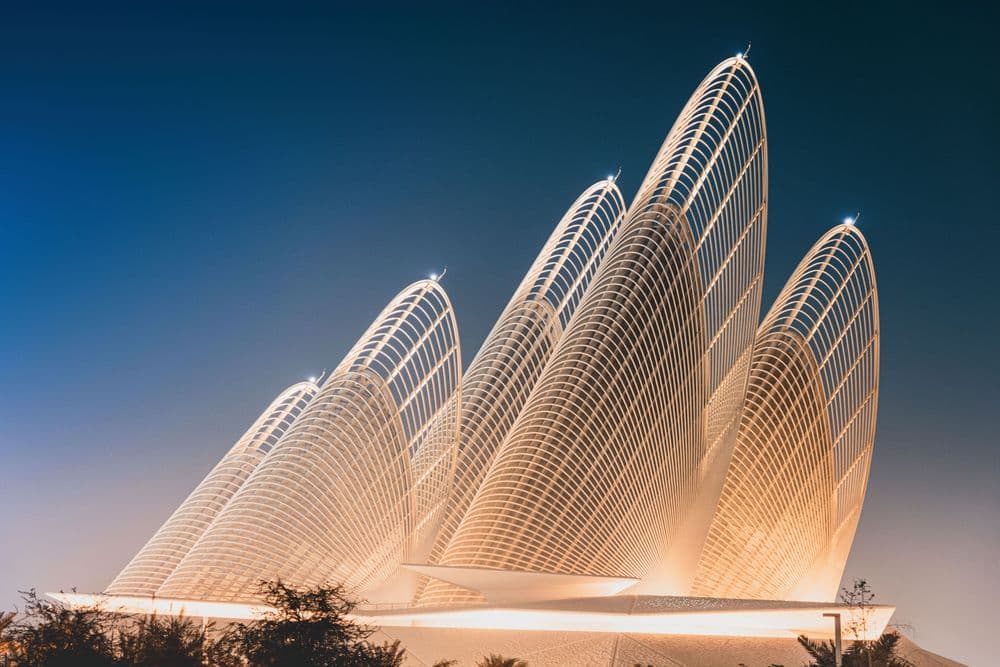
Zayed National Museum in Abu Dhabi featuring its iconic falcon-inspired towers designed by Foster + Partners.Zayed National Museum in Abu Dhabi featuring its iconic falcon-inspired towers designed by Foster + Partners.

ABU DHABI, UAE – Zayed National Museum stands as a defining architectural and cultural landmark in the heart of Abu Dhabi’s Saadiyat Cultural District; a project that embodies the vision, values, and rich heritage of the United Arab Emirates.

Designed by the internationally acclaimed architectural firm Foster + Partners, the museum tells the story of the land from ancient times to the present day and is a tribute to the vision and legacy of Sheikh Zayed bin Sultan Al Nahyan, the Founding Father of the UAE.

A Vision Rooted in Place and Heritage

From the outset, the conceptual framework of Zayed National Museum was grounded in a dual ambition: to tell the story of the UAE’s rich past and to project its future as a center of learning, culture, and global exchange. The objective was clear: create a museum that not only houses history but becomes a living expression of that history. Foster + Partners achieved this by anchoring the design in local traditions, environmental strategies, and the deep cultural connection between the land and its people.

The museum’s narrative arc begins with the story of Sheikh Zayed, whose life and leadership are the foundation of the UAE’s identity. Through its galleries, the museum chronicles the nation’s evolution, from early human settlement and maritime trade to its contemporary status as a nexus of culture and innovation. But what distinguishes this museum is not just its storytelling; it is how the architecture itself embodies that narrative.

Zayed National Museum in Abu Dhabi

An Architectural Icon Sculpted in Steel and Stone

The Falcon-Winged Silhouette

The most arresting feature of Zayed National Museum is its five lightweight steel towers that rise from the landscape.

Inspired by the wings of a falcon in flight, these structures are both symbolic and highly functional. In Emirati culture, the falcon is a revered emblem of strength, courage and pride, reflecting the UAE's national identity and spirit of aspiration.

More than just visual metaphors, the towers play an integral role in the museum’s passive environmental systems. Each of the wings’ functions as a solar thermal chimney, drawing cool air through the galleries below and dramatically reducing the reliance on mechanical air-conditioning systems. Strategically positioned to minimize overshadowing and maximize environmental performance, these towers rise up to 123 meters, creating a distinctive silhouette visible across Saadiyat Island.

These steel wings also moderate daylight, aiding in the control of sunlight within interior spaces via triple-laminated glazing and electrochromic glass that dynamically adjusts transparency in response to external light conditions. This blending of form and function ensures that the building remains comfortable in the warmer climate while preserving the integrity of displayed artifacts.

A Sculpted Mound: Architecture Anchored in Landscape

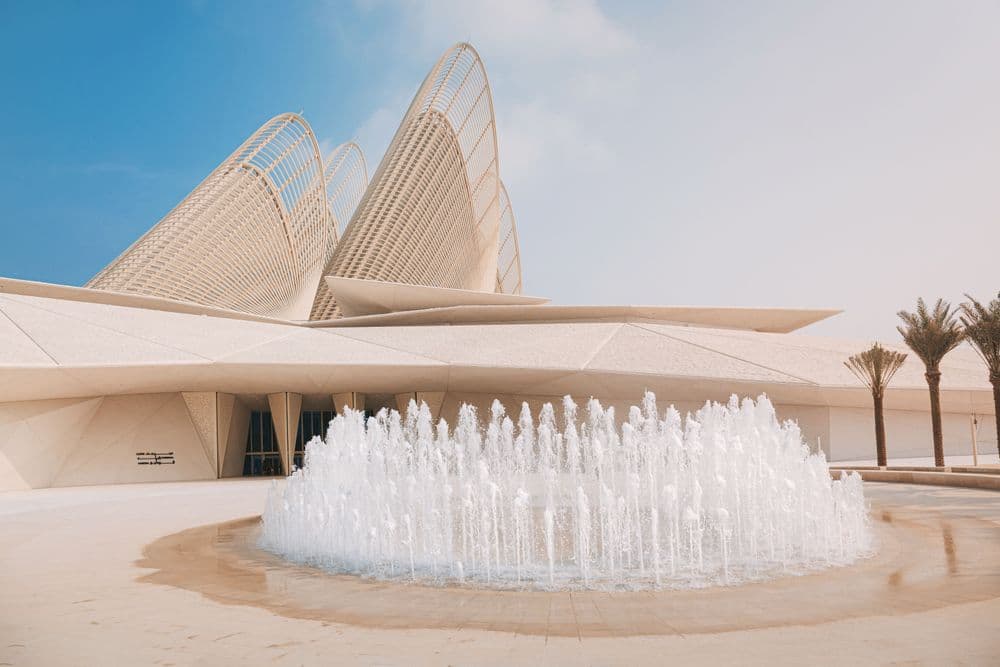
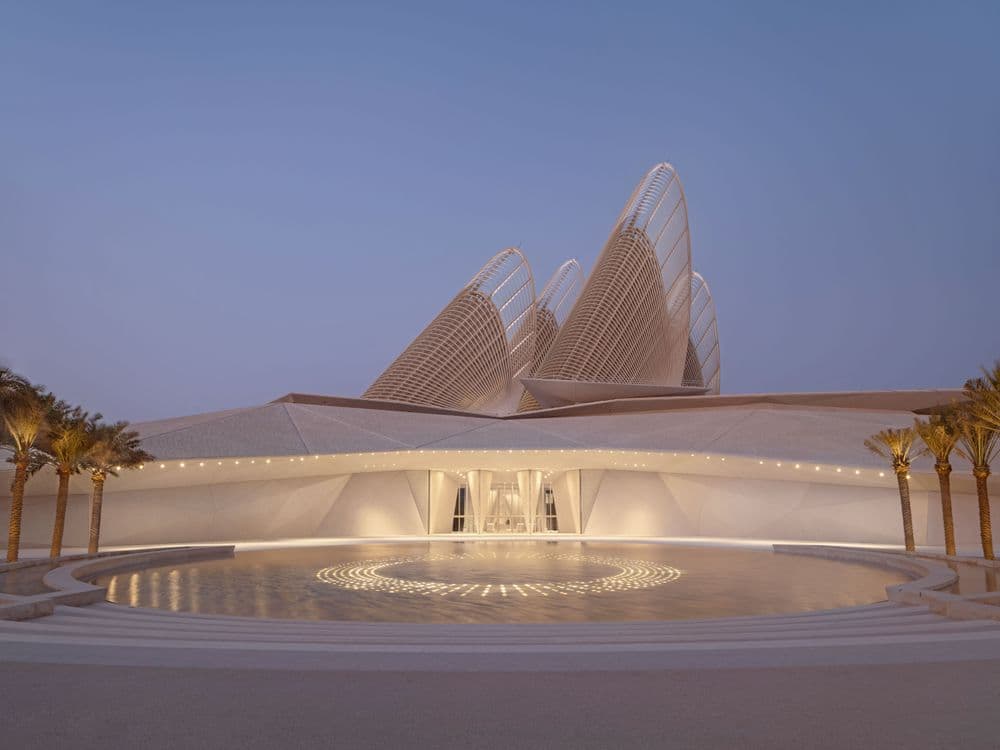
At ground level, the building reads not as a traditional museum box but as a sculpted mound. Clad with textured, faceted panels, the form abstracts the rugged topography of the UAE’s natural landscape. This design choice does more than create visual drama - it insulates the interior spaces from solar gain and forms a protective thermal barrier against the desert heat.

The placement of the museum within a mound also reflects ancient architectural wisdom: isolating precious interior spaces from external conditions. Embedded within this mound are the gallery spaces, which sit beneath the soaring towers, creating an interplay of light, shadow, and spatial movement that enriches the visitor experience.

Zayed National Museum in Abu Dhabi

Interior Experience: Spaces of Memory and Meaning

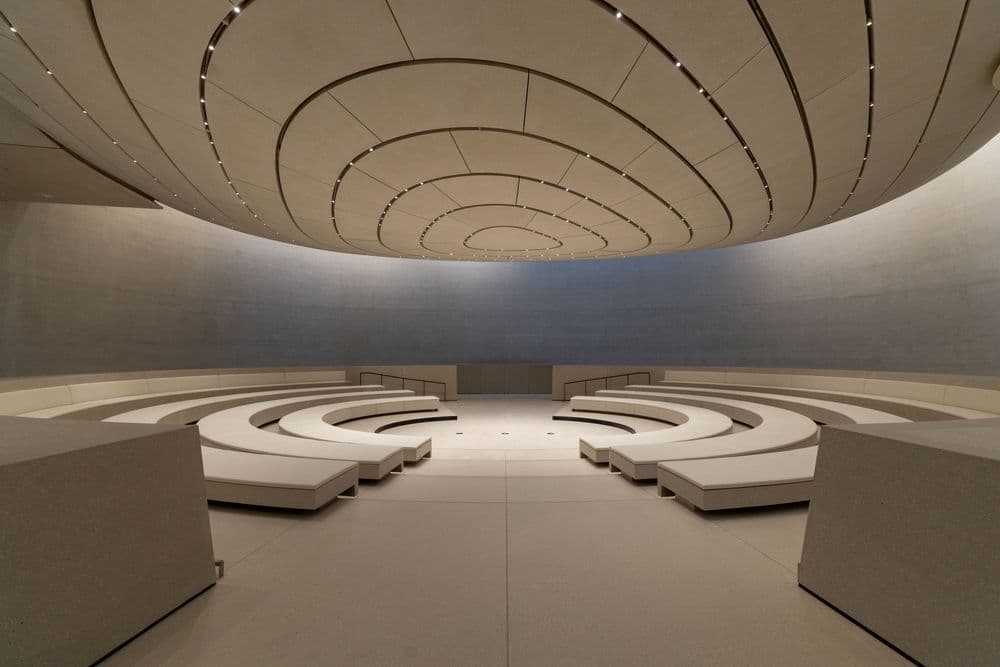
Upon entering the museum, visitors are greeted by the central atrium known as Al Liwan; a vast, light-filled interior space that functions as both a meeting point and a performance venue. Named after the traditional Arabic word for a shaded courtyard, Al Liwan evokes the spirit of hospitality and community that has been central to Emirati culture for generations.

From here, visitors are guided through six permanent galleries, each designed not just as exhibition halls but as multisensory environments that reveal the UAE’s history across multiple dimensions. These galleries explore themes ranging from the nation’s earliest human habitation and ancient trade routes to its contemporary achievements in science, art, and sustainability.

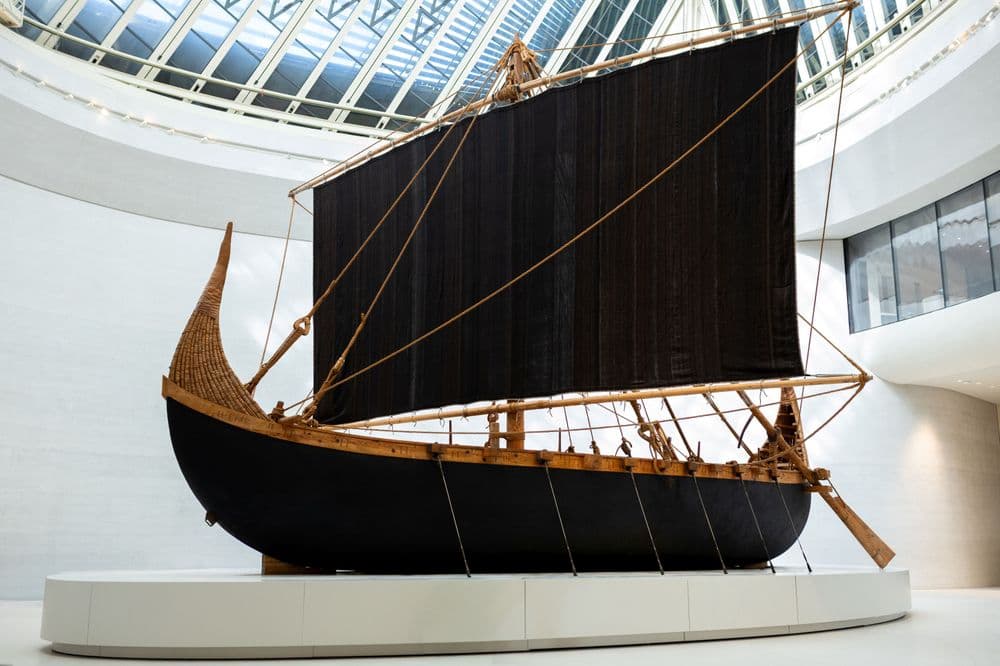
Among the museum’s most compelling exhibits is the reconstruction of the Bronze Age Magan Boat, that underscores the UAE’s historic role as a maritime hub. Accompanied by ancient pearls, manuscripts like the Blue Qur’an, and artifacts tracing craft and trade, these collections offer a rich tapestry of narratives that connect the Arabian Gulf to broader human histories.

Moreover, the galleries are designed to respect the delicate balance between preserving artifacts and creating engaging visitor experiences. Controlled environmental conditions and carefully calibrated daylight ensure that heritage pieces, some thousands of years old, are exhibited in ways that protect their integrity for future generations.

Zayed National Museum in Abu Dhabi

Cultural Resonance: Beyond Museum Walls

While Zayed National Museum is anchored in architectural innovation, its cultural impact extends far beyond its physical structure. The museum is a living space for performance, dialogue, and education; fostering a sense of shared identity among citizens, residents, and global visitors alike.

Its location in the Saadiyat Cultural District aligns it with some of the world’s most respected cultural institutions, including the Louvre Abu Dhabi and the upcoming Guggenheim Abu Dhabi. Together, these institutions form a cultural ecosystem that advances Abu Dhabi’s vision to become a global destination for arts, heritage, and intellectual exchange.

The museum’s outdoor spaces further enhance this cultural mission. Al Masar Garden, an outdoor gallery features a timeline of Sheikh Zayed’s life across three environments desert, oasis and urban.

Educational programs, live performances, and interactive workshops are key to the museum’s engagement strategy. By inviting audiences of all ages to participate in cultural exploration, Zayed National Museum positions itself as more than a repository of objects; it becomes a catalyst for learning, critical inquiry, and national pride.

Accessibility and inclusion are central to Zayed National Museum’s national mission and institutional values. The museum is committed to creating an inclusive and welcoming experience for all visitors through a range of accessibility services, programmes and visitor resources.

Sustainability: Architecture in Harmony with Environment

Sustainability lies at the core of the museum’s architectural philosophy. Designed for the UAE’s warm climate and abundant sunshine, Foster + Partners employed passive design strategies inspired by traditional Emirati architecture, including the a take on the barjeel (wind tower) and thermal massing techniques, while integrating modern technologies.

The steel wing towers serve as thermal engines that facilitate natural ventilation, using the stack effect to draw cooled air from below the surface and circulate it through occupied spaces. Meanwhile, the mound’s form reduces solar exposure and enhances thermal performance, lowering energy demands and reinforcing environmental resilience.

Additionally, materials and construction techniques reflect sustainability goals. Lightweight steel structures minimize material usage while achieving dramatic heights, and the incorporation of advanced glazing and shading systems ensures comfort without excessive mechanical cooling. The landscape design, with native plant species and water-wise irrigation, further exemplifies a commitment to ecological stewardship.

Zayed National Museum in Abu Dhabi

Crafting Legacy: A New Cultural Beacon

Zayed National Museum represents more than an architectural feat or cultural repository; It bridges past and future, tradition and innovation, memory and imagination.

By foregrounding Emirati identity through both form and function, the museum highlights heritage as a living force, one that continues to inspire and shape national aspirations. As visitors wander through the galleries, stand beneath the soaring wings, or explore the landscaped garden, they engage with a story of resilience, creativity, and interconnectedness.

For architects, cultural curators, and global audiences alike, this landmark sets a benchmark, not just in structural elegance or museum prac¬tice, but in how architecture can embody a nation’s soul. Zayed National Museum is at once a place of preservation and possibility; a space where history is honored, present identities are affirmed, and future narratives are opened to the world.

Zayed National Museum stands as a monumental achievement in contemporary architecture, cultural storytelling, and environmental design. With its striking falcon-wing towers, sculpted mound, and dynamic interior spaces, the museum not only redefines how heritage can be experienced but also affirms the UAE’s role as a global cultural hub.

More than a building, it is a cultural beacon; a place where history, identity, innovation, and architecture converge. As it welcomes visitors from around the world, Zayed National Museum will continue to inspire, educate, and elevate the narrative of a nation built on vision, unity, and enduring heritage.