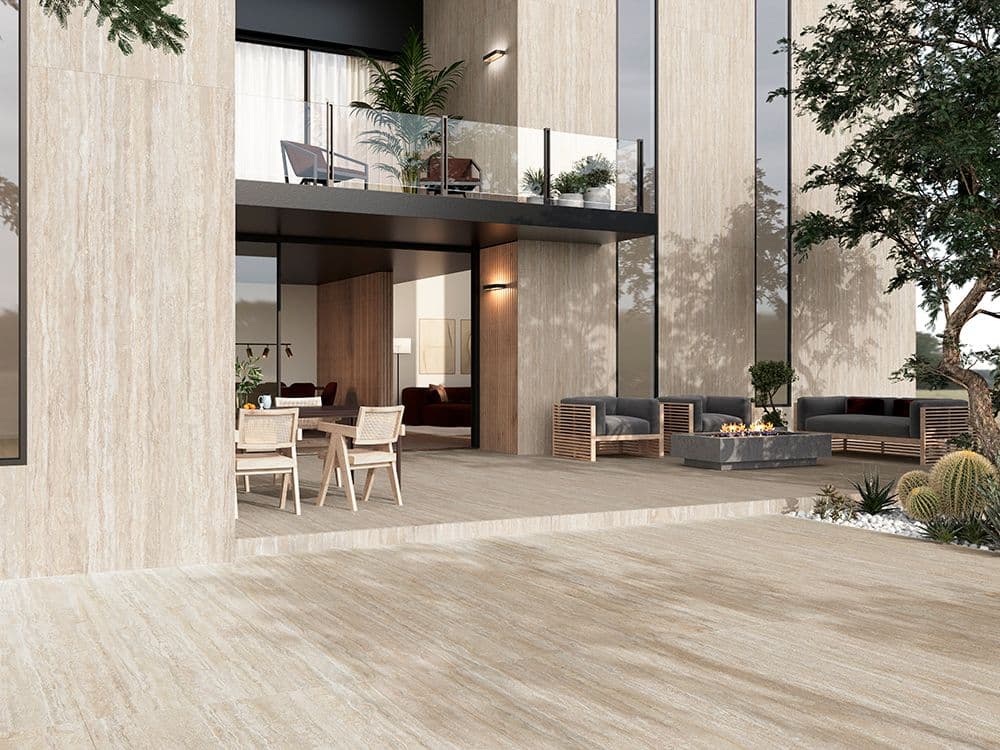
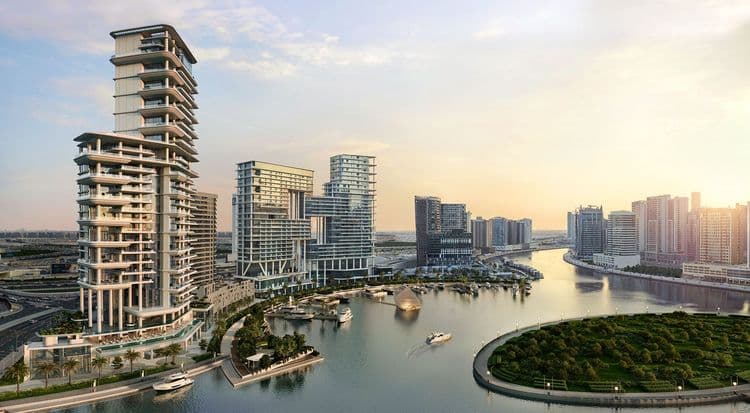
The trend is also closely linked to a growing desire for continuity between indoor and outdoor living spaces. Across Dubai, homeowners, designers and hospitality operators are increasingly creating environments where interiors flow seamlessly into terraces, courtyards, outdoor kitchens and poolside areas.
Large-format ceramic tiles, natural textures and contemporary stone-inspired finishes help support this design approach by creating visual consistency across different environments while maintaining durability and ease of maintenance.
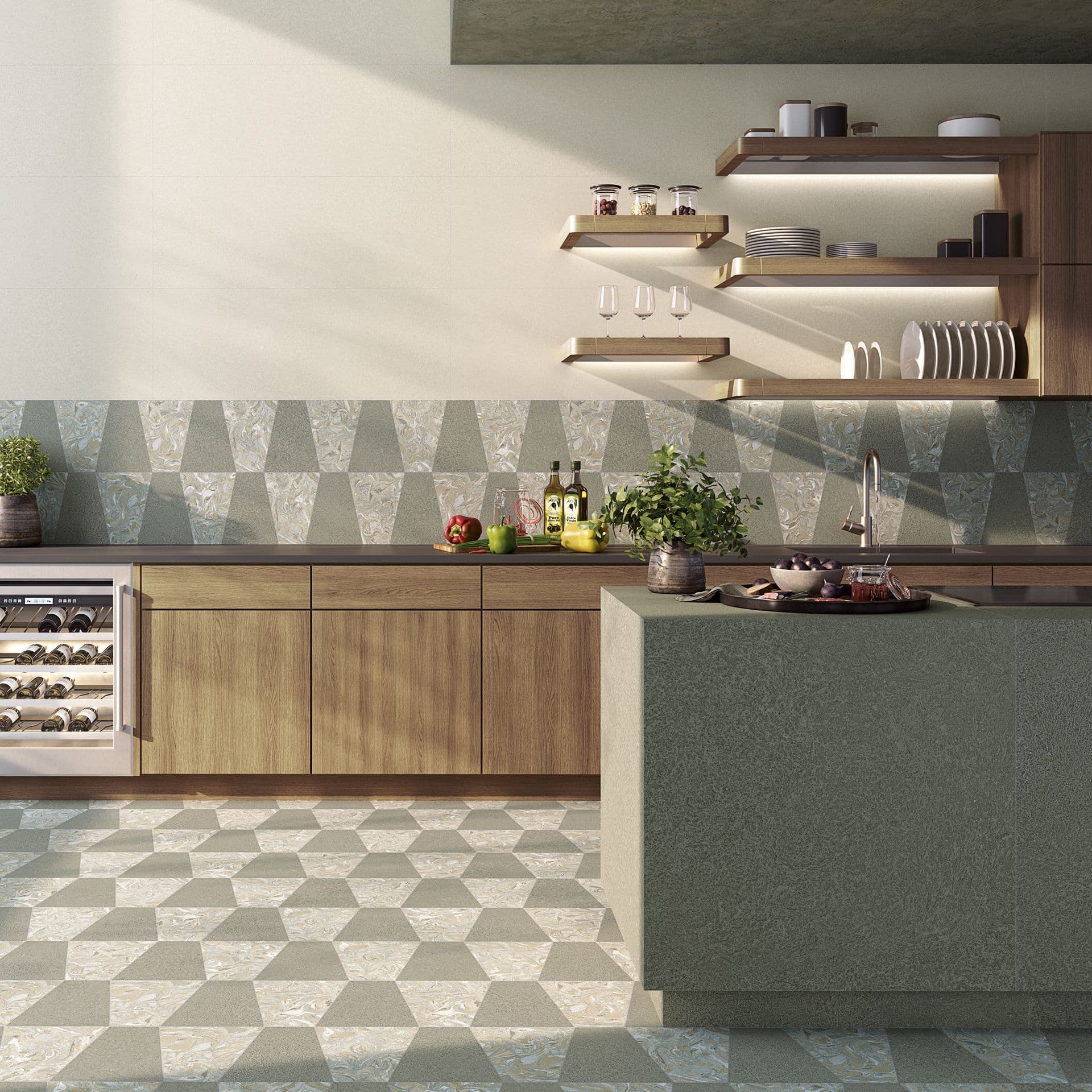
Colour selection is evolving in parallel. Mediterranean-inspired palettes featuring shades of sand, clay, limestone, ivory and greige continue to gain traction across residential and hospitality projects. Green tones are also becoming more prominent, particularly within wellness-focused environments where biophilic design principles contribute to a sense of calm and connection with nature.
Texture has emerged as another defining characteristic of contemporary luxury design. Refined wood-effect ceramics, brushed stone finishes, handmade-inspired surfaces and subtly irregular textures are increasingly being specified to introduce depth and sensory richness without overwhelming a space.
Beyond aesthetics, practical performance remains a critical consideration. Luxury residential and hospitality developments across Dubai are subject to high levels of activity and environmental exposure throughout the year. Pool areas, spas, terraces, outdoor kitchens and dining spaces require materials capable of withstanding heat, moisture, cleaning regimes and heavy foot traffic while maintaining their appearance.
Manufactured from natural raw materials such as clay and sand, ceramic surfaces offer durability, hygiene, recyclability, fire resistance and long-term performance, making them particularly well suited to premium residential and hospitality applications.
Sustainability is also becoming a key component of luxury material specification. Homeowners, developers and hospitality brands are increasingly seeking materials that combine environmental responsibility with design quality and performance. Spanish ceramic tiles support this shift through their durability, recyclability, long lifespan and the industry's continued focus on sustainable manufacturing practices.
For Summer 2026, ceramic's role within Dubai's luxury design sector extends beyond individual rooms or design trends. From residential interiors and shaded terraces to wellness spaces, hospitality destinations and outdoor living environments, the material is increasingly being specified as part of a cohesive design strategy that prioritises comfort, durability, sustainability and timeless appeal.
As Dubai's luxury market continues to evolve, ceramic surfaces are emerging as a material that reflects the next chapter of design in the region, where sophistication is defined not by excess, but by warmth, longevity, functionality and refined simplicity.