In today’s fast-paced construction and real estate sectors, speed, flexibility, and accuracy are no longer optional, they’re expected.
As projects grow in complexity and scale, mobile-first workflows have emerged as a crucial enabler for businesses looking to stay competitive and responsive. The ability to make decisions on the move, resolve issues in real time, and seamlessly connect field teams with office stakeholders is redefining how projects are managed across the Gulf Cooperation Council (GCC) region and beyond.
The Case for Going Mobile
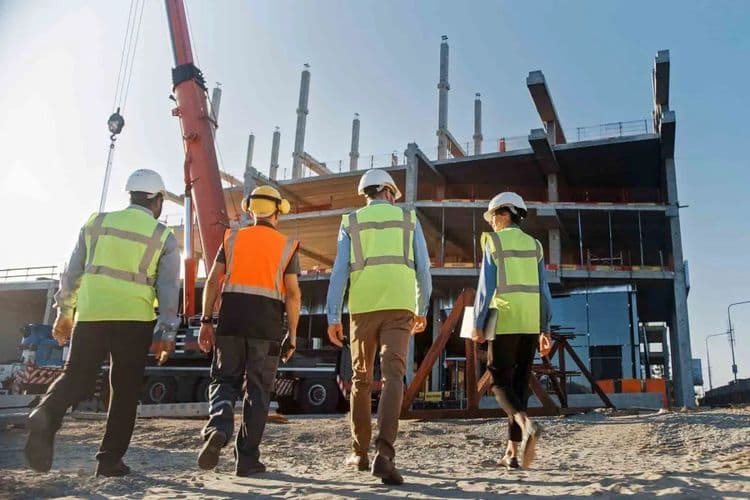
The traditional, stationary approach to project management, relying on paper checklists, manual data entry, and delayed communication, no longer meets the demands of large-scale developments. With multiple contractors, consultants, and stakeholders involved in a single project, the margin for miscommunication is razor thin.
In a 2023 McKinsey Global Institute report, over 60% of construction delays were attributed to poor coordination and communication. These issues are often exacerbated when field teams have limited or delayed access to project documentation, inspection results, or change requests. Mobile-first platforms eliminate this bottleneck by placing essential data and tools directly in the hands of site teams, inspectors, and managers.
Platforms like PlanRadar offer cloud-based mobile apps that allow users to document tasks, update plans, assign tickets, capture photos or 360° images, and track progress, all from a smartphone or tablet. This real-time connection between the field and the office reduces rework, shortens response times, and boosts overall transparency.
From the Site to the Boardroom: Enabling Instant Access
One of the key advantages of mobile-first workflows is the ability to access and update information instantly, from anywhere. Project managers no longer need to wait until the end of the day to receive reports or updates, they can view site activity in real time, communicate with teams, and adjust as needed.
This shift is especially valuable in regions like the UAE and Saudi Arabia, where government-backed mega-projects like NEOM, The Line, and Expo City Dubai require high standards of digital accountability. Public and private clients are increasingly demanding real-time progress reporting, quality control logs, and compliance documentation, all of which mobile workflows can support.
According to a 2022 Dodge Data & Analytics survey, 62% of construction professionals reported a significant improvement in schedule reliability after adopting mobile-first platforms, while 47% saw measurable reductions in site errors.
Collaboration Reimagined: Breaking Down Silos
Mobile tools allow for continuous collaboration between teams, even when they’re spread across different locations or time zones. For example, a subcontractor identifying a defect on-site can immediately upload a photo, tag the relevant stakeholder, and trigger an automated workflow to resolve the issue.
This level of transparency empowers teams to work faster and more efficiently. Instead of chasing down information or waiting for someone to return to the office, everyone is on the same page, whether they're in a high-rise in Riyadh or a site cabin in Sharjah.
In a region where multilingual and multicultural teams are common, mobile platforms that support multilingual interfaces and visual documentation help bridge communication gaps. Annotated photos, video walkthroughs, and voice notes can often convey far more than written reports, speeding up resolution and improving accountability.
Enhancing Compliance and Reporting Through Mobility
In highly regulated environments, especially in the built environment, accurate and timely documentation is critical. Mobile-first platforms help ensure that inspections, safety checks, handovers, and approvals are all properly recorded and stored. QR codes can be scanned to view equipment histories, permits can be signed on-site, and reports can be generated instantly, with all data time-stamped and geo-tagged for audit purposes.
For instance, PlanRadar enables automatic report generation that compiles images, comments, user logs, and timestamps into a structured, professional document, often ready for client submission before the inspector has even left the site. This reduces administrative workload while ensuring documentation integrity.
According to a 2023 IDC study, organizations using mobile-enabled reporting tools saw a 30% decrease in compliance-related delays and a 22% improvement in audit readiness.
The Rise of Mobile Data Capture and Analytics
Mobile workflows aren’t just about convenience, they’re about smarter decision-making. With every action recorded and synced to the cloud, companies build a rich digital archive of project data. This information can be analyzed to identify trends, spot recurring issues, measure contractor performance, and forecast delays.
Advanced mobile platforms now incorporate AI-driven analytics that interpret on-site data to suggest next steps or flag anomalies. For example, if repeated safety violations are occurring in a specific zone, the system can alert managers before incidents escalate.
As construction and facility management become more data-driven, the value of mobile-first documentation and analytics will only increase.
Remote Oversight: A New Reality for Managers and Executives
Gone are the days when senior managers needed to physically visit every site to stay informed. With mobile-first solutions like PlanRadar’s SiteView feature, they can now take virtual walkthroughs of 360° site images, view progress in context, and access digital documentation from any location.
This not only saves time and travel costs but also enables more frequent oversight, faster approvals, and better decision-making. Executives can review inspection results, verify milestone completions, and sign off on deliverables, all without stepping foot on-site.
Especially in post-pandemic work environments where hybrid models are gaining traction, mobile-first workflows ensure that management remains agile and connected regardless of location.
Mobile-First, Future-Ready: The GCC Advantage
In the GCC, where smart city initiatives, digital transformation mandates, and sustainability goals are shaping the future of urban development, mobile-first workflows align perfectly with national visions. Whether it’s meeting Dubai Municipality’s digital inspection standards or complying with Saudi Arabia’s Vision 2030 project KPIs, mobile tools are no longer a luxury, they’re a necessity.
Moreover, as ESG reporting becomes a priority for both private and public stakeholders, mobile-enabled data collection supports environmental monitoring, labour safety checks, and materials traceability.
According to a report by Bain & Company, companies that digitize their field operations via mobile tools are 35% more likely to meet sustainability KPIs and 2x as likely to maintain budget accuracy across large projects.
Conclusion: From the Field to the Future
The transition to mobile-first workflows isn’t simply a shift in technology, it’s a strategic evolution in how construction and real estate professionals operate. Mobile tools empower teams with real-time visibility, faster communication, and streamlined compliance, all while fostering a culture of accountability and continuous improvement.
As the GCC continues its transformation into a hub for smart, sustainable development, mobile-first platforms will be at the heart of successful project delivery. The organizations that embrace this mindset today will not only meet the demands of modern project execution, they’ll define the benchmarks for tomorrow.