Property News International

Change region:

GlobalcheckMiddle East

Subscribe to Our Newsletter

Sign up to receive the latest tech news and updates from Property News International straight to your inbox.

By signing up, you will receive emails about property news products and you agree to our terms of use and privacy policy.

@2026 Property News International. All Rights Reserved.

Blends Media
A Blends Media Group Production

Sheikh Hamdan Approves New Architectural Identity for Dubai’s Roads

Dubai Crown Prince Sheikh Hamdan approves a new architectural identity for the emirate’s roads, enhancing design standards, mobility, and urban aesthetics.
Sheikh Hamdan approves Dubai’s new road design identityew Architectural Identity for its road and infrastructure network following an official review by H.H. Sheikh Hamdan bin Mohammed bin Rashid Al Maktoum. (Image: WAM)

Dubai, UAE: Dubai has endorsed a comprehensive new Architectural Identity for its road and infrastructure network following an official review by H.H. Sheikh Hamdan bin Mohammed bin Rashid Al Maktoum, Crown Prince of Dubai. The initiative aims to unify the visual language of bridges, tunnels, corridors and public spaces while reinforcing Dubai’s long-term vision of an integrated, modern and sustainable city.

During the visit, Sheikh Hamdan also inspected the progress of two major infrastructure upgrades, the Trade Centre Roundabout Improvement Project and the Al Mustaqbal Street expansion, representing a combined investment of AED 1.3 billion (USD 354 million). Both projects are designed to ease congestion, strengthen connectivity, and enhance mobility across some of Dubai’s busiest commercial and residential districts.

Trade Centre Roundabout Upgrade Reaches 40% Completion

The upgrade of the Trade Centre Roundabout, a key interchange linking Sheikh Zayed Road with several major arterial routes, has reached 40 percent completion. The project will introduce new bridges, tunnels and traffic flow improvements across a total length of 6,500 metres. Once operational, it is expected to reduce travel time through the junction by 75 percent.

The project includes converting the existing roundabout into a surface-level intersection, easing movement between Sheikh Zayed Road, 2nd December Street, Al Majlis Street, Sheikh Khalifa bin Zayed Street and Sheikh Rashid Street. New bridges will open in phases beginning January next year, significantly improving traffic flow to and from the World Trade Centre, DIFC, the Museum of the Future and Downtown Dubai.

Dubai’s transport network now spans more than 25,000 lane-kilometres and supports over 3.5 million vehicles daily. RTA continues to exceed global benchmarks, constructing an average of 829 lane-kilometres annually, more than double the global average of around 400. Such improvements have also influenced property values, contributing to increases of 6 to 16 percent in surrounding districts.

Sheikh Hamdan approves Dubai’s new road design identityDuring the visit, Sheikh Hamdan also inspected the progress of two major infrastructure upgrades, the Trade Centre Roundabout Improvement Project and the Al Mustaqbal Street expansion, representing a combined investment of USD 354 million. (Image: WAM)

Al Mustaqbal Street Expansion Set for Completion in 2027

Running from Zabeel Palace Street to Financial Centre Street, the Al Mustaqbal Street Improvement Project will widen the corridor to four lanes in each direction. The upgrade includes new bridges and tunnels totalling 1,500 metres, enhanced pedestrian routes and improved connections with Exhibition Street and Trade Centre Street.

Once completed, the street’s capacity will rise from 6,600 to 8,800 vehicles per hour, an increase of 33 percent. Travel time along the corridor will be reduced from 13 minutes to six, enhancing access to financial, commercial and residential districts in central Dubai.

A Unified Architectural Language for Dubai’s Roads

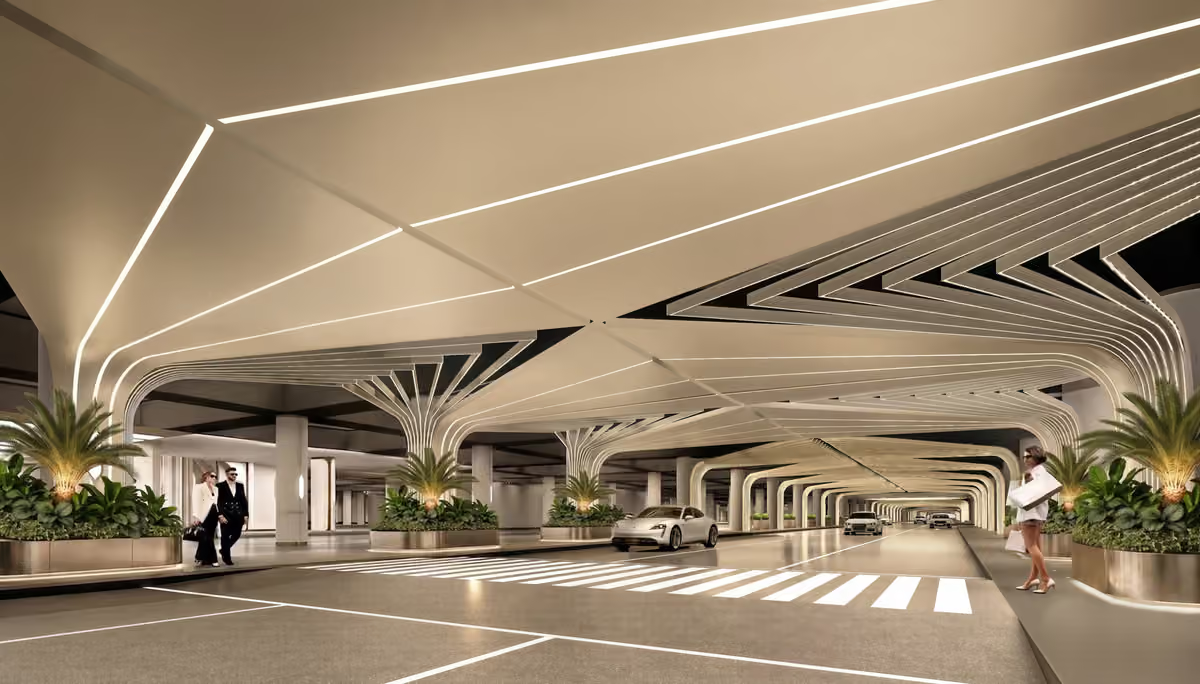
Sheikh Hamdan also approved the new Architectural Identity, a framework designed to enrich the urban landscape and ensure visual harmony across Dubai’s major infrastructure. The initiative aligns with the Dubai 2040 Urban Master Plan, focusing on aesthetic cohesion, sustainability and design excellence across bridges, tunnels, street furniture, lighting and architectural elements.

The strategy classifies Dubai into six main design zones based on land use, activities and architectural character. Each zone will follow tailored material palettes, colour schemes and design standards. Residential neighbourhoods will focus on privacy and warmth, rural areas will adopt natural tones, while industrial districts will follow a simpler, durable design language. Mixed-use, heritage and high-attraction zones will each reflect distinct themes that contribute to Dubai’s wider visual identity.

This unified approach ensures that every new road or infrastructure project supports a cohesive urban aesthetic while preserving the individuality of different districts.

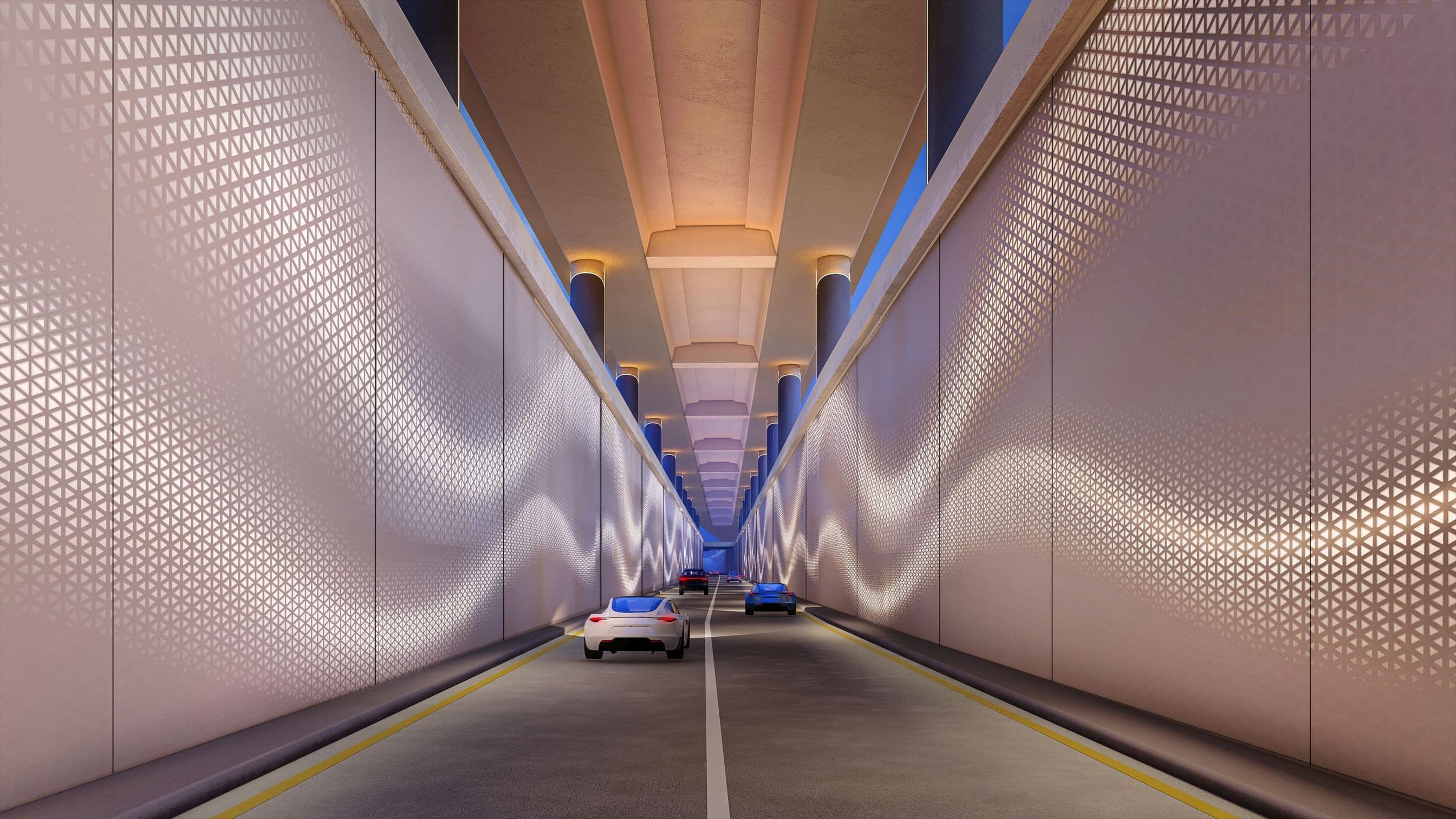
Sheikh Hamdan approves Dubai’s new road design identityCovering 18 tunnels across three phases, the programme will introduce adaptive smart lighting systems, heat-resistant artistic panels and sustainable materials to transform key passages into visually engaging urban features. (Image: WAM)

International Talent Highlights Dubai’s Vision

Sheikh Hamdan reviewed results from the Dubai Urban Challenge, an international competition launched by RTA to develop innovative architectural concepts for Dubai’s roads. The competition attracted more than 500 submissions from designers across 91 countries. Winning designs included A Thread Through Time by Oliver Charles (UK), Breathing Masonry by Mohammed Ayash (Saudi Arabia), and Echo by Giulietta Debrutti (Argentina).

These concepts will contribute to the future development of road architecture and public spaces throughout the emirate.

Transforming Tunnels into Urban Landmarks

The Crown Prince also reviewed the Dubai Tunnels initiative, which aims to enhance the city’s visual and cultural appeal through artistic lighting, murals and advanced materials. Covering 18 tunnels across three phases, the programme will introduce adaptive smart lighting systems, heat-resistant artistic panels and sustainable materials to transform key passages into visually engaging urban features.

The approach reflects Dubai’s ambition to merge functionality with art, elevating infrastructure into an essential part of the city’s evolving architectural identity.