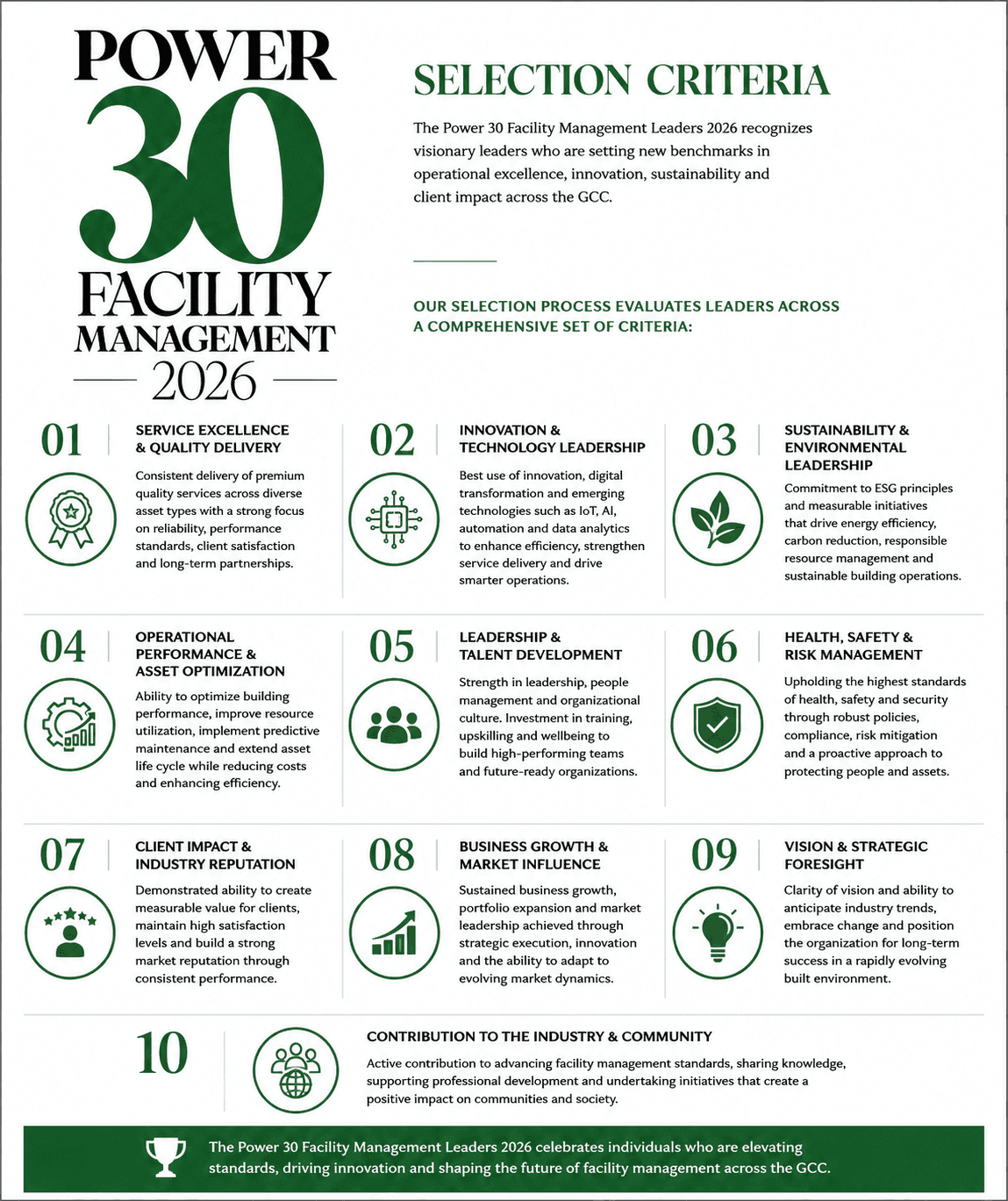
The Power 30 Facility Management Leaders 2026 recognizes the executives, innovators, and industry pioneers who are shaping the future of facility management across the GCC. The selection process evaluates leaders based on a comprehensive range of criteria designed to reflect the evolving demands of the industry and the growing importance of facility management in supporting operational efficiency, sustainability, occupant wellbeing, and long-term asset value.
Service Excellence and Quality Delivery
At the core of the selection process is a commitment to service excellence. Leaders are assessed on their ability to consistently deliver high-quality facility management solutions across diverse asset classes, including residential communities, commercial buildings, hospitality properties, healthcare facilities, industrial developments, and mixed-use destinations. Particular consideration is given to organizations that demonstrate strong client retention, measurable service outcomes, operational reliability, and a proven ability to exceed performance expectations.
Innovation and Digital Transformation
As technology continues to transform the built environment, innovation remains a critical evaluation factor. The ranking recognizes leaders who have successfully embraced digital transformation through the implementation of smart building technologies, predictive maintenance systems, IoT-enabled monitoring, automation platforms, artificial intelligence, data analytics, and integrated management systems. These innovations are increasingly helping organizations improve operational performance, enhance service delivery, reduce downtime, and optimize asset lifecycle management.
Sustainability and Environmental Leadership
With sustainability becoming a strategic priority across the region, leaders are evaluated on their contribution to environmental stewardship and ESG objectives. This includes initiatives focused on energy efficiency, carbon reduction, water conservation, waste management, green procurement, and sustainable building operations. The ability to deliver measurable sustainability outcomes while maintaining operational excellence is considered a key indicator of leadership within the sector.
Operational Performance and Asset Optimization
The most successful facility management leaders understand that operational efficiency directly impacts the long-term value of real estate assets. Candidates are assessed on their ability to optimize building performance, implement preventive and predictive maintenance strategies, improve resource utilization, enhance operational resilience, and maximize asset longevity. Strong emphasis is placed on measurable results and the ability to deliver value-driven solutions for clients and stakeholders.
Leadership and Talent Development
Exceptional organizations are built by exceptional people. The Power 30 recognizes leaders who invest in workforce development, employee wellbeing, training programs, and professional growth opportunities. Leaders who foster strong organizational cultures, empower teams, promote diversity, and cultivate future industry talent demonstrate the qualities necessary to drive sustainable growth and long-term success.
Health, Safety, and Risk Management
Maintaining safe and secure environments remains a fundamental responsibility within facility management. Candidates are assessed on their commitment to health and safety standards, regulatory compliance, emergency preparedness, risk mitigation strategies, and the implementation of best practices that protect occupants, employees, and assets.
Client Impact and Industry Reputation
The ranking also considers the broader impact leaders have on their clients, communities, and the industry as a whole. This includes customer satisfaction, market reputation, successful project delivery, strategic partnerships, thought leadership, and contributions to advancing industry standards. Leaders who consistently create value for clients while strengthening the reputation of the facility management profession are given special recognition.
Business Growth and Market Influence
Sustained business growth, portfolio expansion, contract wins, and market influence are important indicators of leadership effectiveness. The selection process evaluates how executives have driven organizational growth while maintaining service quality, operational excellence, and long-term client relationships. Particular attention is given to leaders who have successfully navigated changing market conditions while positioning their organizations for future success.
Vision for the Future
Finally, the Power 30 celebrates leaders who are shaping the future of facility management. These individuals demonstrate strategic vision, adaptability, and the ability to anticipate emerging industry trends. Whether through innovation, sustainability, technology adoption, workforce transformation, or customer-centric service models, they are helping define the next chapter of facility management across the GCC.
The Power 30 Facility Management Leaders 2026 is ultimately a recognition of those individuals whose leadership, expertise, and achievements are elevating standards across the industry and contributing to the continued evolution of the built environment throughout the region.
The 2026 ranking reflects only those companies and individuals who elected to take part in the selection process.