Dubai, UAE: The Gulf’s office real estate sector continues to experience a surge in rental growth as multinational corporations compete for prime, ESG-compliant office space across key markets. According to the 2025 GCC Office Market Review by global consultancy Knight Frank, demand for grade-A offices has pushed occupancy to near-record highs in Saudi Arabia, the UAE, and Qatar, fuelling double-digit rent increases and intensifying pressure on limited supply.
Saudi Arabia: Largest Rental Growth and Tightest Prime Supply
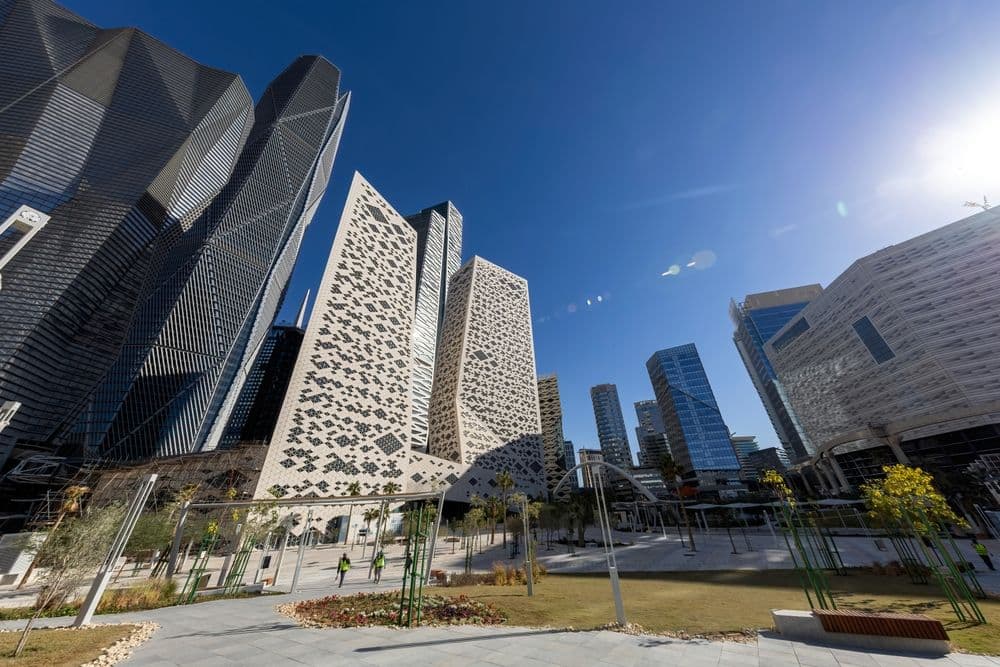
Saudi Arabia remains the GCC’s strongest performer, with its office market benefiting from unprecedented government investment, large-scale giga-projects, and the Regional Headquarters (RHQ) Programme. This expansion has created sustained demand for grade-A, ESG-aligned spaces across Riyadh, Jeddah, and the Dammam Metropolitan Area.
In Riyadh, the Kingdom’s corporate centre, grade-A office rents surged 15.1% year-on-year in Q3 2025 to an average of SAR 2,750 psm, while grade-B rents climbed 16.5%. Occupancy for grade-A stock now averages 98%, underscoring a chronic shortage of prime space as more than 780 multinational firms commit to establishing RHQs in the capital.
Knight Frank notes that strong non-oil GDP expansion, driven by Vision 2030, continues to support broad real estate demand. However, the firm highlights that the five-year rent freeze policy unveiled in 2025 prompted landlords to increase rents by 10–15% in select prime locations ahead of the regulatory cutoff.
Jeddah also reported steady improvements. Supported by new masterplans and landmark developments such as the USD 1 billion Trump Plaza Jeddah (expected 2029), the city recorded a 1.3% rise in grade-A rents to SAR 1,251 psm, with healthy occupancy at 92%.
Dubai and Abu Dhabi: Strong Occupier Demand, Limited Prime Supply
Dubai continues to see extraordinary demand for top-tier office space, driven by the business services sector (41% of total demand) and the technology industry (31%). Supply remains constrained as firms increasingly prioritise premium, future-proofed workspaces across the city’s most established business districts.
In Abu Dhabi, grade-A rents surged 28% year-on-year in Q3 2025 to AED 2,300 per sqm. Leasing activity is expanding rapidly in growth corridors such as Industrial City and Mohammed Bin Zayed City, as tenants seek high-quality new-build stock. New additions like the HB Tower on Yas Island - now 98% occupied - and the 22,171 sqm Saas Business Tower signal increasing developer confidence. Abu Dhabi’s supply pipeline is set to accelerate in 2027, with approximately 175,000 sqm scheduled for delivery.
Qatar: Consolidation Drives Shift from West Bay to Lusail
Qatar’s office market is undergoing a strategic consolidation phase marked by a multi-year migration from West Bay to the modern, master-planned district of Lusail. While headline rents fell 2.2% year-on-year in Q3 2025, occupancy in grade-A assets remains robust.
Lusail is quickly emerging as the country’s institutional hub, strengthened by relocations from major entities such as the Qatar Financial Centre, the Qatar Central Bank, the Qatar National Bank, and the Qatar Investment Authority. Msheireb Downtown Doha continues to attract government and corporate tenants due to its integrated, ESG-driven design.
Rising Demand, Future Supply, and the GCC’s “Flight to Quality”
Knight Frank’s analysis underscores a common regional trend: corporations are increasingly shifting toward premium, sustainable, and future-ready workplaces, driven by global corporate mandates and regional diversification agendas.
Faisal Durrani, Partner – Head of Research, MENA at Knight Frank, notes:
“Office markets across the region remain undersupplied, with strong demand underpinning rental growth. Government diversification efforts continue to support the need for high-quality, ESG-compliant real estate.”
James Hodgetts, Partner – Occupier Strategy & Solutions, MEA, adds:
“The flight to quality is the defining trend across the GCC, with blue-chip occupiers prioritising premium space and reinforcing long-term confidence in the region’s economic outlook.”
Supply relief is expected in the coming years, notably in Riyadh, where total stock is projected to expand by 60% by 2027 - exceeding 10 million sqm - and in Dubai, which anticipates more than 13.2 million sq ft of new offices by 2030.