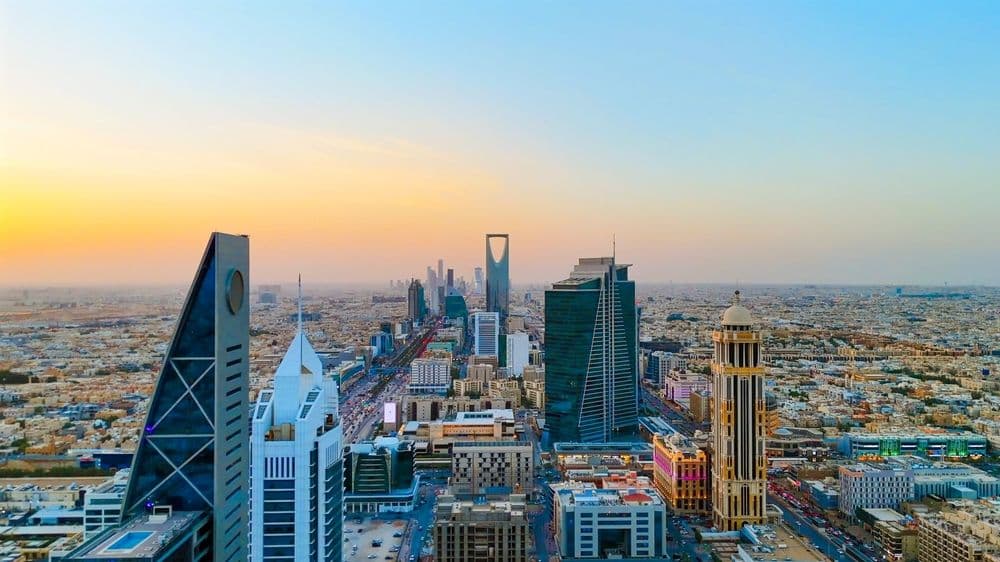
Riyadh, Saudi Arabia: Saudi Arabia’s real estate sector delivered another quarter of broad-based growth in Q3 2025, supported by resilient investor demand, expanding tourism flows and the continued momentum of Vision 2030-led transformation, according to the latest Market Dynamics report by global property consultancy JLL.
The performance reflects a maturing market that continues to attract domestic and international capital across hospitality, industrial, office, retail and residential segments, underpinned by large-scale government investment, population growth and accelerating business activity across the Kingdom’s major cities.
Hospitality defies seasonality on surging tourism
Saudi Arabia’s hospitality sector continued to outperform traditional seasonal expectations, with nationwide occupancy reaching 60.5% in Q3, up 1.4 percentage points year-on-year. The robust performance was driven by 14.3 million international visitors recorded in the first half of 2025, alongside the “Saudi Summer” campaign, which attracted more than 32 million tourists, representing a 26% annual increase.
Major destinations benefitted from growing leisure, religious and business travel, reinforcing the sector’s resilience and its expanding role as a cornerstone of the Kingdom’s non-oil economic diversification agenda.
Industrial rents climb as demand tightens
Industrial real estate posted some of the strongest gains in the market, led by Riyadh, where rents recorded 10.5% annual growth. Key submarkets significantly outperformed the average, with Taybah up 21.7% and Al Fawzan Industrial City rising 20.0%.
Jeddah also saw solid momentum with 6.6% annual rental growth, while rents at Jeddah Islamic Port reached approximately USD 125 per sqm (SAR 470). Occupancy remained elevated across major industrial hubs, with Riyadh at 90.0%, Jeddah at 91.0% and the Dammam Metropolitan Area (DMA) at 85.0%, reflecting sustained demand driven by logistics, manufacturing and supply chain expansion.
Read more:
JLL Unveils Real Estate Knowledge Hub to Advance Expertise in Saudi Arabia
Office market tightens sharply in Riyadh
Riyadh’s prime office market remained exceptionally constrained, with vacancy falling to just 0.5%, intensifying upward pressure on rental levels. Prime rents in King Abdullah Financial District (KAFD) climbed 11.1% year-on-year to approximately USD 970 per sqm (SAR 3,630), while Grade A office rents across the city rose 9.5% annually.
In Jeddah, Grade A vacancy stood at a still-healthy 4.9%, indicating balanced but tightening conditions. Corporate relocations, regional headquarters programs and growing demand from the technology, financial and professional services sectors continue to drive absorption.
Retail adapts through experience-led concepts
Retail real estate continued to evolve in response to shifting consumer behavior and tourism-led demand. Riyadh’s super-regional malls maintained a low 2.5% vacancy rate, reflecting strong footfall and a growing emphasis on entertainment, dining and experiential retail formats. The sector’s evolution aligns with broader lifestyle positioning and mixed-use integration across major urban centers.
Residential sales and rents accelerate in Riyadh
Residential activity remained robust, particularly in Riyadh, which recorded 6,140 transactions in Q3. Apartment prices rose 10.3% year-on-year to approximately USD 1,733 per sqm (SAR 6,501), while rental growth accelerated sharply, with apartment rents climbing 19.6% annually and villa rents increasing by 17.2%.
In Jeddah, 3,228 residential sales were recorded. Villa prices rose 3.1% to around USD 1,778 per sqm (SAR 6,668), while apartment prices dipped modestly by 2.8%, reflecting localized supply dynamics and product segmentation.
Regulatory shifts set to reshape market dynamics
Alongside strong market performance, a new wave of regulatory reforms is expected to influence investment behavior and development strategies.
In Riyadh, a five-year rent freeze has been introduced, applying to both renewed and vacant residential and commercial leases, with rents reverting to their last registered amount. The policy aims to stabilize living and operating costs while curbing speculative rental inflation. Market analysts anticipate a gradual shift in investor focus toward long-term, income-stable assets and development-led value creation rather than short-term rental gains.
At a national level, amendments to the White Land and Vacant Property Tax Law have extended the tax to include long-term vacant buildings, beyond previously undeveloped plots. Tiered fees of up to 10% now apply to holdings of 5,000 sqm and above, a move designed to unlock dormant land, accelerate development activity and expand the supply of both residential and commercial stock.