Sign up to receive the latest tech news and updates from Property News International straight to your inbox.
By signing up, you will receive emails about property news products and you agree to our terms of use and privacy policy.
@2026 Property News International. All Rights Reserved.
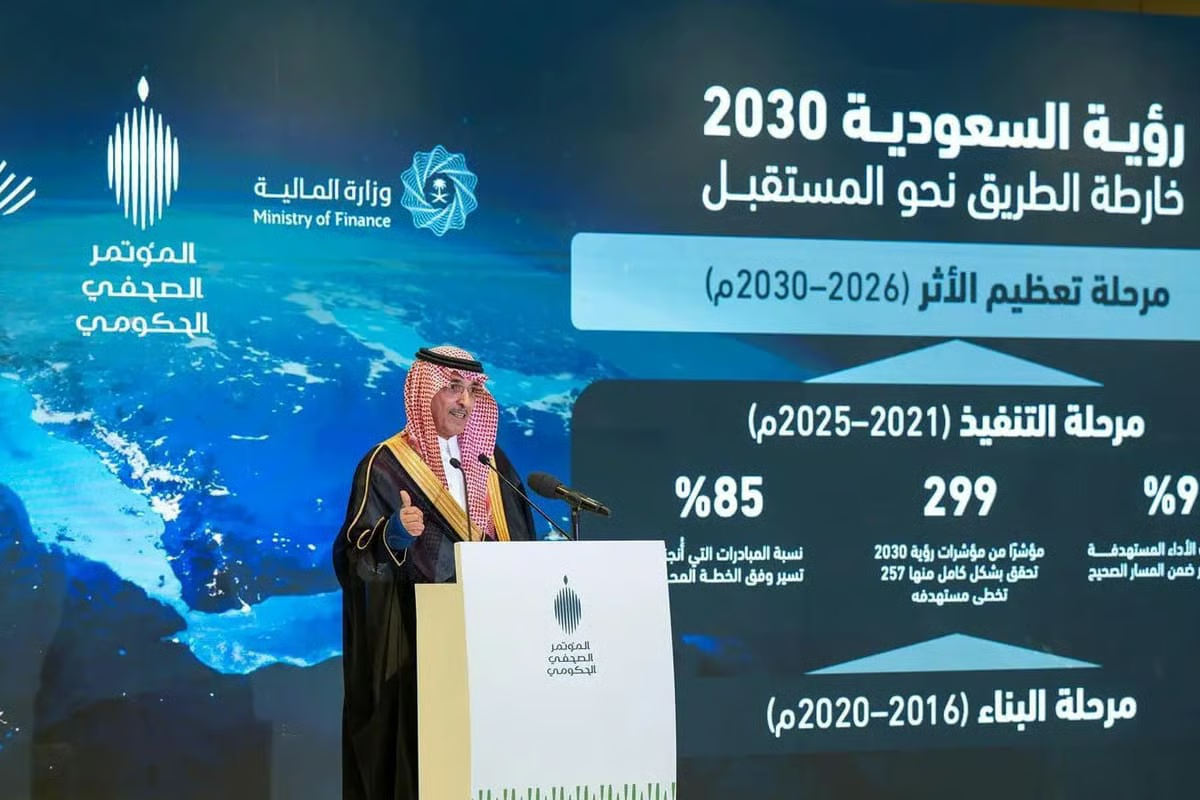
Minister of Finance Mohammed Aljadaan affirmed that the Kingdom of Saudi Arabia’s government will continue with expansionary spending in the 2026 budget, highlighting the importance of stability and medium-term planning. Image: SPARiyadh, Saudi Arabia: Saudi Arabia has approved its 2026 national budget, forecasting revenues of USD 305.5 billion (SAR1.147 trillion), marking a 5.1 percent increase over the 2025 estimate. The growth underscores the continued progress of the Kingdom’s economic diversification agenda, according to the Saudi Press Agency.
The budget was ratified during a Cabinet meeting chaired by Crown Prince Mohammed bin Salman in Dammam. Total expenditure for 2026 is set at USD 349.8 billion (SAR1.31 trillion), slightly below the USD 357.9 billion (SAR1.34 trillion) outlined for 2025. The deficit is expected to reach approximately USD 43.6 billion (SAR165 billion), equivalent to 3.3 percent of GDP, supported by targeted countercyclical spending.
The Crown Prince called on ministries to execute programs and development projects aligned with Saudi Vision 2030, emphasizing continued prioritization of citizen welfare.
Following the approval of the fiscal year 1447/1448 AH (2026) budget, the Crown Prince reiterated the government’s commitment to citizens and highlighted significant progress driven by King Salman’s directives and the efforts of the Saudi people.
He noted that Vision 2030 will advance into its third phase in 2026, requiring accelerated implementation to ensure long-term impact. Structural reforms introduced since 2016 have strengthened non-oil growth, kept inflation below global averages, improved the business environment, and bolstered the Kingdom’s position as a global investment hub.
The government will continue to reinforce economic resilience and fiscal sustainability through disciplined financial and economic policies, long-term planning, and diversified financing tools within the medium-term debt strategy.
The Crown Prince highlighted unprecedented progress in employment, with the number of Saudis working in the private sector rising to 2.5 million. Saudi unemployment has fallen to historic lows, surpassing the Vision 2030 target of 7 percent.
Key initiatives continue to expand opportunities for youth, entrepreneurs, and women. The real estate sector has also seen significant gains, with homeownership reaching 65.4 percent by the end of 2024, exceeding the 2025 target.
He emphasized that the Kingdom remains committed to enabling investment, strengthening the private sector, and sustaining the momentum of non-oil growth—supported by preliminary estimates of 4.6 percent real GDP growth in 2026 and a 4.8 percent increase in non-oil activities.
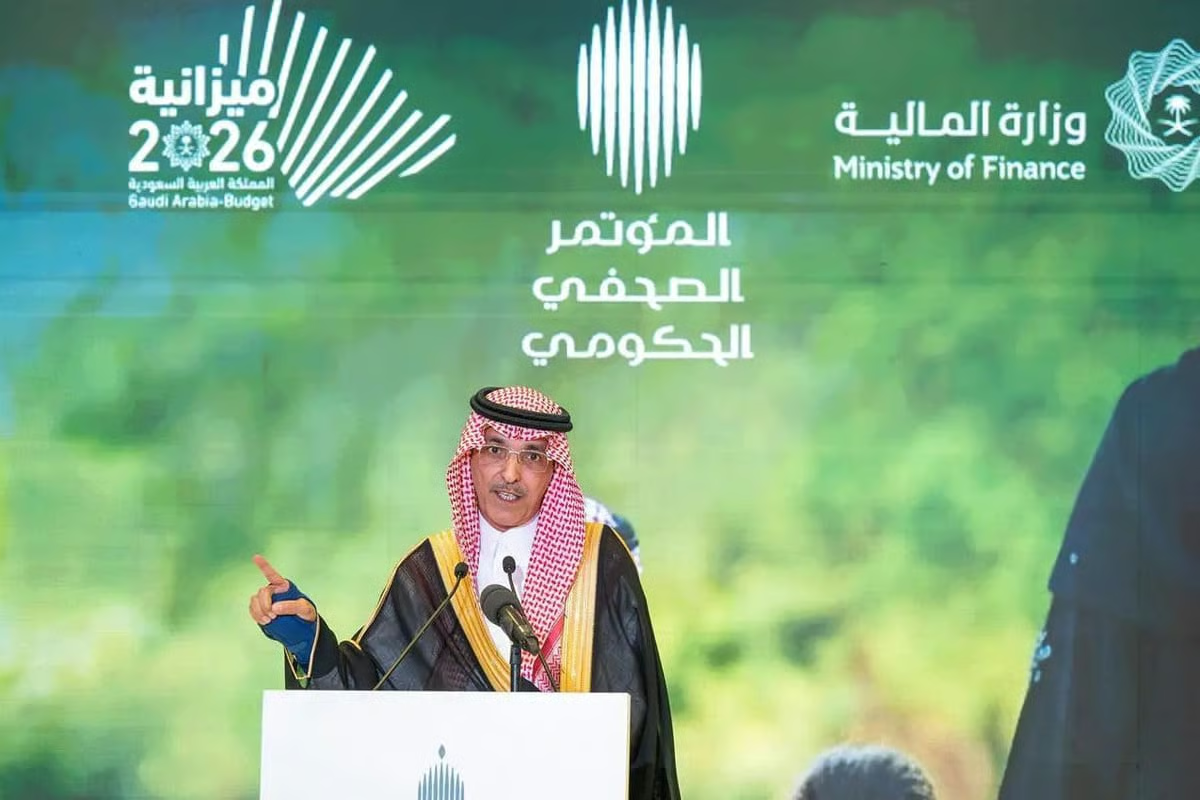
Minister of Finance Mohammed Aljadaan confirmed that the 2026 budget will maintain expansionary spending while preserving stability and medium-term financial planning. Image: SPAThe Crown Prince reaffirmed that the Public Investment Fund (PIF) will continue to drive diversification by developing strategic sectors and expanding global economic partnerships. These efforts complement ongoing initiatives by the National Development Fund and its associated entities to stimulate economic activity and support long-term fiscal sustainability.
The private sector’s contribution to real GDP has now reached 50.3 percent, supported by infrastructure programs, foundational service improvements, and strengthened budget execution controls.
Minister of Finance Mohammed Aljadaan confirmed that the 2026 budget will maintain expansionary spending while preserving stability and medium-term financial planning.
He highlighted that core services, including education, healthcare, social services, and municipal programs—will receive USD 142 billion (SAR533 billion) in 2026.
The “maximizing impact” phase of Vision 2030 will begin next year, requiring closer coordination between government entities and the private sector.
Aljadaan outlined key progress indicators:
He also reiterated the strategic use of deficits to enable long-term returns, noting: “The objective of this borrowing of SAR245 billion is to yield a return that surpasses its cost, which is indeed occurring in the Kingdom.”
Non-oil activities reached a historic contribution level of 55.4 percent, with projections indicating the 2030 target will be reached by or before the deadline.
The number of micro, small, and medium enterprises (MSMEs) surged from 500,000 to 1.7 million, contributing an estimated 1.2 million jobs under Vision 2030.
Real GDP is forecast to grow 4.4 percent by the end of 2025, with nominal GDP expected to reach SAR5.6 trillion by 2028.
Aljadaan emphasized that while oil remains a vital national asset, achieving long-term sustainability will depend on continuing reforms and diversification efforts.
The PIF’s assets have grown from SAR150 billion to more than SAR800 billion, reinforcing its role as a long-term investment vehicle for future generations.
Health and education expenditures will surpass SAR460 billion next year. Aljadaan clarified that privatization initiatives do not conflict with public service commitments but instead aim to improve efficiency and expand access.
He also addressed long-term project planning, emphasizing the need for flexibility in adapting project scopes as conditions evolve.

Roshn launches luxury curated villas within its flagship Sedra community in Riyadh

Dubai commercial property sales reached a record $5.31 billion during H1 2026, W Capital reveals

Sheikh Khaled launches Marsa Al Saadiyat, a $27.23 billion, 6.4 million sqm waterfront destination
MERED says Dubai's off-plan market is redefining luxury residential development across the emirate.