Sign up to receive the latest tech news and updates from Property News International straight to your inbox.
By signing up, you will receive emails about property news products and you agree to our terms of use and privacy policy.
@2026 Property News International. All Rights Reserved.
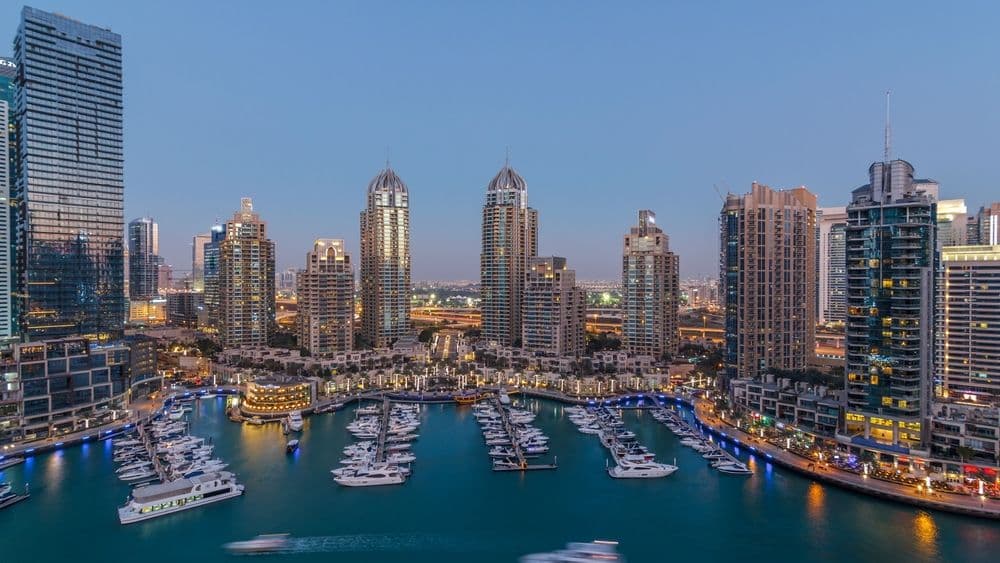
Dubai recorded its strongest transaction year on record in 2025, with USD 170.0 billion (AED 624.1 billion) in property deals across 197,263 transactions between January and November alone, surpassing previous annual highs with a month still remaining.Dubai, UAE: After another record-breaking year for Dubai’s real estate market, the sector is entering 2026 with a notable shift underway. Momentum-driven buying is gradually giving way to a more disciplined, logic-based approach, while luxury assets continue to demonstrate structural resilience across the emirate.
According to an in-depth market outlook released by fäm Properties, the coming year is expected to reward developments that deliver genuine connectivity, strong fundamentals, credible execution and clear lifestyle value, while projects built primarily on hype are likely to face increasing pressure.
Drawing on analytics from DXBInteract, which aggregates Dubai Land Department-verified data, the report outlines the defining trends of 2025 and the forces set to shape the market through 2026.
Dubai recorded its strongest transaction year on record in 2025, with USD 170.0 billion (AED 624.1 billion) in property deals across 197,263 transactions between January and November alone, surpassing previous annual highs with a month still remaining. This exceptional performance was largely driven by momentum, as buyers responded to rapid price appreciation and strong headline activity rather than undertaking deep analysis of fundamentals, developer track record or long-term usability.
At the same time, the market saw a meaningful rise in end-user demand. Families increasingly opted for ownership over renting, lending greater stability to established, well-serviced communities. International capital flows also remained robust, with UHNW individuals and global families investing from Europe, the UK, the CIS, India, Africa and a growing cohort from North America. Beyond residential assets, commercial real estate continued to expand, supported by growth in construction, logistics, professional services and the broader real economy.
fäm Properties expects 2026 to mark a clear transition toward logic-based buying. Pricing discipline, realistic payment plans, construction quality, developer credibility and end-user suitability are set to become decisive factors in determining project success. The luxury segment is forecast to remain particularly resilient, with prime villas, branded residences and waterfront assets still structurally undersupplied, sustaining strong pricing, liquidity and resale velocity.
The developer landscape is also expected to become more polarised. Tier-one developers with proven delivery records are likely to dominate off-plan demand, while smaller or newer players may increasingly partner with established master brokerages to offset limited track records and execution histories. At the same time, Dubai’s development ecosystem is becoming more competitive as international developers, particularly from the United States, enter the market, introducing new design benchmarks and operational expectations.
Firas Al Msaddi, CEO of fäm PropertiesCommercial real estate momentum is projected to continue, underpinned by economic expansion, infrastructure investment and rising corporate presence. Connectivity is emerging as a critical value driver, with communities linked to the upcoming Dubai Metro Blue Line expected to enjoy disproportionate gains in demand and pricing. Areas benefiting from improved transport links, walkability and integrated planning are increasingly favoured by both investors and end users.
From a macro perspective, a shifting global economic cycle, easing monetary conditions following aggressive tightening, and renewed inflationary pressures are likely to support real asset valuations, particularly in supply-constrained markets such as Dubai.
“In 2025, momentum drove decisions, but 2026 will be the year when buyers and investors operate with far more logic and discipline,” said Firas Al Msaddi, CEO of fäm Properties. “Rather than being influenced by brand names alone, buyers will assess the full equation, price versus value, payment plan realism, construction consistency, location and developer credibility.”
He added that projects with aligned fundamentals and low execution risk will outperform, while the role of advisory brokers with strong brand equity, data depth and a proven track record will become increasingly important.
Communities expected to see renewed interest include those benefiting from new metro connectivity, such as Dubai Creek Harbour, Festival City and key districts within Dubai Silicon Oasis and International City. Ultra-prime villa locations including Jumeirah Bay Island, Palm Jumeirah, Al Wasl, Dubai Hills Estate and Mohammed Bin Rashid City continue to demonstrate the highest resale velocity and the lowest tolerance for price discounts.
Walkable, lifestyle-led master communities such as City Walk, Central Park at City Walk, Bluewaters Island and upcoming Meraas developments are also attracting heightened attention, supported by integrated retail, design quality and human-scale planning. Meanwhile, Etihad Rail-influenced corridors, including Dubai South and the southern logistics belt, are emerging as longer-term strategic plays as inter-emirate connectivity and industrial demand mature.
“The winners in 2026 will not be defined by hype,” Al Msaddi concluded. “They will be defined by data, fundamentals, infrastructure and brand credibility. Logic-based buying is back, and it will clearly separate real assets from speculative noise.”

Roshn launches luxury curated villas within its flagship Sedra community in Riyadh

Dubai commercial property sales reached a record $5.31 billion during H1 2026, W Capital reveals

Sheikh Khaled launches Marsa Al Saadiyat, a $27.23 billion, 6.4 million sqm waterfront destination
MERED says Dubai's off-plan market is redefining luxury residential development across the emirate.